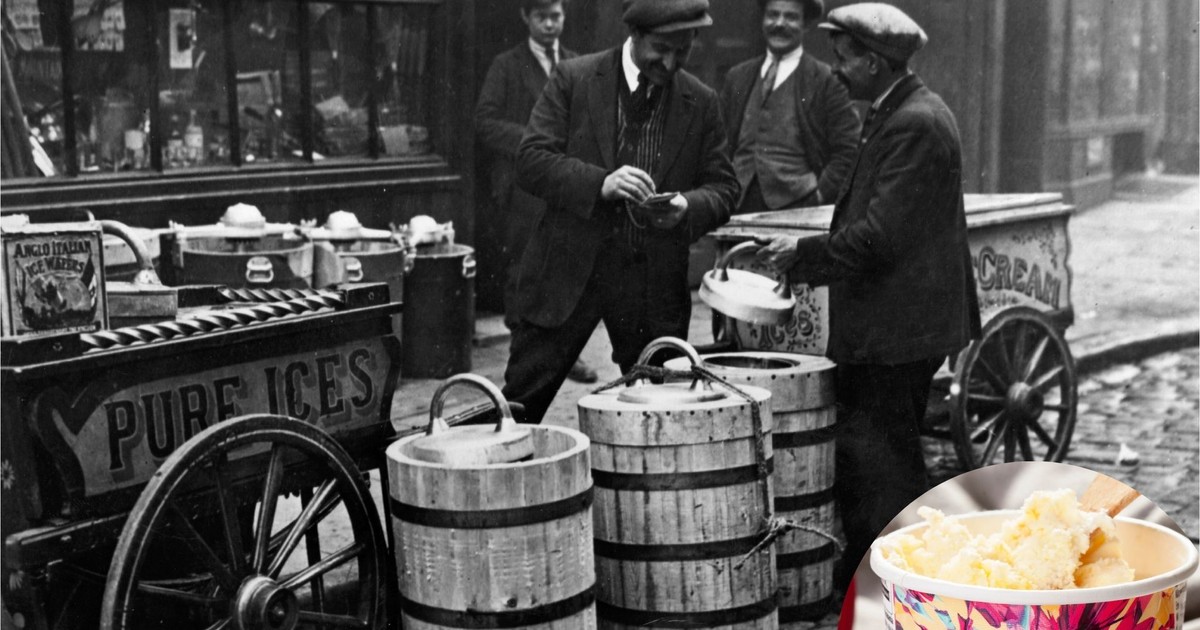
Reuben Mattus was born in 1912 in Grodno, into a Jewish family that made its living from a small delicatessen shop. After the outbreak of World War I, business began to decline. Reuben's father – Nathan – went to America, wanting to open the way for the entire family to emigrate. However, he did not have time to implement the plan – as soon as he returned for his wife and children, he was conscripted into the tsarist army. He died at the front. After the war ended, Reuben's mother, Lea, reopened the store.
Shortly thereafter, relatives who had settled in New York brought the Mattus family to live with them. Lea, Reuben and his sister arrived in March 1921. Reuben's uncles who ran ice businesses – Big Bear Ice Cream and Yukon Ice Cream – were waiting for them. Lea quickly found her place in this world.
Reuben grew up between crates of lemons and blocks of ice. At the age of ten, he worked at his uncle's ice cream shop in Brooklyn. In the late 1920s, together with her mother, she founded her own company under the brand Senator Frozen Productshe sold ice cream delivered by horse-drawn wagon around the Bronx.
Over the decades, the business, which Reuben eventually took over, grew into a small factory. Senator Frozen Products supplied ice cream to a supermarket chain and local stores. Then came the 1950s – the era of mass production, centralization of distribution and supermarkets with increasingly strict price demands. Giants entered the market and could afford discounts and promotions unavailable to small family businesses.
Read also: Brands with history. How to maintain your identity in the modern world
The road against the flow
Most entrepreneurs in such a situation would try to cut costs and reduce margins. Mattus couldn't afford it. With the specter of bankruptcy on the horizon, he had another idea. Instead of joining the race for the lowest possible price, he decided to create ice cream that would be incomparably more expensive than all those available on the market. Against all logic and advice, he defined a new category of premium ice cream.
He gave up on compromises. When other companies were optimizing costs by relying on artificial flavors, colors and stabilizers, he was looking for the best vanilla on the market. But texture was the key – his ice cream contained twice as much butterfat and half as much air as the competition. Rose later recalled in her biographical book that the characteristic creaminess arose by accident: when the pump that forced air into the mass broke down. Reuben tried the “faulty” batch and found it even better than he expected.
In 1961, in a tiny factory in the Bronx, production of the first three flavors began: vanilla, chocolate and coffee. This is how it was born Häagen-Dazs.
European luxury in a box
Mattus understood that a luxury product required a luxury brand. He decided on a Danish-sounding name, believing that the Scandinavian associations would add prestige. It was also intended to be a tribute to Denmark for the country's treatment of Jews during World War II.
Sitting at the kitchen table, Mattus began writing down nonsense words. This is how “Häagen-Dazs” was created – a name that means nothing in any language, but sounds European and mysterious. Adding the umlaut (ä) and the digraph “zs” was a move intended to make Americans look at ice cream differently: as something rare, foreign, unique. Nobody knew that they are not used at all in Danish.
Rose Mattus promoted the brand in person – elegantly dressed, she handed out samples at local stores and strategically introduced the product to sophisticated restaurants and shops at New York University in Greenwich Village. Word of mouth marketing did the rest.
Read also: Arabica from the laboratory. This is Nestlé's controversial plan to combat the looming coffee crisis
Building a competitive advantage
Ice cream is temperature sensitive – each thawing and refreezing destroys its structure. Mattus couldn't let that happen. So he relied on his own network of refrigerated trucks, ensuring regular deliveries directly from the factory to the delicatessen.
In 1973, the brand already had nationwide distribution. Three years later, Mattus' daughter, Doris Hurley, opened the first company store on Montague Street in Brooklyn. The success exceeded her wildest expectations. She convinced her father to create a franchise network. Soon, the stores conquered the entire United States.
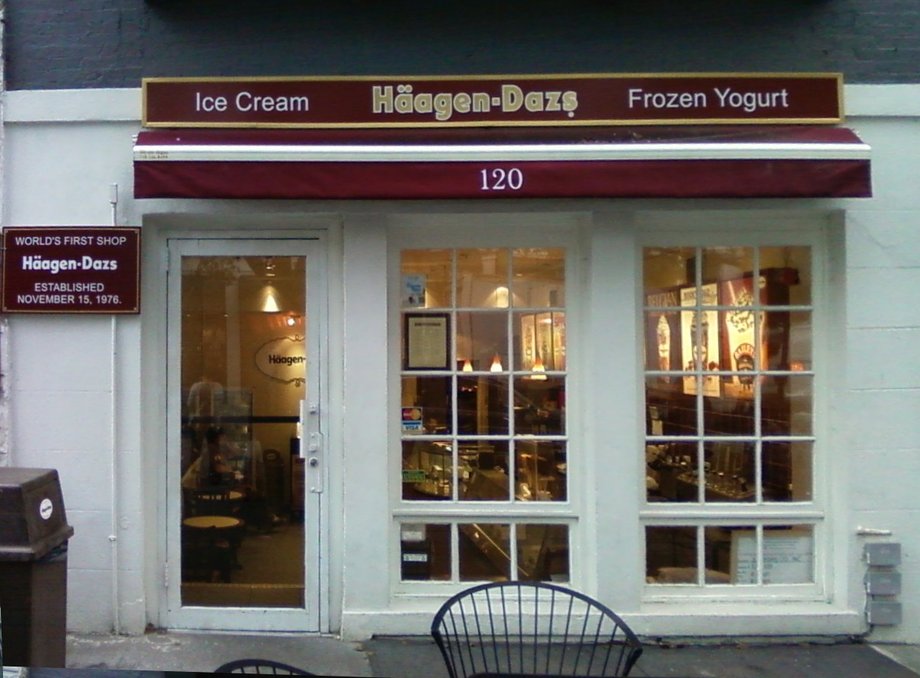
In 1976, Reuben Mattus' daughter opened the first company store in Brooklyn
|
Fuhghettaboutit / Wikimedia Commons
Imitators and the first premium brand war
For years, Häagen-Dazs had virtually no competition in its class. This changed in 1980 when one of the former distributors, Richard Smith, founded the brand Frusen Glädjé — also stylized in Scandinavian style.
Mattus sued him for copying “Scandinavian aesthetics”, but lost. The court stated that it was impossible to reserve a national style. The verdict opened the way for further imitators, although ultimately the biggest competitor turned out to be Ben & Jerry's – a brand of equal quality, but with a more accessible, American personality.
Sales and brand legacy
In 1983, Reuben Mattus sold Häagen-Dazs to Pillsbury. After years of changing ownership structure, today the brand is divided into:
- Froneri (joint venture of Nestlé and PAI Partners) manages the brand in the USA and Canada,
- General Mills is responsible for international markets under license and produces ice cream, among others. in France.
Reuben Mattus died in 1994. The Polish immigrant proved that building value based on unrivaled quality is a more powerful force than competing at the lowest price level. This strategy is particularly relevant today. While e-commerce drives the race for the lowest price, consumers increasingly focus on brand quality and authenticity.