The race of small parties for the electorate of the big parties. Why attempts to break tie votes fail

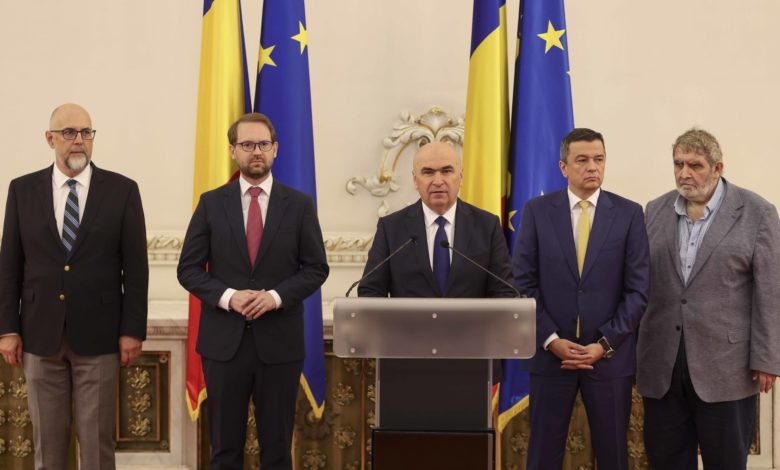
Romania's political scene is dominated by the big parties, such as PSD and PNL or more recently AUR and USR, which divide Romanians' voting options. This is reconfirmed by the elections of the last year, as well as by the polls for the Capital City Hall, where the candidates of these formations are in the foreground, although a recent study showed that more than half of Romanians prefer the disappearance of the current parties.
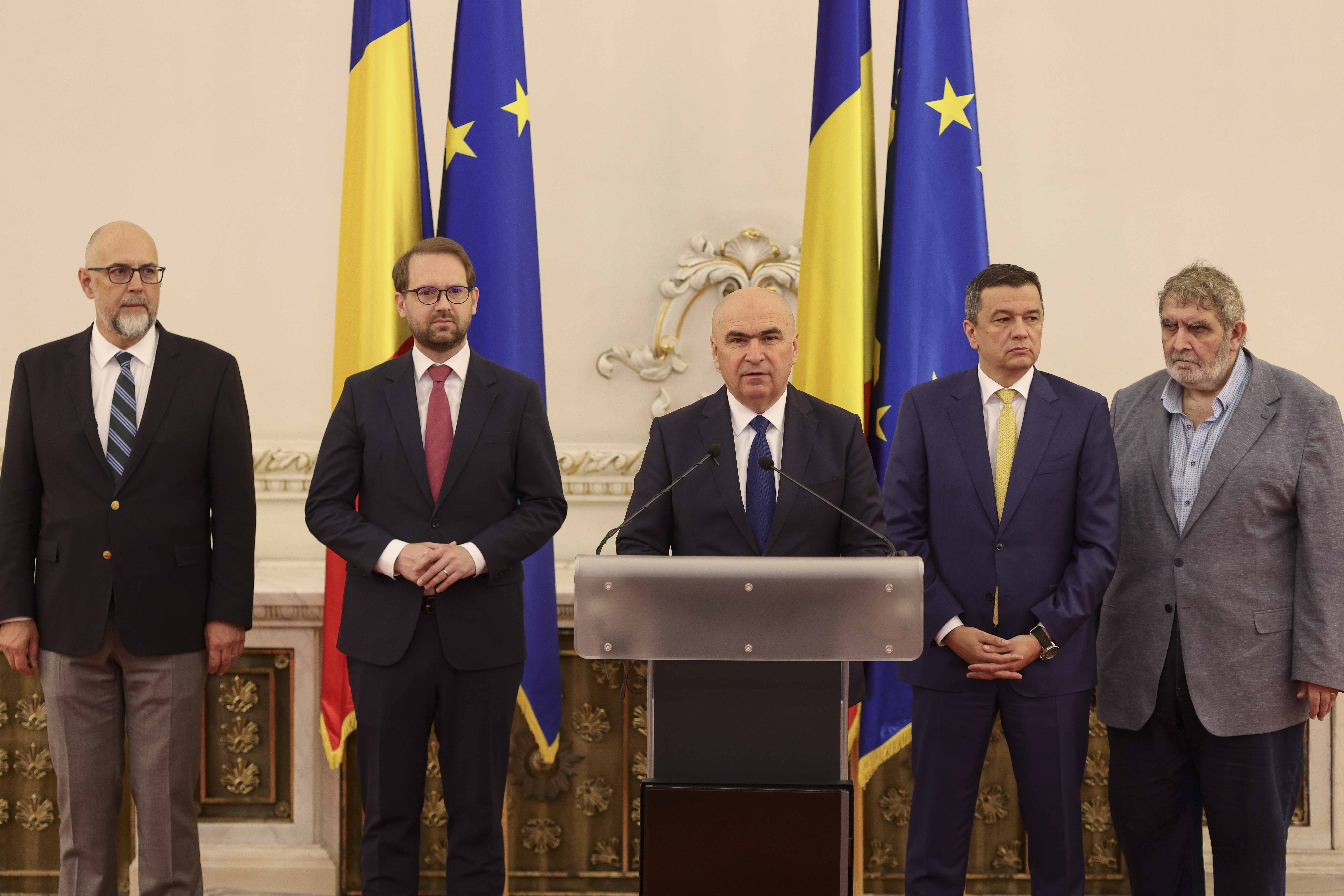
PHOTO Inquam Photos / Octav Ganea
In the parliamentary elections of 2024, against the background of a sovereignist wave, which was successful especially after the entry of the former presidential candidate Călin Georgescu in the second round of the canceled elections, two new formations managed to enter the Parliament, SOS Romania and POT. Other formations failed to reach the 5% threshold for Parliament, although data from a recent INSCOP survey indicated that more than 55% of Romanians agree with the statement “All the parties now existing in Romania should disappear and be replaced by new ones.”
According to analysts, the old big parties have gradually decreased in percentages in recent years, but they remain in the forefront of Romanian politics due to several requirements that the newly emerged parties fail to tick off.
“There is a small advantage for parties that are already strong”
“To a large extent, the need for new parties overlaps a lot with the sovereignist wave”currently, sociologist Barbu Mateescu explains for “Adevărul”, referring to the only recent success recorded by the new parties.
While the old parties continue to dominate political life because they 'have visibility', new parties have often failed to respond to today's demands of voters, in some cases capturing only 'a generation' or being “linked to a particular political moment rather than a part of society”. Another obstacle to the rise of these formations was represented by their own leaders. “These new parties must also be made by new people. And that's a very important thing.” the sociologist explains.
The dominance of the big parties also comes on the back of the necessary resources, which the new parties usually do not have: “When I say that notoriety is very important, I'm also thinking about the resources that you have at your disposal, the ability to have teams that work in the mass media, in the online environment. There is a small advantage here for the parties that are already strong, but it doesn't really matter that much, from my point of view.”
According to the sociologist, the massive mobilization during the electoral period since the end of last year, against the backdrop of the presidential elections – in which the USR candidate and Călin Georgescu had qualified – produced a disadvantage in the case of new formations, which otherwise obtained a fairly high score. “SENS got 263,000 votes. She could have entered the Parliament if the attendance was normal for female parliamentarians, but it wasn't. There was a very high mobilization after the first round of residentials“, explains Barbu Mateescu.
“There is a desire for new, cleaner parties”
“The truth is somewhere in the middle. There is a desire to have new parties, in the sense of being cleaner parties in the eyes of the electorate, less compromised. On the other hand, there have been many new parties. Many have tried to make new parties and many of them have not been able to establish themselves”is the opinion of the editor-in-chief of Historia Ion M. Ioniță.
On the other hand, the old parties enjoy a traditional electorate: “Voters have become accustomed to certain political figures and there are parties that have a traditional electorate that does not give up, a hard core. The PSD, which relies heavily on retirees, on local structures, on state officials. These structures remain. And they will continue to vote for these parties that also have many mayors. Even though we have now seen that the contribution of the mayors in the elections mattered less, that is, they failed to gather the votes that the parties expected. But local structures matter, local mobilization matters”.
According to the analyst, the data indicates that there is currently potential for new construction, and on the downtown side, but these “they haven't found their exponents yet.”
What happened to the parties that missed the threshold of the Parliament
And success in a parliamentary election has often proved fleeting. If in some cases, the new parties did not even manage to tick off a successful election, in recent years, several relatively new formations received a mandate, and then disappeared from the public space.
An unsuccessful merger
PMP or ALDE are two of the parties with success stories, initially succeeding in entering the Parliament or even participating in the government. However, today they are either gone or not on the list of those with a chance in an election.
The Alliance of Liberals and Democrats (ALDE), founded in 2015 by the merger of the Liberal Reform Party (PLR) with the Conservative Party (PC), managed to enter the Parliament in 2016, winning 20 seats in the Chamber of Deputies and another 9 in the Senate, a position from which it also reached the government. In the same year, he also managed to tick off a good result in the local elections, obtaining the leadership of over 60 town halls and over 2000 local councilor positions. He was part of several governments led by the PSD. But it dissolved in the PNL, after the resignation of the former president of the formation Călin Popescu Tăriceanu and the failure in the parliamentary elections of 2020. In the local elections of that year, he checked enough to survive until the merger with the PNL.
The resignation of Călin Popescu Tăriceanu came as a product of another merger. ALDE and Pro Romania announced before the 2020 parliamentary elections the formation of the “Pro Romania Social-Liberal” party, the two parties running together. However, the merger was stopped after the electoral failure.
If ALDE completely disappeared from the political scene, the same did not happen with PRO Romania, whose president, Victor Ponta, is still today in a parliamentary seat. However, his mandate is obtained on the PSD lists, from which he was excluded. With or without belonging to the party, the former leader continues his mandate, while PRO Romania has already reached a borderline situation in 2021. It is the first party in Romania that could no longer benefit from the monthly subsidy due to debts. In 2019, he managed to bring two MEPs to the European Parliament.
With or without electoral success
And PMP started with an electoral success. He ticked off the Parliament in the 2016 elections, obtaining 18 deputies and 8 senators' mandates, including the former president Traian Băsescu. He managed to send two people in both 2014 and 2019 to the European Parliament, but his luck went downhill in 2020, when he failed to reach the 5% threshold for the Parliament. Incidentally, that was also the first year in which former president Traian Băsescu did not run on the party lists. He obtained one mandate as a senator and one as a member of the European Parliament from the formation. In that year the lists were completed by names such as Elena Băsescu or Liviu Negoiță. The formation is still present in the European Legislature, but only through the voice of party president Eugen Tomac.
PLUS ticked Parliament into the USRPLUS alliance, merging with USR. The Freedom, Unity and Solidarity Party was the first project founded by former Prime Minister Dacian Cioloș. The alliance that brought him success was also the one that brought him the end. After the merger, Dacian Cioloș won the presidency of the new formation, but the party's Executive Bureau was majority USR, and it voted to keep the USR name and logo. The lack of support of his direction in the leadership of the formation also determined the former prime minister to abandon the position and leave the leadership. The PLUS party is today a memory, present only in the history of the USR.
Forța Dreptei broke parliamentarians from the PNL, but did not manage to bring them another mandate. The party lost both in the 2024 parliamentary elections and previously in the alliance with PMP and USR, when it failed to get any party members to the European Parliament. Remaining outside the Legislature, today only the party leader Ludovic Orban is still present in the public space, reaching the position of councilor in Cotroceni, but being dismissed shortly after a scandal.
And REPER (Renew the European Project of Romania), the second project of former Prime Minister Dacian Cioloș, used the same strategy. It had parliamentarians in the 2020-2024 mandate breaking from the new USR, but it failed to tick off a parliamentary vote. The party remained out of the legislature, with a score below 5% in the 2020 elections. The new government, however, brought him a position of minister in the Executive. The party is now represented here by Dragoș Pîslaru, Minister of Investments and European Projects.