Warsaw, almost razed to the ground after the Warsaw Uprising, remains one of the most important symbols of German brutality. The systematic destruction of the capital, the destruction of the civilian population and enormous material losses became the foundation of the Polish feeling that the account of wrongs had never been closed.
Read also: War reparations from Germany are back on the agenda. What is Donald Tusk planning?
The rest of the text below the video
The recent discussion sparked by Donald Tusk's visit to Berlin has once again shed light on the issue of compensation for living victims. The Prime Minister announced that if Germany does not present a clear declaration, Poland may pay the benefits at its own expense – but he expects a gesture from Berlin. In this context, the latest United Surveys survey becomes particularly important, examining how public opinion evaluates German actions to date.
Poles critical of Berlin regarding war reparations
The latest WP study shows that almost 7 out of 10 Poles believe that Germany has not sufficiently accounted for its responsibility for World War II. Until 49.8 percent respondents declare strong criticism, and another 18.4 percent assesses Berlin's actions as insufficient. Only a few – a total of 18.6 percent — they believe that the settlement process was carried out properly.
Read also: The Bundestag adopts a monument to Polish victims of World War II in Berlin
Importantly, until 13.2 percent respondents were unable to give a clear answer.
Big differences between electorates
The survey reveals significant differences in the perception of history depending on political preferences. Voters of the ruling coalition are much more divided on this issue: 39 percent. of them positively evaluate Germany's actions, 33 percent remain skeptical, and as many as 28 percent no opinion. This contrasts with a very clear stance PiS and Confederation electorate, where as many as 91 percent considers the German settlements to be insufficient.
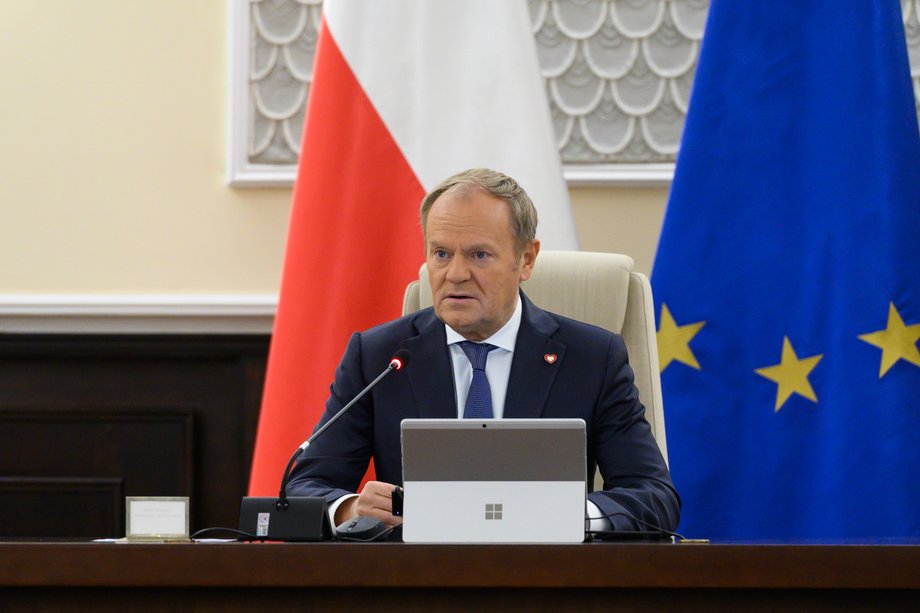
Prime Minister Donald Tusk
|
NurPhoto/Getty Images
Undecided voters are also more likely to lean towards critical opinions – 57%. assesses Germany's actions as definitely insufficientbut the percentage of unsure people is the highest among all the analyzed groups.
The most important conclusion from the study is: regardless of political sympathies, the majority of Poles believe that the issue of Germany's responsibility for World War II has not been closed. The debate on reparations and compensation is therefore not only a political dispute, but also a reflection of deeply rooted emotions and historical memory that still shapes Polish-German relations.
The survey was conducted on November 21-23, 2025, using the CATI&CAWI method, on a sample of n=1000.