The governments of the United States and Ukraine are currently discussing a framework for future peace negotiations. Representatives from both sides met earlier this week in Geneva, where U.S. government officials presented their Ukrainian counterparts with a 28-point plan to end the war. After the talks, both sides reported progress in a joint statement. However, they do not convey politeness in the information space the negative impact of the Kremlin's use of the United States' approach to negotiations.
In all negotiations, there should be one lead negotiator who engages the various parties. This person should have a clear understanding of all interests, constraints and restrictions that are relevant and should coordinate the activities of the negotiating team to maximize results. This is the basic principle of negotiationso it immediately seemed strange that the Trump administration chose not to follow it in its pursuit of peace mediation to end Russia's war against Ukraine.
Chaos and conflicting signals
For undisclosed reasons, the U.S. government decided to divide these duties between retired Lt. Gen. Keith Kellogg and businessman Steve Witkoff. Kellogg became special envoy for Ukraine, focusing on contacts with the Zelensky administration, and Witkoff became special envoy for peacekeeping, dividing his time between Moscow and activities related to the war between Israel and Hamas.
Kellogg has repeatedly stated that this arrangement is not a problem, however evidencethey point to something completely different. There were reports that Witkoff attended meetings with Vladimir Putin alone and communicated with him through a Kremlin translator, which constituted an error in US diplomatic protocol and could have led to a misrepresentation of the Russian side's position and intentions. Moreover, when the Kremlin began to protest against Kellogg's participation in the negotiation process, this started to fade into the background.
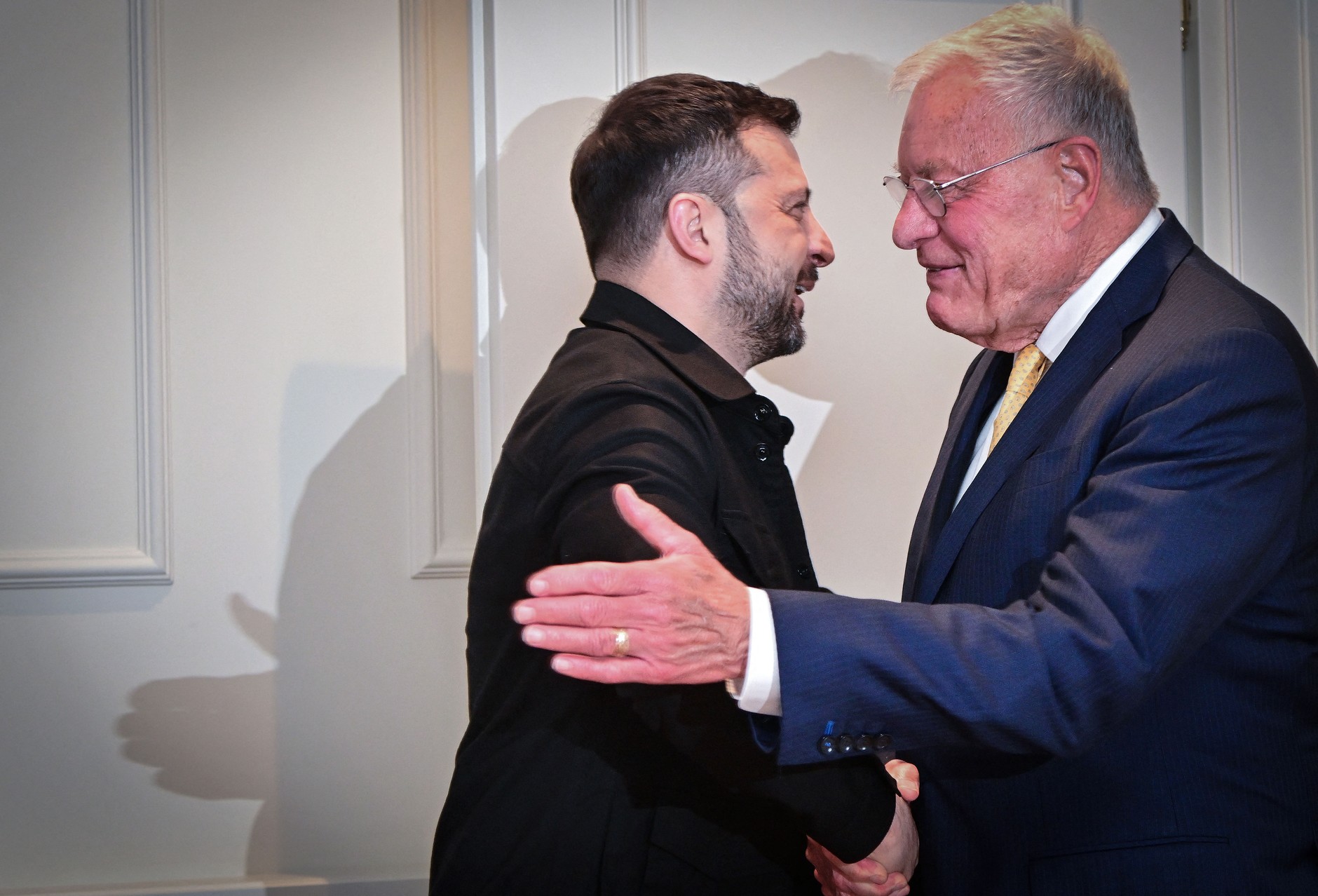
U.S. Special Envoy for Ukraine Keith Kellogg and Ukrainian President Volodymyr Zelensky in Rome, July 9, 2025.Tiziana Fabi/AFP / AFP
At the same time, Witkoff intensified his involvement. This included a multi-day meeting with Kremlin representative Kirill Dmitriev in Miami in October. There, they reportedly developed the basic elements of what later became the U.S. government's proposal to end the war.
The result of this US approach was an inability to put pressure on the Russians and a problematic framework for peace negotiations. Every time the United States was willing to apply pressure, whether through sanctions or additional military aid to Ukraine, The Kremlin was reaching out to peace through Witkoff or other actions long enough to delay any punitive measures. Currently, the Russian side has managed to influence the shape of the 28-point peace proposal of the United States government.
The 28-point plan wasn't entirely bad. It reflected the U.S. government's continued interest and commitment to the peace process. Another positive aspect was the fact that it included a guarantee of Ukraine's security from the US.
The article continues below the video
Nevertheless, the bad outweighed the good. The proposal included unspecified provisions that would make it easier for the Kremlin to invoke Ukraine's failure to comply with the provisions or for Russians to find ways to circumvent their implementation. It also called for the creation of a “Peace Council,” which might make sense for transitional administrations but is not appropriate for a peace process between sovereign states with functioning governments.
The plan takes into account U.S. and Russian interests such as arms control, economic relations, and a return to the G8 format, which should not be included in a peace agreement to end hostilities between Russia and Ukraine.
Furthermore, there is no provision for the establishment of a demilitarized zone along the entire proposed Line of Control or mechanisms for third-party implementation on the ground.
A faulty basis for further negotiations
These were just a few of many issues, but ultimately a 28-point proposal required too many concessions from Ukraine and too few from Russia. It was aspirational in nature and clearly favored a short-term declaration of peace over a sustainable and implementable peace process. Worse still, it has become a basis for the US government – that is, a reference point for current talks.
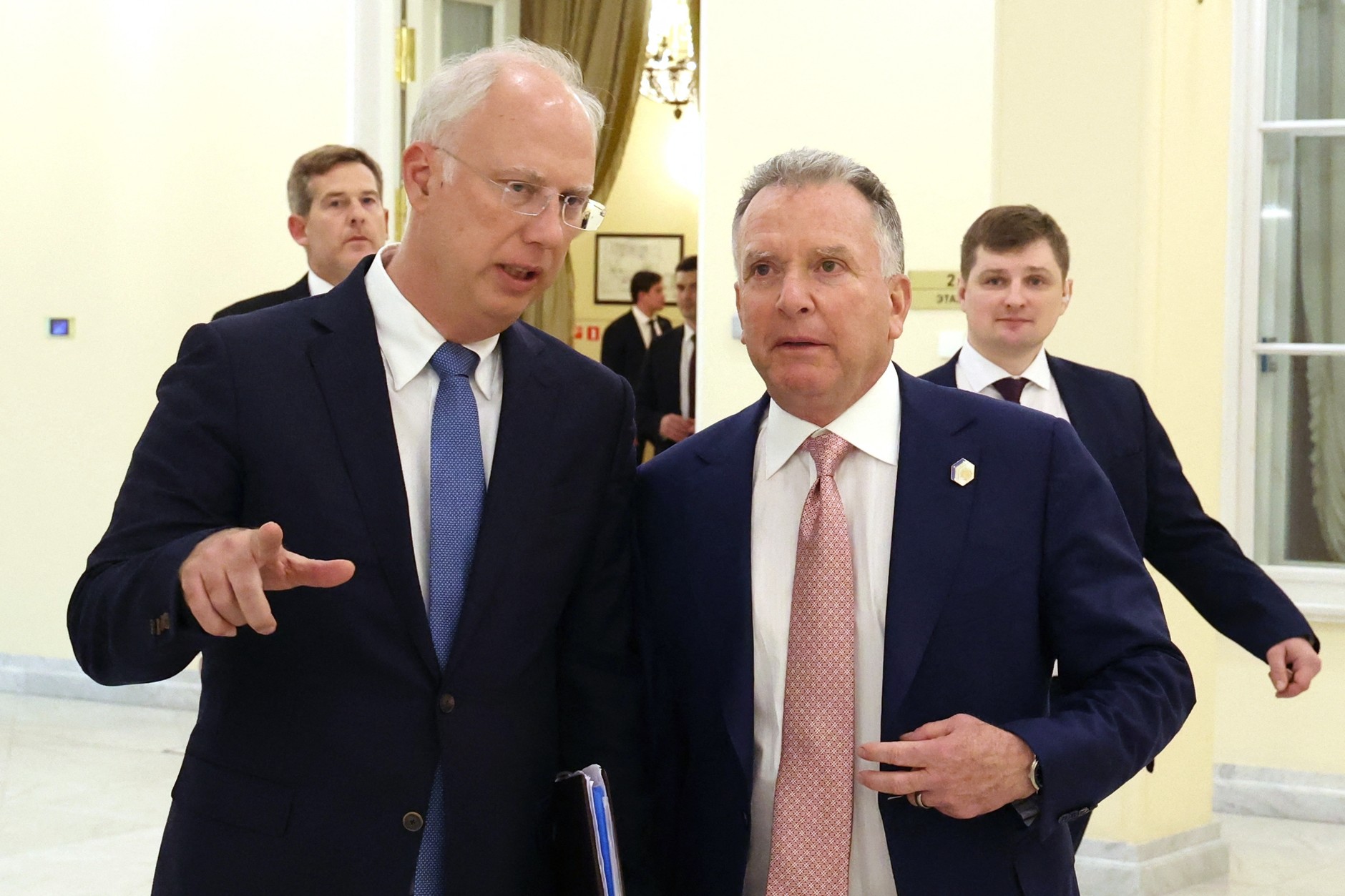
Kirill Dmitriev and US President Donald Trump's envoy Steve Witkoff in Saint Petersburg, April 11, 2025.VYACHESLAV PROKOFYEV / POOL / AFP / AFP
While there is no doubt that U.S. and Ukrainian working-level officials are doing their best to work with what they have, currently they operate on this flawed basis in negotiations.
This means that any agreement they reach will be unnecessarily focused on Kremlin goals, will leave serious structural gaps in implementation and oversight, and will undermine the foundations of lasting peace.
Unfortunately for Ukraine, Volodymyr Zelensky's administration has little choice in the matter. As President Zelensky noted, “at this moment, Ukraine may face a very difficult choice. Either the loss of our dignity or the risk of losing a key partner.” Accordingly, both sides worked on the United States' proposal, reportedly reducing the 28-point agreement to 19 points and eliminating any issues that violated Ukraine's necessary negotiating interests.
The Kremlin's strategy is based on two assumptions
Despite this conciliatory approach, the Kremlin will likely initially reject any compromise solutions reached by the United States and Ukraine. This will allow the Russian side to check what additional concessions it can obtain, which is consistent with its current approach. So far, sticking to maximalist demands has worked to her advantage.
Ultimately, the Kremlin's negotiating strategy is simple and based on two assumptions: firstly, that Ukraine's partners will lose interest in the war and withdraw their support; second, that its partners will not further increase Russia's costs. Therefore, the Kremlin will continue to exploit the Trump administration's desire to reach another short-term peace agreement and use all available tools and opportunities.
In fact, if the United States wants a just and lasting peace for Ukraine, the solution is the same as always: pressure on the Kremlin, aid for Ukraine, ceasefire negotiations, and postponing political issues until a complete cessation of hostilities. It will take more time, negotiation efforts and commitment, but today's work and difficulties will save many lives and prevent conflict from recurring in the future.
I’m Ashley Davis as an editor, I’m committed to upholding the highest standards of integrity and accuracy in every piece we publish. My work is driven by curiosity, a passion for truth, and a belief that journalism plays a crucial role in shaping public discourse. I strive to tell stories that not only inform but also inspire action and conversation.