60-70% of Europe's soil is already degraded, with another billion tonnes of soil lost every year, causing 74% of agricultural land to suffer from nutrient imbalances, according to a latest specialist report.
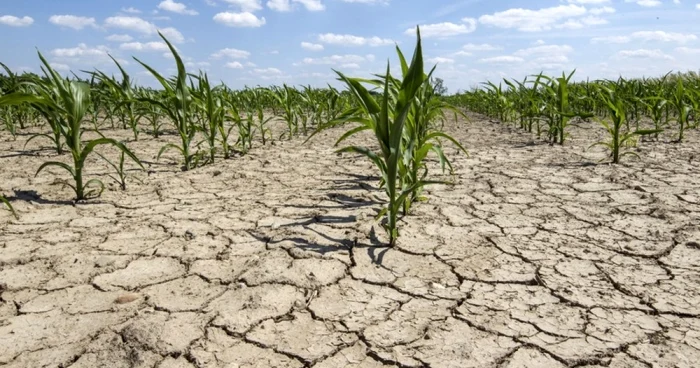
60-70% of Europe's soil is already degraded. Archive photo
A new global report by Aroura, IUCN WCEL and Save the Soil presents the Soil Security Framework, a practical way to restore soil health, build resilience and support climate, hydrological and food systems.
The report estimates that soil degradation costs the global economy more than $11 trillion each year, undermining global food security, biodiversity and climate resilience.
While 60-70% of Europe's soil is already degraded, each year another billion tonnes of soil is lost, leaving 74% of agricultural land suffering from nutrient imbalances.
To achieve global emission reduction targets, soil status (one of the 5 key aspects of the Soil Security Framework) must be restored globally. According to a report by the Aroura Soil Security Think Tank, IUCN's World Commission on Environmental Law (WCEL) and the Save the Soil campaign, the world's topsoils represent a considerable, largely untapped carbon reservoir, containing 45% more carbon than previously estimated, but unlike the atmosphere and oceans, soils do not enjoy binding legal protection under international law.
As we move beyond 1.5 degrees of warming, the report points out that 27% of the carbon emissions needed to be neutralized to keep global warming below 2 degrees can be captured in soils in good condition – a surprising solution to climate change mitigation that should have been discussed at COP30, where 70% of countries' NDCs ignore soil restoration in this context.
Nationally Determined Contributions (NDCs) are binding climate action plans that countries set as part of the Paris Agreement. They contain targets for reducing greenhouse gas emissions and strategies for adapting to climate change.
Carbon dioxide stored in the soil reaches the surface when the soil degrades
Continued degradation also risks the colossal reservoir of carbon in soils being released into the atmosphere. It is estimated that this could release 4.81 billion tons of CO2 – roughly equal to the annual emissions of the US. 40% of Earth's land is already degraded, and UNFAO predicts that up to 90% of land could be degraded by 2050.
The report also points out that current CO2 emissions from US soils alone are equivalent to the emissions of about 75 million cars. Furthermore, if 1% of the carbon in Europe's soils were released, this would be equivalent to the annual emissions of a billion cars.
Unlike the United Nations Convention on the Law of the Sea (UNCLOS) which regulates the oceans and the Paris Agreement of the UNFCCC which regulates the atmosphere, land does not benefit from a global legal framework for protection.
Praveena Sridhar, Technical Coordinator of the Save the Soil movement and co-author of the report, said that “we need to look at soil from a holistic perspective – such as the Soil Security Framework – to protect the many dimensions of soil as a living entity, including soil health, to meet our emissions targets”. “For too long, soil has been thought of as just earth. However, he is the living shell of the planet. Every inch of healthy, living soil is a microcosm of life and a storehouse of carbon and water. Protecting soil is not only an environmental duty, but also a generational responsibility, essential to mitigating climate change.” , added the co-author of the report.
Soil security framework
The report introduces the Soil Security Framework, a practical model for protecting and restoring soils on five levels:
· Capacity: Soil's inherent potential to support life and solve global challenges, from food and water scarcity to climate change mitigation and adaptation.
· condition: Current soil condition and productivity. Due to human impact, we risk losing this base through erosion and the loss of soil organic matter.
· Connectivity: How people understand, value and relate to soil. Urbanization, industrialization and environmental challenges are removing people from the soil, leading to a lack of legal measures to protect it.
· Capital: The economic value of soil ecosystem services, worth more than $11 trillion annually. Every dollar invested in soil regeneration can generate up to $30 in economic benefits
· Legislation: Legal and governance frameworks needed to protect soil. The timing is right, as the EU, the Pan African Parliament and the IUCN have taken steps towards adopting a legal instrument on soil security.
This approach changes the perspective on soil, transforming it from an agricultural variable into a strategic resource that underpins food security, water security, climate resilience and economic stability.
Report co-author Dr. Julio C. Pachón-Maldonado of the Aroura Soil Security Think Tank said: “We need to move beyond abstract discussions about soil. The soil security framework is a plan. It offers us 115 concrete ways to ensure soil protection, connecting the 23 functions, services [ceea ce face solul pentru noi] and threats to soil [principalele cauze ale diminuării funcțiilor și serviciilor solului] with the five dimensions that actually control its fate: the scientific, the economic, the legal, and our own human connection to it.”
A turning point for soil policies
In 2025, the International Union for Conservation of Nature adopted Resolution 007, which requires the development of a global legal instrument for soil protection. The European Union Law on Soil Monitoring and the Pan-African Model Law on Sustainable Soil Management are further steps towards recognizing soil as a global common good.
“Without specific targets for soil protection and restoration, countries rarely prioritize this aspect in their climate laws. Currently, there is no specific comprehensive international treaty or other mandatory legal instrument for soil security. Soil security requires coordinated initiatives by policymakers, farmers, companies, consumers, etc. to promote soil protection, including soil health. Therefore, it is essential that we continue to develop and implement more specific legal instruments regarding soil security. We need to change the current legal status of the soil to protect it and give it to future generations”said Dr. Irene Heuser, Chair of IUCN WCEL's Soil Law and Sustainable Agriculture Group.