The US is losing patience with the EU. They threaten to withdraw from their important role in the Balkans

The United States has threatened to reconsider its involvement in the affairs of this Balkan country, the Guardian newspaper reported on Saturday.
“The United States recognizes the lack of consensus in Europe regarding a European candidate and is disappointed that these divisions prevented the Peace Implementation Council (PIC) from fulfilling its task of electing a new High Representative. Europe's indecision and the PIC's renunciation of its own responsibilities towards BiH force the United States to reconsider its role in Bosnia and Herzegovina,” the American Embassy in Sarajevo wrote on Friday.
USA vs. EU in the Balkans. Diplomatic crisis around a key diplomat
European countries previously refused to support the US-preferred candidate for the new High Representative. During a session of the PIC – the international group responsible for overseeing the implementation of the 1995 Dayton Peace Agreement in BiH – Washington supported Italian diplomat Antonio Zanardi Landi, while Britain, France, Germany and most European countries supported France's envoy to the Balkans, Rene Troccaz.
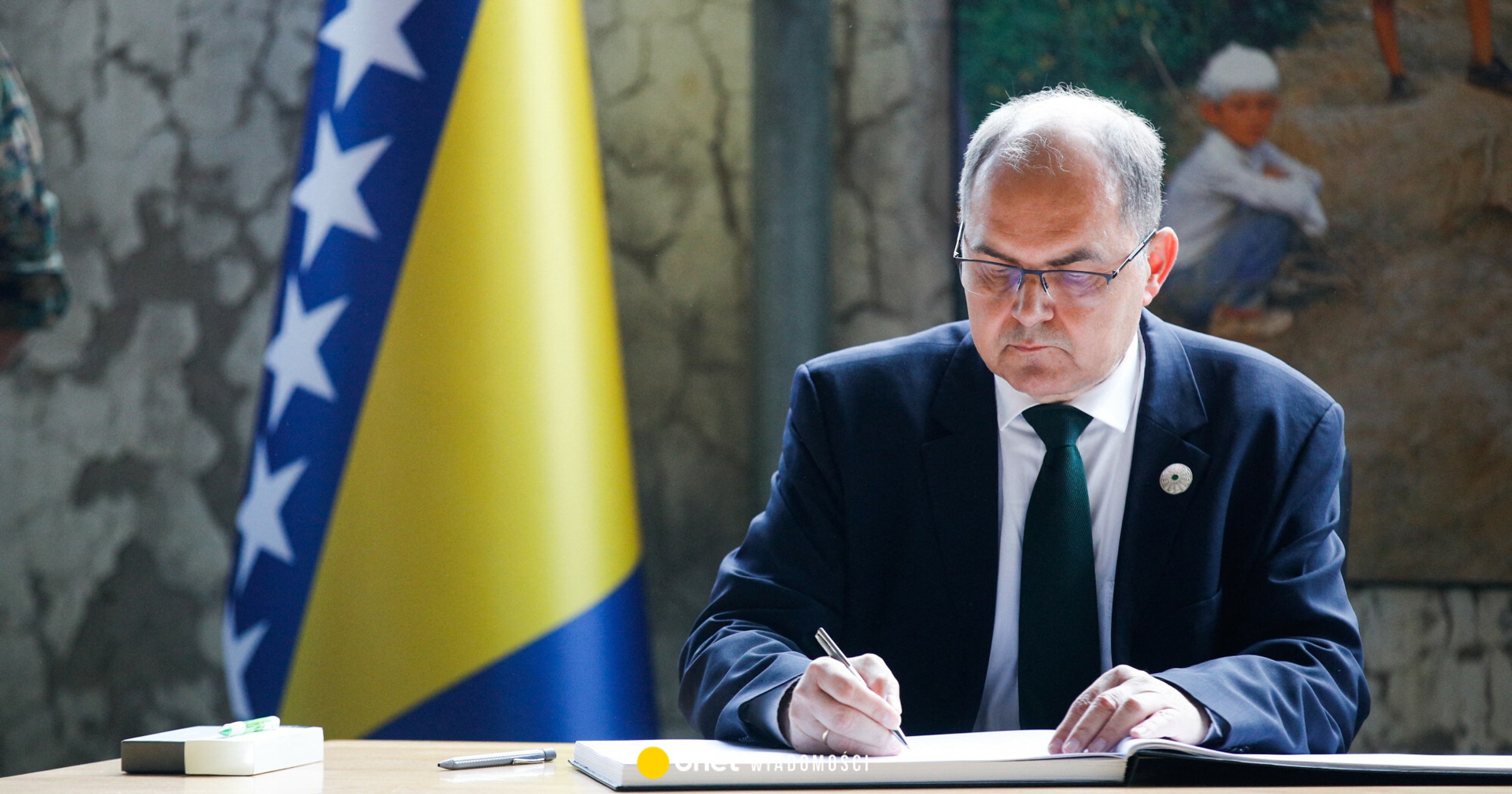
The current High Representative, German diplomat Christian Schmidt, announced in May that he was leaving office after five years in office. When he submitted his resignation, which he justified for personal reasons, he announced that he would remain in BiH until a successor was chosen.
Office of the High Representative. History and role
Schmidt's term was marked by conflict with Bosnian Serb leaders, especially the former president of the Serb part of BiH, Milorad Dodik. Dodik and his colleagues questioned Schmidt's mandate, arguing that he was operating illegally in BiH. Dodik's obstruction of the implementation of decisions made by Schmidt led to his removal from the position of president of Republika Srpska in BiH.
The PIC is scheduled to meet again at the end of June to attempt to elect a candidate for High Representative. Political scientist Jasmin Mujanović, commenting on the US-EU dispute for the Guardian, noted that “Americans seem to think that what Europeans think is irrelevant and assume that they will obey them.”
Kurt Bassuener, co-founder of the Berlin think tank Democratization Policy Council, commenting on the support provided by the US to Landi, said that “the Americans' position results not only from ideology, but also from business pressure, and it seems that this is the most important issue: obtaining concessions and contracts.”
Vedran Dżihić from the University of Vienna, in turn, noted in an interview with the Balkan editorial office of Radio Free Europe that “the cracks between the US and the EU can no longer be hidden.” — So far, we have assumed that the consensus and common position of the US and Europe are a guarantee of the stability of Bosnia and Herzegovina, the expert warned.