The mysteries of the village of Bulza, hidden in the forests crossed by the “highway with tunnels”. Why are there only five families here


Hidden between the frequent forests on the border of Timiș, Hunedoara and Arad counties, through which the “highway with tunnels” takes place, the village of Bulza seems detached from the legends about haiduci, mines of gold and lost treasures. Today, only five families live permanently here.
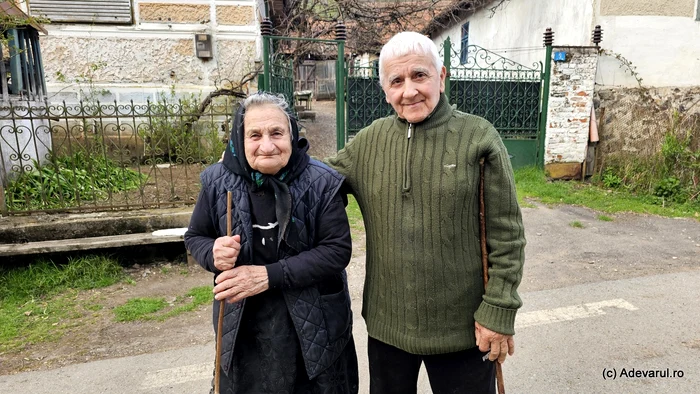
Ioan and Maria, among the few locals in Bulza. Photo: Daniel Guță
Five families still live permanently in the village of Bulza (video), from Timiș county, a settlement full of legends, hidden at the end of some forest roads that separate the counties of Hunedoara, Timiș and Arad.
In order to reach the village of Bulza, from Arad, the travelers travel the industrial road on the left bank of Mures and then sink into the forests that cover the hills, for another seven to eight kilometers, to the first houses in the village.
Over the hills, the old roads that connected the Bulza to a few other small villages of the commune of Margina and the lands of Timiș and Hunedoara were swallowed by forests and are no longer practicable.
“Highway with tunnels” (video) will pass at 5–6 kilometers from the Vatra of Bulza village, and the road nodes at Margina and Holdea are also close. However, in the absence of roads over the hills, the locals are forced to bypass the Mureș Valley to reach the Lugoj -Deva highway.
Old over eight centuries, the village of Bulza was established in the medieval era by Romanians who either took refuge from some invaders, or wanted to live far from the feudal estates. The wooden church, erected in the early years of the 19th century, remained the oldest place in the Banat village.
The village with a few families and a monument church
Around her, strung on the valley of a stream that creeps between the hills, there were almost 120 households. Many of them were abandoned, over time, especially after 1980, when the village school, now a ruined building, was closed.
“The school in the village was only for grades I-IV. In 1979, our daughter was one of the last students from here. Then there were no children at the village school. The locals sent them to the boarding school, in close villages, as Margina or Topolovăț, then, over time, many moved from here. It is difficult to keep in touch with ours, living here ”, says Maria Ticula, an old woman who, together with her husband, Ion, are among the few natives of the village of Timisoara.
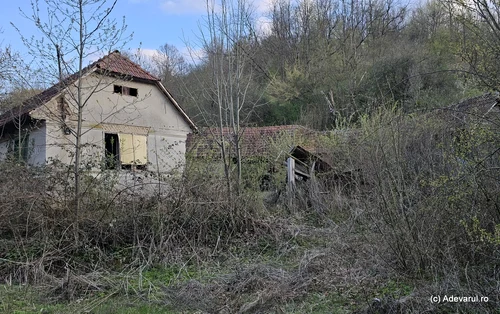
Image 1/15:
Bulza Village Photo Daniel Guță Adevărul (34) JPG
For several years, the road in the village has been paved, but the other roads that reach Bulza have remained ground and are hard to reach. For other locals, the settlement remained a corner of tranquility in which they retreat at the weekend.
“It is a wonderful place, even though the road is missing and the people as they once were, lived. Today it was Maslu, which is why the village was more animated, but in some days when they come here it is a quiet silence only by the rustling of nature.” says a woman who came here on the weekend.
The mysteries of Bulza village
The village of Bulza hides a few strange stories. In the interwar years, when the village belonged to Severin County, a mine of Blenda, Pirita and Galena, whose remnants were included by the forest, operated. Some locals reminded that, in the time of Austro-Hungarians, there was also a gold mine in Bulza and antimonium was exploited.

Image 1/22:
Bulza village of Timiș Photo Daniel Guță Adevărul (85) JPG
A local legend about Bulza revealed that one of these me remained a huge precious metal. The one who had discovered him would have ended, after returning to the old gallery leading to the gold vein, and her ceiling collapsed over him, burying him forever. The locals knew the story, but they did not dig after gold, in the gallery, and the mine was forgotten.
Another variant of the legend says that the haiduces, who used to withdraw in this isolated place, would have hidden a great golden treasure here. The village of Bulza, now inhabited by several old families, visited by others at the end of the week, seems stubborn to withstand the passage of time, along with his legends.