Ten years since the massacre in Paris » Terror in the center and near the Stade de France, “prisoners” in the stands and in the dressing rooms


Article by Aurelian Botezatu – Published on Thursday, 13 November 2025, 15:21 / Updated on Thursday, 13 November 2025 15:23
On November 13, 2015, three Islamic State (IS) commandos committed horrific acts of violence in Paris almost simultaneously. 130 people died, hundreds were injured. Caught in the middle: the national teams of France and Germany.
Coincidence or not, ten years after those attacks they are playing again at the Stade France. It's no longer France vs. Germany, but France vs. Ukraine, in the 2026 World Cup qualifiers. But the memory of that day on November 13, 2015, and the massacre from that time still lingers.
On the morning of the match against France, the Germans had to evacuate the hotel because of a bomb threat!
The morning of that day started with a shock for the German national team! An anonymous bomb threat had been received at their hotel, the Molitor. Some players had just returned to their rooms from breakfast or were already participating in an activation session in a special room when the alarm went off.
Security personnel from the German Football Federation (DFB) knocked on the doors and asked the footballers and technical staff to leave the hotel and complete their warm-up training at the nearby Roland Garros tennis complex. Meanwhile, the building was searched with dogs for explosives. But nothing was found. False alarm? Rather a warning!
The first bomb was detonated at 21:20 in front of the Stade de France
In the evening, at 21:20, the first bomb detonated in front of the Stade de France. A few minutes later, another loud explosion rang out, in the first half of the France-Germany match. Outside the stadium, in addition to the three attackers, an innocent witness was killed.
That there weren't more casualties was either a fluke or a miracle. Fortunately, the terrorists made mistakes in their treacherous plans. The law enforcement officers who denied the attackers entry to the stadium, because they did not have tickets, became saviors.
Guest of honor François Hollande, then President of France, was briefed in the stadium's control center by the Ministry of Security about events outside the arena. Later, including about the horrible events that took place in the city, but also about another explosion, near the stadium.
The terrorists had attacked the “Bataclan” club, where they committed a real massacre. They also opened fire on the terraces of several cafes and restaurants in the crowded 10th and 11th arrondissements. The final tally: 130 dead and hundreds injured.
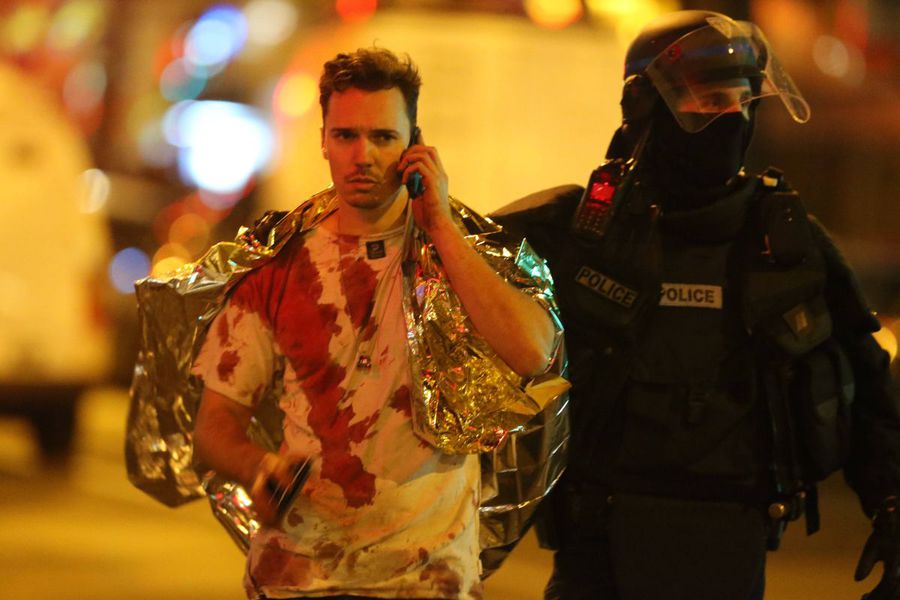
One of the survivors of the Bataclan attack, led to the rescue by an anti-terror police officer / Photo: Imago
The players and spectators were only informed about the terrorist attacks at the end of the match
The German Football Association (DFB) has also been informed – including by the home authorities. Discussions were then held with the French security agents about how best to proceed in the arena. And the decision was not to abandon the match and, for now, not to publish any information about the attacks around the stadium.
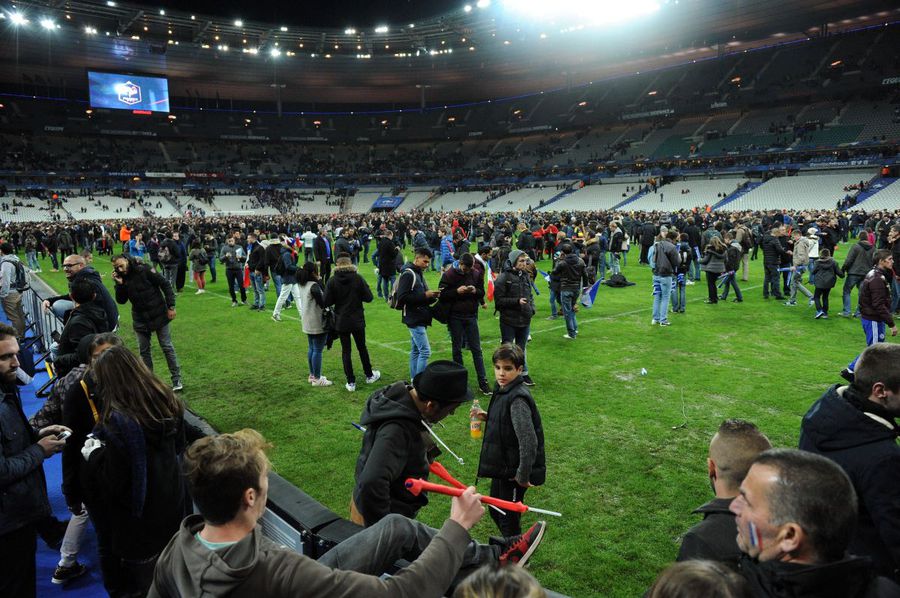
Thousands of fans were detained by the police at the Stade de France, in order not to be exposed to new attacks / Photo: Imago
The stadium was closed to prevent terrorists from entering. Even the mobile phone network was deliberately cut off at one point to prevent viewers from receiving information about what was happening in central Paris. These measures were intended to prevent mass panic.
Both teams were therefore only informed of the bombings after the final whistle, when security quickly asked them to go to the changing rooms – while thousands of fans remained “prisoners” inside the arena. The locker room and catacombs became a safe haven for German stars.
The teams of Germany and France stayed in the dressing room until the morning!
The area was guarded by heavily armed anti-terror police. Stadium staff procured extra mattresses and brought numerous cold drinks from the VIP area. Warm meals such as pasta and fruit were also available. What was missing? Sufficient chargers for the players' mobile phones, because they really wanted to be informed about the dangers of Paris via the Internet. Most had left their devices at the hotel. And the sockets in the locker room were rare.
The German players remained at the Stade de France, in the dressing room, until the next morning. The DFB chiefs decided that the team would not return to the hotel. DFB staff recorded the codes of the safes in their rooms, a list was drawn up of the belongings to be retrieved from everyone's safes and rooms, and once collected, they were packed into blue bin bags and taken straight to the airport.
The Germans later called off their match against the Netherlands in Hanover due to another terror threat
Around 5:00 in the morning, the Germans left for the airport, escorted by French anti-terror police. The plane was parked in an isolated spot at the far end of Charles de Gaulle Airport. Without being screened, the team, staff and accompanying journalists were led onto the runway and boarded the aircraft. Destination: Frankfurt am Main. Landing, around 10:00.
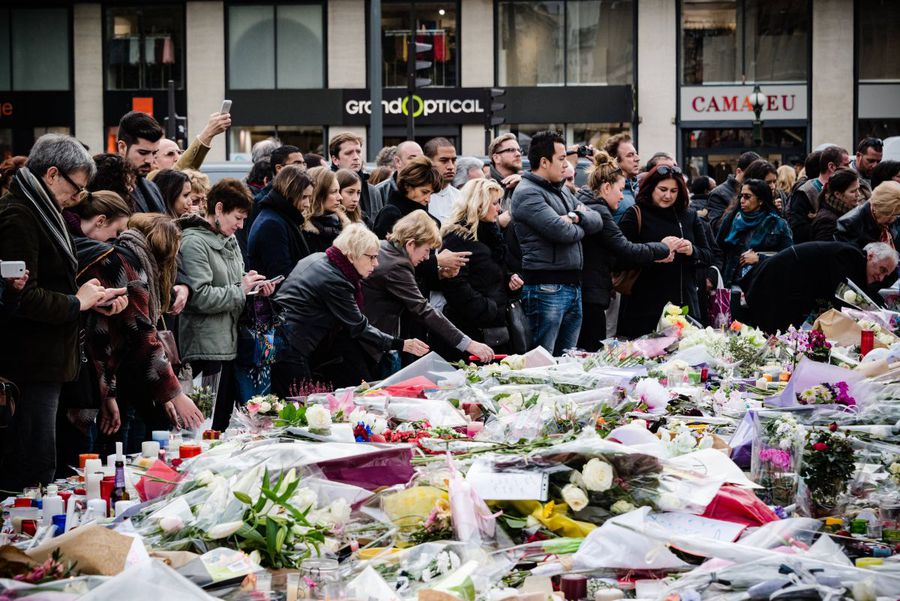
Tribute to the victims of the terrorist attacks of November 13, 2015 / Photo: Imago
But the Germans did not escape the terror. Four days later, on November 17, they had to play the Netherlands in Hanover. But shortly before the starting whistle it was decided to cancel the game. The reason? A new terrorist threat.