How Italians remember Gică Hagi and Răducioiu » “Cinderella with heels as hard as marble and the sour face of a farmer moved to the city” + “When she entered the square, her light bulb went out!”


Article by Daniel Scorpie – Published Sunday, December 14, 2025, 5:19 p.m. / Updated Sunday, December 14, 2025, 5:32 p.m.
In the same issue of Sport Week magazine, a weekly supplement published by Gazzetta dello Sport, in which the story of Cristi's arrival appeared Chivu TO Interthe Italians make a portrait of the most representative Romanian players, among the 80 who passed through Serie A in the last century.
The list of foreigners is obviously opened by the “King” of Romanian football. which the cited publication presents from a rather unfriendly angle:
“Gheorghe Hagi was the biggest of them all, a Cinderella (he wore size 39 shoes and had wide feet and heels as hard as marble), with the sour face of a farmer who lived in the city and who, with his psychedelic left foot, he held the ancient secret of football.
“Hagi was a king, he acted like one. Arrogant, cocky, brilliant. He wore the number 10 shirt, loose as a cloak”
He was a king and acted like one. Arrogant, conceited, brilliant. He wore the shirt with no. 10 as a cloak, with the same ease. He set off fireworks for Brescia, two seasons in the mid-90s.
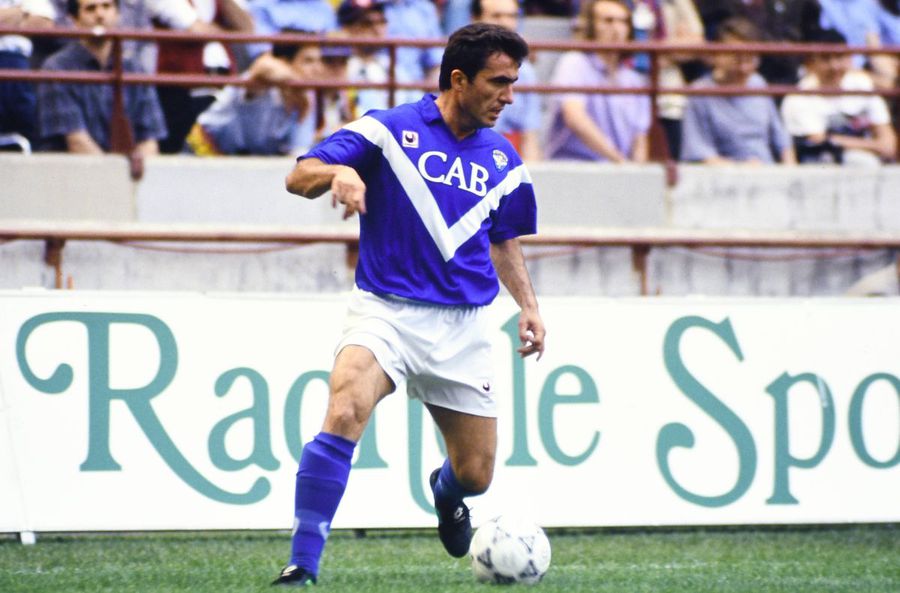
Gică Hagi in the Brescia shirt / PHOTO: Imago
He came from Real Madrid and after Italy he returned to Spain, playing for Barcelona. This succession of teams should be enough to illustrate its uniqueness.”
Sport Week writes that “currently, the most famous is Cristian Chivu, former defender at Roma and Inter, now on the Nerazzurri bench. Before and during him, Romania has always been an interesting reservoir for Serie A. Every footballer has a story, every story, a destiny that was more or less fulfilled.
“Hooped from exhaustion and panting, Petrescu cursed the person who made him do this after the first training”
Dan Petrescu came from Steaua Bucharest and had already played about 20 matches for Romania. At the end of his first training session with Zeman in Foggia, he stopped, hunched over from exhaustion, and, panting, cursed whoever made him do this.”
Then, the Italians targeted Radu, “whose full name is Ionuț. The goalkeeper became a meme, blamed for a missed takeover and a lost championship – so said the furious Inter fans in 2022 – even if it wasn't entirely his fault.
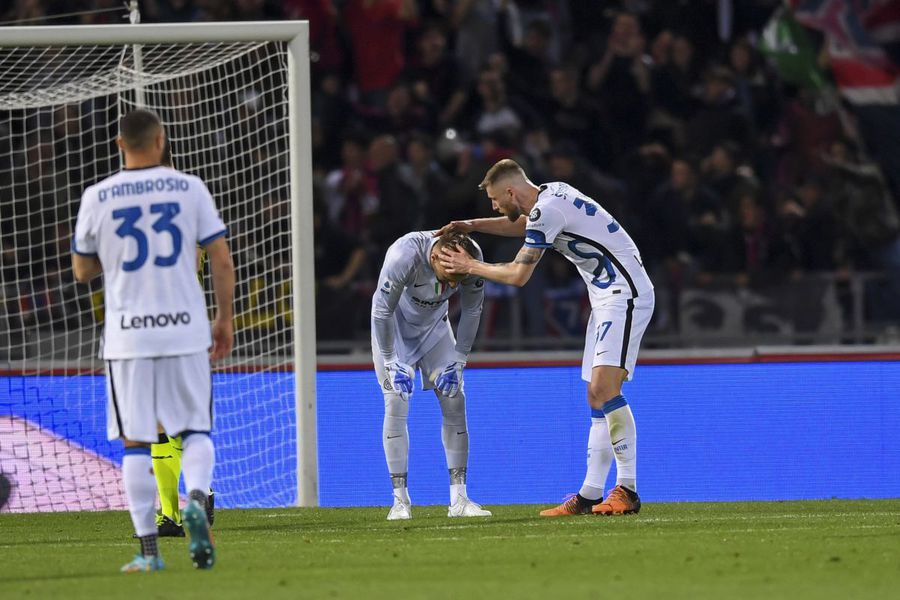
Few of the colleagues from Inter (Milan Skriniar was among the exceptions) went to console Ionuț Radu after he “buried” Inter in Bologna / Photo: Imagi
Another Radu, the defender Ștefan, was a symbol at Lazio and, with 349 appearances in Serie A, boasts the longest career of all the Romanians in our league”.
Among those praised in the magazine published by Gazzetta dell Sport is “the fabulous young Adrian Mutu, who, after making a sensation in his native country with Dinamo Bucharest, arrived at Marcello Lippi's Inter in the early 2000s. It was the right team at the wrong time. He had to step back and start over in the province, in Verona.
“Mutu, came to the right team and the wrong time. Then blossomed like a flower comforted by an unexpected ray of sunshine”
There it blossomed, like a flower comforted by an unexpected ray of sunshine. Parma, Juve, his best period in Florence, then Cesena.
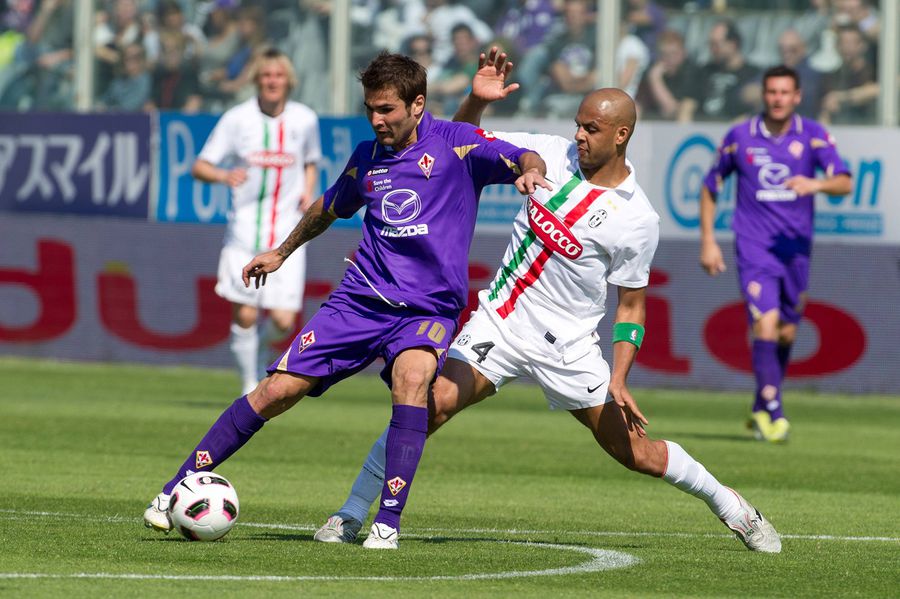
Adrian Mutu vs. Felipe Melo in Fiorentina – Juventus 0-0, April 17, 2011 / Photo: Imago
Bright moments and gray afternoons, suspended for testing positive for cocaine, hell, rebirth. With the 103 goals scored in the championship, Mutu is still the most prolific Romanian footballer so far.
In the chapter of disappointments, the Italians passed Dennis Man, “another talent, who wanted to be a tough guy – and he wanted to be Mutu too – but his recent experience at Parma has been marked by top technical displays and irritating football breaks”.
The “gloomy Ciprian Tătarușanu, who suffered from astigmatism. It was not the best thing for a goalkeeper.
He remained at Milan as a reserve for three seasons, compensating – or so the club doctors assured – with a spontaneous focus, achieved through the staring of the eyes when he saw the opposing striker shoot.
“Răducioiu was too fast for the cameras, he missed in the most unimaginable ways! Contra, nicknamed Nosferatu by fans”
Sport Week couldn't ignore the “Romanian colony of Brescia” either: “Florin Răducioiu was an unstoppable counter-attacking player. He was so fast that, in the television reports of the time, he often ended up outside the frame of the camera.
A complete centre-forward with only one flaw. When he entered the box, he had total memory loss. His light bulb was going off. It was wrong in the most unimaginable ways, always by excess, never by deficiency.
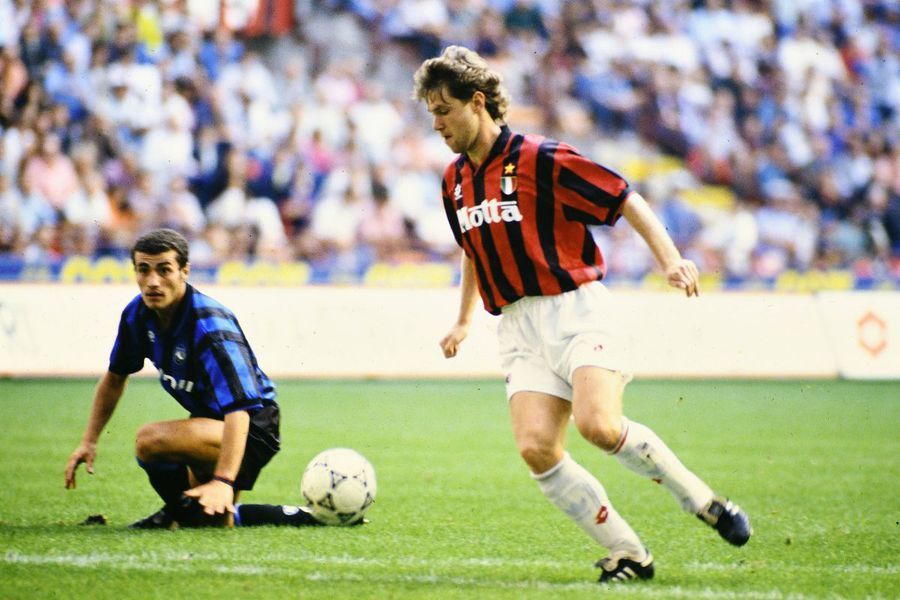
Florin Răducioiu in the shirt of AC Milan PHOTO Imago
In Italy, he played for Bari, Milan, Verona and Brescia. “Gialappa's Band” celebrated him as Pippero (no – category reserved for players with the worst marks, in a satirical show on Italia 1 broadcast between 1990 and 2001), and even today he is remembered for his boomerang shots.
Together with his compatriots Gică Hagi, Ovidiu Sabău and Dorin Mateuț – with coach Mircea Lucescu – he created a small Romanian enclave in Brescia in the mid-90s”.
“Gică Popescu, monumental in his speed and perfectly tactical”
Two other representative “tricolors” are characterized in antithesis. Gheorghe Popescu, also known as Gică, is one of the eternal children of his country's football.
He wore the shirts of the most famous clubs in Europe (PSV, Tottenham, Barça, Galatasaray), and in Italy we remember him, already at the age of 34, at Lecce, monumental in its speed, but perfectly tactical.
AC Milan fans had a mocking nickname for Cosmin Contra: Nosferatu. And the extreme right Marius Lăcatus, on the other hand, is a memory that takes us to Fiorentina after Italy 1990.
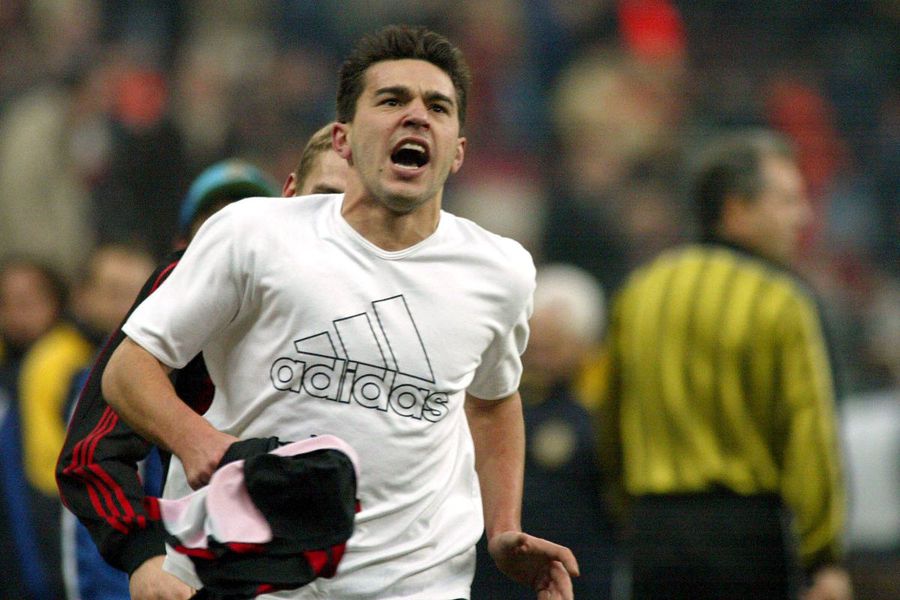
The indescribable joy of Cosmin Contra after the goal scored in Inter – AC Milan 2-4 from October 2001 / Photo: Imago
The fans of Stella, where he had shone, adored him. And they nicknamed him “The Beast”. “The beautiful one”, meaning his wife, Mariana, was his most ardent fan and did not hesitate to face anyone who dared to challenge her husband”.
“Stanciu seems to have the most promising technical quality”
Sport Week also lost sight of the first post-war Romanians: in the 1947-1948 season, Nicolae Simatoc signed with Inter, and Josef Fabian.
“A native of Transylvania, transferred from Torino, who won the title with Valentino Mazzola's legendary team, then moved first to Lucchese and then to Bari”.
Coming back to the present day, the Italians note Pisa midfielder Marius Marin, Udinese goalkeeper Răzvan Sava and Genoa attacking midfielder Nicolae Stanciu: “The latter seems to have the most promising technical quality.
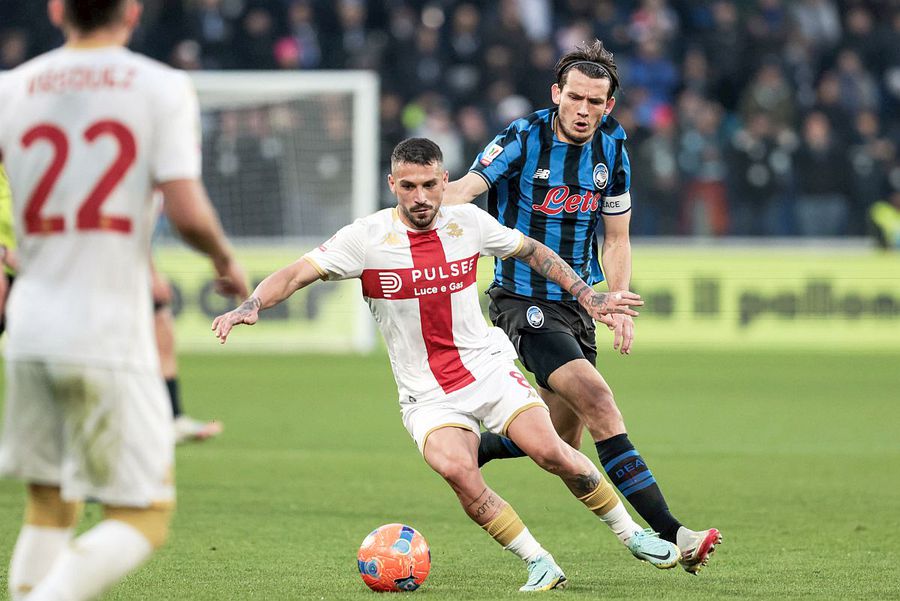
Nicolae Stanciu, in action in Atalanta – Genoa // photo: Imago Images
Viorel Năstase, a player for Catanzaro since the early 80s, when Italy reopened its borders, also had a varied repertoire. A Star star in 1979, he disappeared one night after a Cup Winners' Cup match in Bern with the Young Boys and was nowhere to be found.
“Women, going out to nightclubs, alcohol and various vices. Viorel Năstase loved the good life, but on the field, total apathy”
Romania was at that time under the terrible dictatorship of Nicolae Ceaușescu. Hiding was one of the options considered by those who could afford it.
Năstase appeared a few days later at the Swiss embassy, requesting political asylum. He sat out for a year, then signed with Munich 1860, performing well in the Bundesliga.
In the summer of 1981, Catanzaro's president, Adriano Merlo, paid 400 million Italian pounds for the transfer. Women, night clubbing, alcohol, various vices. Năstase loved the good life, but on the field, total apathy.
He spent two and a half years at Catanzaro in Serie A and Serie B, scoring a few goals and then disappearing overnight, magically leaping over walls and borders mid-season and leaving the typical impression of unfinished'.