The official campaign before the parliamentary elections in Hungary started on October 23. On the same day, two large rallies of rival camps were also held: supporters of Prime Minister Viktor Orban and his current opponent and former close associate, Peter Magyar. These demonstrations showed not only how deep the political divisions in Hungary are today, but also how turbulent the future of the country may be in the coming months.
Viktor Orban, the longest-serving prime minister in modern Hungary's history, faces the greatest threat since he took power 15 years ago. His dominance may be challenged by a new – and at the same time well-known – player on the political scene, Peter Magyar. The rallies that took place in Budapest on the day of the national holiday commemorating the anti-Soviet uprising of 1956 clearly showed how deep the split between the two camps is.
The political game Orban has been playing for years is now starting to get out of his hands.
The banners of Orban's supporters carried the slogan: “We don't want to die for Ukraine!”. The prime minister presented his Fidesz party as a “force of peace”, unlike – as he put it – “war mongers from the European Union who are sending weapons to Ukraine”.
Hungary sided with peace. The Russian-Ukrainian war is not our war
– Orban said to the gathered crowds.
Meanwhile, Peter Magyar accused him of turning from a young, anti-communist activist into “the Kremlin's most loyal ally.”
Orban is constantly breaking down the unity of the European Union, blocking aid to Ukraine and maintaining close relations with Moscow, so both Kiev and Brussels are anxiously awaiting the results of the parliamentary elections scheduled for April 2026.
— Orban's victory would have very serious consequences, said a senior EU diplomat in an interview with the Kyiv Independent website.
Orban, 62, has ruled the country continuously since 2010, when his Fidesz party won a landslide victory in parliamentary elections. Since then, the group has consistently maintained power.
The Prime Minister describes his system as “illiberal democracy”. It is based on national and conservative values, opposing immigration, LGBT+ rights and the growing role of the European Union.
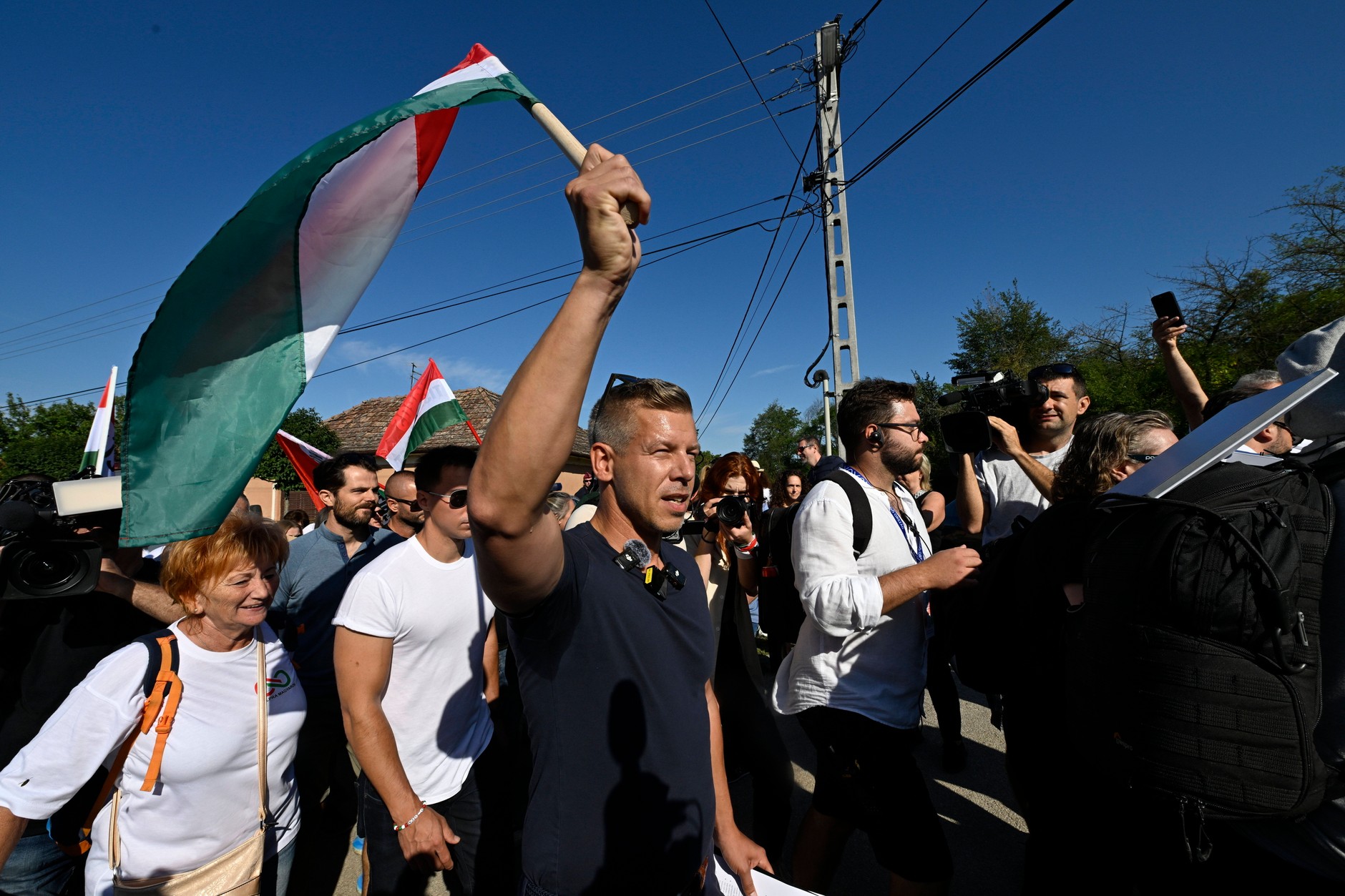
Peter Magyar, leader of the Hungarian opposition Tisza party, at a rally in Kotcse, Hungary, September 7, 2025.SZILARD KOSZTICSAK / PAP
Many accuse Orban of undermining the rule of law and perpetuating systemic corruption. The Hungarian prime minister is in a dispute with Brussels, as a result of which the EU has frozen approximately USD 20 billion from Hungary. (approx. PLN 82 billion) funds.
Since 2022, Orban has been opposing aid for Ukraine and blocking talks on its accession to the European Union.
Orban hoped that after taking power again, US President Donald Trump would introduce changes in Western policy, especially in relation to Russia. However, Trump's strategy focuses on encouraging Europe to stop importing Russian energy resources, which Budapest firmly rejects.
The vast majority of the oil purchased by Hungary comes from Russia and is transported via the Druzhba pipeline. In addition, Rosatom, the Russian monopoly in the field of nuclear energy, is leading the expansion of the Paks II nuclear power plant.
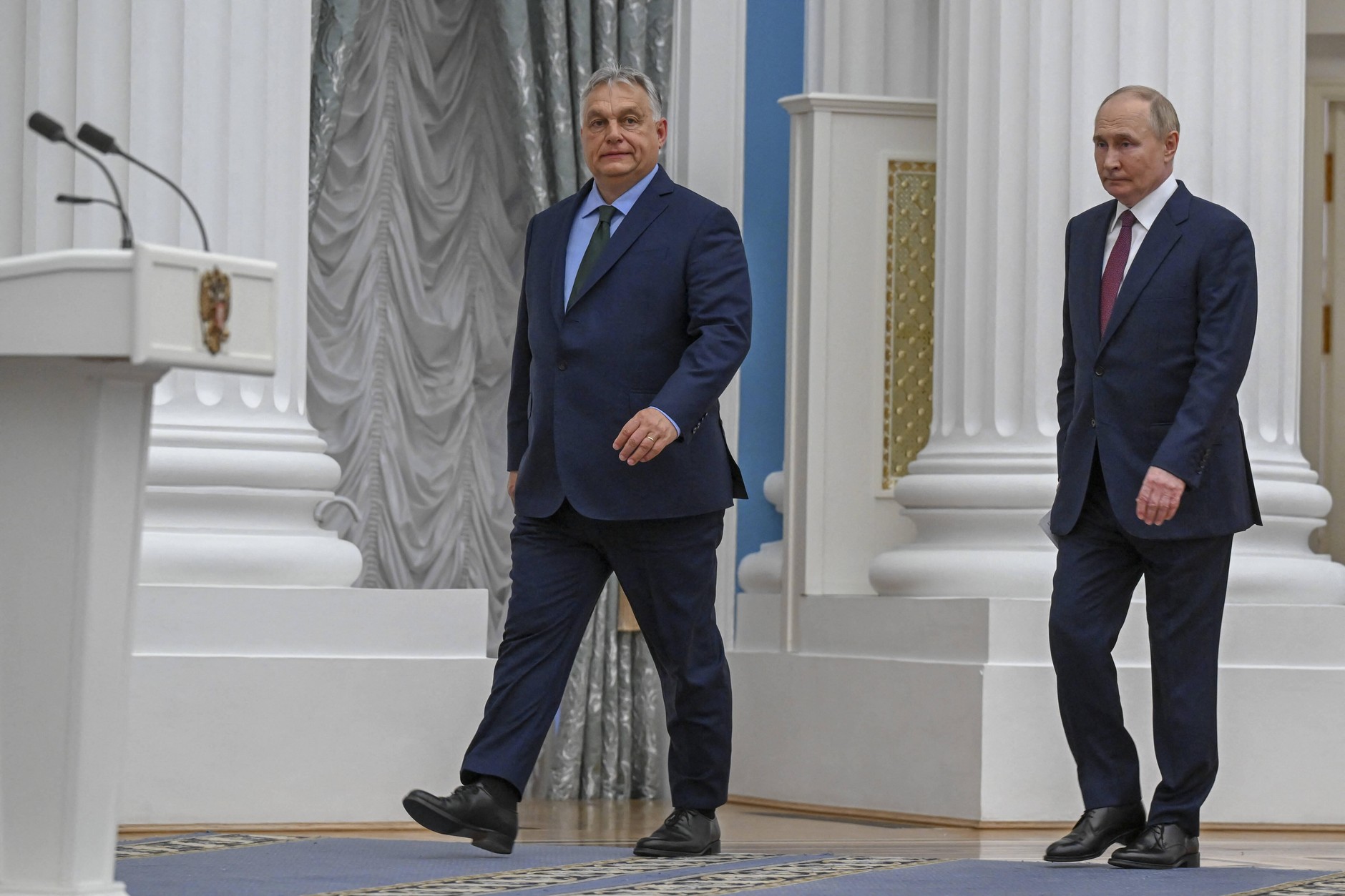
Orban was also one of the few EU leaders who met with Vladimir Putin during the ongoing war. This sparked sharp criticism from European partners.
Hungarian Prime Minister Viktor Orban and Russian President Vladimir Putin during a joint press conference after their meeting in the Kremlin. Moscow, Russia, July 5, 2024AA/ABACA / PAP
Enemy from Within: A former ally rebels
Peter Magyar was a little-known Fidesz lawyer for years. He was the husband of Judit Varga, former Minister of Justice and close associate of Orban.
His name first hit the headlines in February 2024 when he left the party with a bang, publicly criticizing pardoning a person convicted of covering up pedophilia cases. This case shocked the whole of Hungary and caused one of the biggest political crises in recent years.
From that moment on, Magyar became a strong opponent of Fidesz, openly denouncing on social media the ubiquitous corruption and nepotism among Orban's people. He soon joined the small Tisza party, and then quickly became its leader, becoming the government's main rival.
The center-right Tisza party won almost 30 percent. votes in last year's European Parliament elections, and most polls indicate that it has now caught up with Fidesz. Magyar describes his views as “critically pro-European, liberal-conservative”, distancing himself from both Orban and the traditional left.
To curb the rise of his popularity, Fidesz began to present Magyar as “Brussels puppet” and Ukraine's ally. Orban himself even went as far as to claim that Kiev openly supports the Hungarian opposition. This year, both countries also accused each other of espionage.
Although Magyar is cautious in his statements about the war, he personally delivered humanitarian aid to Kiev, and Orban's government “survey” on Ukraine's EU membership [pytano Węgrów o ich stosunek do akcesji Ukrainy do Unii Europejskiej] he described it as “pure propaganda”.
The article continues below the video
Clash between Brussels and Moscow
Hungary's opposition leader has accused Moscow of trying to interfere in the upcoming elections, saying it is using “disinformation campaigns, cyber operations, as well as intimidation” to influence voters.
At the same time, Magyar announces that it will strive for “pragmatic relations” with Russia and does not plan to suddenly cut itself off from Russian oil.
Nevertheless, observers emphasize that after so many years of Fidesz's dominance, it will be difficult to talk about fair elections. Unlike Tisha, Orban controls vast state resources and a vast media empire.
On the other hand, the ruling camp is burdened corruption scandals and economic slowdownwhich could give Peter Magyar an advantage.
I’m Ashley Davis as an editor, I’m committed to upholding the highest standards of integrity and accuracy in every piece we publish. My work is driven by curiosity, a passion for truth, and a belief that journalism plays a crucial role in shaping public discourse. I strive to tell stories that not only inform but also inspire action and conversation.