The US is playing with NATO. Their decision may turn out to be an “invitation to Russia”


This decision was made at a moment increased anxietyafter increasingly frequent violations by Russia in NATO airspace, including Romania. It also coincides with the US president's apparent desire to “redouble efforts” to persuade Russian President Vladimir Putin to reach a ceasefire in Ukraine.
Before the official announcement, three U.S. and European officials who asked not to be named told the Kyiv Post that in internal discussions Initially, reductions were considered in both Romania and Polandbut the final decision concerned only Romania. This distinction highlights the complexity of geopolitical calculations.
The reasons for the cuts are related to the Pentagon's broader strategy, which assumes focusing resources on the Western Hemisphere and better countering China in the Pacific.
This is consistent with an ongoing Pentagon review examining U.S. European Command missions. The goal is resource release for the purpose of shifting to the Western Hemisphere and the Indo-Pacific region, i.e. the main areas of US strategic competition and domination.
However, this is difficult for a region that is still struggling with the consequences of Russia's invasion of Ukraine.
Retired US Army Colonel Richard Williams, former deputy director of NATO's defense investment division, told the Kyiv Post on Tuesday: “There are no obvious or tactical reasons for withdrawing the NATO brigade from Romania.”
The article continues below the video
An invitation to Russia
President Trump recently met with the new President of Poland, Karol Nawrocki, and guaranteed that the number of American troops in Poland would not be reduced.
During the meeting, Trump reportedly said that the United States had “never even considered” withdrawing troops from the country. “We are with Poland until the end” – he emphasized. This promise brought some relief in Warsaw.
Justyna Gotkowska, deputy director of the Center for Eastern Studies (OSW), emphasized the importance of this assurance, although she drew attention to the continuing concerns about a broader US presence in Europe. In her opinion, reductions in the region “will be perceived by Russia as an invitation.” The expert drew attention to the key “deterrent value” of the US military presence on the north-eastern flank.
She also told a Kyiv Post correspondent that rotational units — such as those currently stationed in Romania — are “the easiest to withdraw.”
Poland currently hosts up to 10,000 people. rotational troops of the United States forces, as well as the headquarters of the V Corps.
The move also came in the context of the U.S. Army announcing that the 3rd Infantry Division had taken over command of the U.S. military mission in Romania, which aims to strengthen NATO's eastern flank.
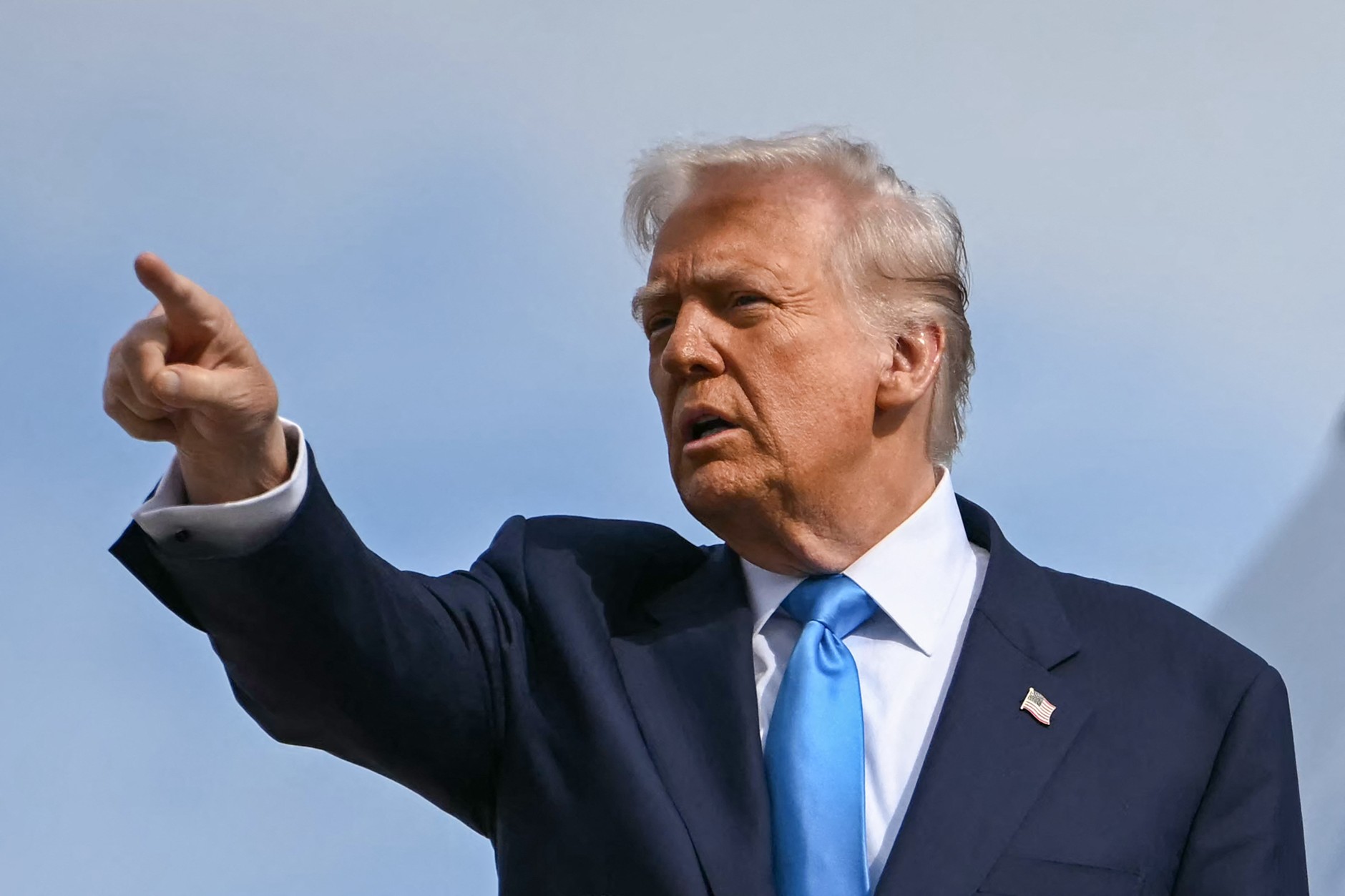
US President Donald Trump, Tokyo, October 29, 2025.Andrew Caballero-Reynolds / AFP
Debates in the Pentagon
This week, the 3rd Infantry Division took command of Army operations in the Black Sea region, leading a task force of approximately 3,000. soldiers during a nine-month mission.
The unit replaced the 1st Armored Division on Monday during a ceremony at Mihail Kogalniceanu (MK) Air Base – the main center of American forces in Romania.
Operations include missions in Romania, Slovakia, Hungary and Bulgaria. During its mission, the 1st Armored Division task force “accelerated U.S.-NATO command and control integration through detailed planning for crisis response operations, eastern flank defense lines, and frontline ground force expansion,” the Army said.
Strengthening the armed forces and command capabilities in the Black Sea region has happened priority after Russia invades Ukraine in 2022.
The Pentagon's troop increase included an increase in the number of troops in and around Romania. While some officials debated in 2023 whether to reduce the rotational force, military commanders ultimately decided to maintain an expanded presence.
The arrival of the 3rd Infantry Division came as the Pentagon continued to review the state of the military. The assessment could impact the mission of U.S. European Command. The planned withdrawal of forces was met with surprise and confusion.
Geopolitical chess game
A former Romanian military officer called the decision in an interview with the Kyiv Post on Tuesday afternoon “difficult to understand” — especially considering that the current US military presence in Europe (approx. 80,000 soldiers) is historically small.
The reduction comes despite lawmakers from both U.S. parties supporting a strong U.S. military presence on the eastern flank after 2022. The withdrawal proposal also comes as Russia continues to test NATO's resolve, as evidenced by numerous violations on the eastern flank in September.
NATO responded by launching the Eastern Sentry program, i.e. increased vigilance activity, but the reduction of American forces risks sending a contradictory signal.
Experts believe that reducing the presence of US troops could weaken Washington's interests and influence, and potentially encourage Russia to see this as a relaxation of deterrents.
In an interview with the Kyiv Post, Col. Williams expanded on this point, saying that the alliance still considers its presence crucial to stability. He noted that NATO has strengthened its eastern flank by deploying rotational troops there to act as a deterrent, and at the same time building a large air base in Cinc, which is expected to become the largest in Europe. At the same time, Russia demanded that forces be reduced to pre-1997 levels, which would mean the potential withdrawal of NATO troops from Romania and Bulgaria.
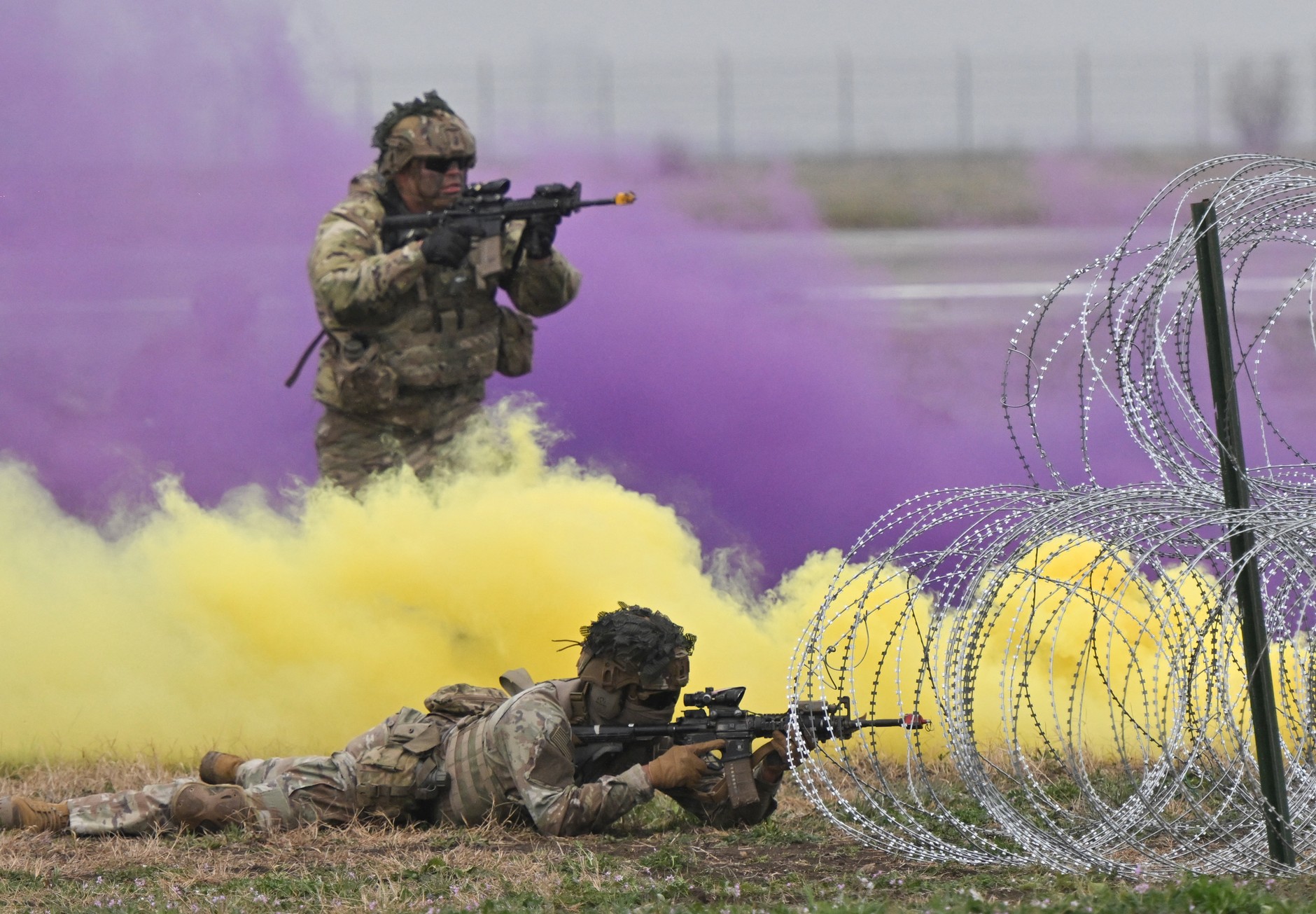
American soldiers at the Mihail Kogalniceau base, Romania, March 31, 2025.Daniel Mihailescu / AFP
Pressure on Europe
Williams added that the recent deployment of the high combat readiness 101st Airborne Division to the region suggests its rapid deployability could keep the brigade available for operational use elsewhere if new requirements arise.
“It's on the line many variable factors” – he said.
This decision puts renewed pressure on European allies to shoulder more of the security burden. However, the Center for Eastern Studies warns that the transition to a more European-led NATO must be “structured” to avoid creating a vacuum that Russia could perceive as an “invitation.”
The impending withdrawal of the rotary brigade represents a significant shift in U.S. priorities. The decision will force allies to rethink their defense posture as Washington turns its attention to both the Western Hemisphere and the Pacific.