
The government amended Ordinance 52 which upset the mayors. Expenses from donations and sponsorships or from certain festivals will be allowed


On Monday, in an extraordinary meeting, the government amended the emergency ordinance 52/2025 aimed at reducing certain expenses in town halls and caused a scandal in the Coalition. The first information related to the changes was communicated by the Ministry of Culture, which announced that the new act will allow expenses incurred from donations and sponsorships or expenses from special events (festivals of the performing arts, cultural diplomacy events, book fairs, exhibitions, biennials, etc.).
The changes adopted by the government to GEO 51/2025 were made in the framework of another emergency ordinance project on the agenda, which aimed to amend and supplement Government Emergency Ordinance no. 60/2022.
What expenses will the town halls be allowed, according to the Ministry of Culture
The first information related to these changes came from the Ministry of Culture, which stated that the government approved several exemptions from art. XVII of GEO no. 52/2025, which allows, among other things, the normal development of the activity in public cultural institutions.
“The new normative act exempts from the imperative provisions prohibiting the employment of expenses from public funds, provided for in paragraph (1), and from those regarding the capping of expenses, provided for in paragraph (2), the expenses made from donations and sponsorships, those necessary for the production, exploitation, capitalization of cultural, artistic, literary, publishing or cinematographic goods, for protection, conservation, research and promotion of cultural heritage goods, or within social events, organized in accordance with the public mission”, the Ministry's press release states.
Thus, within the limits of the approved budget, public institutions that organize and carry out activities in the field of culture and/or offer cultural-artistic services, regardless of the form of financing and subordination, may incur expenses according to the applicable provisions of OG no. 51/1998, according to Law no. 186/2003 and Law no. 422/2001 and, as the case may be, according to the commitments included in the management contracts concluded with the guardianship authority
“The exception is also applicable in the situation where the existence of a management contract is not relevant or, for various reasons, there is no such contract”, the Ministry of Culture mentions.
Free at festivals, book fairs and exhibitions
“Also, taking into account the specific, seasonal character, the exceptions cover the possibility of capitalizing on cultural assets independently or, as the case may be, within special events (festivals of the performing arts, cultural diplomacy events, book fairs, exhibitions, biennials, etc.). Also, authorities and public administration institutions can finance consultancy and/or studies and research expenses necessary for the issuance of various mandatory documents and becomes also possible to exercise the quality of financing authority in the matter of granting non-reimbursable financing.
For exceptional situations, not covered by the new provisions, based on a thorough justification, the possibility remains for the Romanian Government to approve, on the basis of a memorandum, the conclusion of legal commitments, respectively the exceeding of payment limits”, emphasizes the Ministry of Culture.
In order to avoid the repetition of similar situations and blockages in the following years, the Ministry of Culture says that “it will initiate the modification of the legislative framework and, starting from the financial year 2026, Title 20 will no longer include the material expenses of public institutions in the field of culture, they will be included, with the support of the Ministry of Finance, under another budget title”.
In the same logic, the Ministry of Culture reiterates the importance of compliance with the provisions of the special law on cultural management by all public authorities. Performance management remains, and not only in times of economic crisis, the most appropriate tool for recognizing the social role of the field of culture, enshrined in the Constitution.
HotNews.ro will return with all the exceptions regarding the reductions in expenses from the town halls, as soon as the Government makes an announcement in this regard.
Why did Bolojan return to the reduction of expenses in the town halls
Emergency Ordinance 52/2025, adopted on October 1 by the Government and concretely, stipulates that town halls and County Councils will no longer be able to give money, until December 2025, on:
- Furniture;
- Office equipment;
- Mobile phones and additional subscriptions;
- Cars and fuel (except in emergency cases);
- Non-essential inventory items (new office equipment, decorative equipment);
- Printing and advertising (leaflets, brochures, advertisements, media campaigns);
- Protocol (festive meals, receptions, gifts);
- Organization of events without external funding;
- Consulting and expertise;
- Internal and external travel (except strictly mandatory);
- Studies and documentation not provided for by law;
- Current repairs.
The town halls will be able to continue spending money for salaries, allowances, contributions, utilities, the operation of educational institutions, dispensaries and the town hall, for health, social assistance, for emergencies – such as ISU interventions and for audit, banking services, mandatory IT, tax collection.
The measures angered the mayors, with criticism coming from PNL mayors as well.
Thus, the PNL mayor of Slatina, Mario de Mezzo, complained on October 11, that this ordinance blocked town halls from all over the country that were planning to do repair work. The Minister of Finance, Alexandru Nazare, supported by the PNL, should take responsibility for this mistake, de Mezzo said at the time.
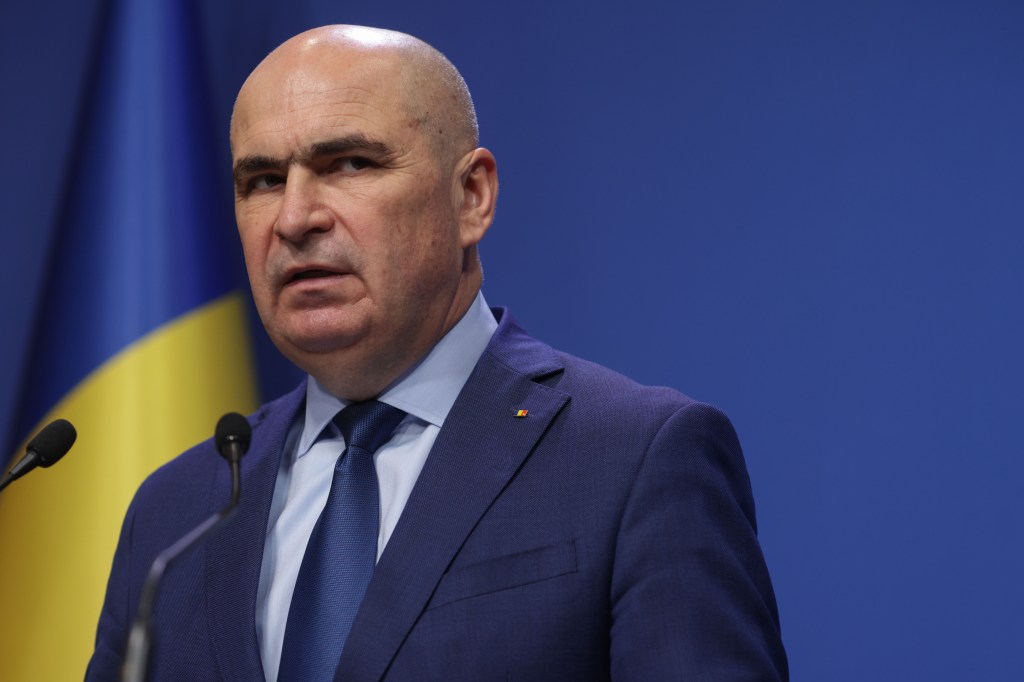 INTERVIEW The reproaches of an important PNL mayor towards Bolojan: “Please make a decision. Whatever”
“We can no longer prepare the roads for winter”, accuses PSD
The Association of Municipalities and Cities warned, on October 6, that in the period October-December 2025, payments for “Goods and services” cannot exceed the monthly average of payments made from January to September 2025, to which 10% is added.
The Mayor of Craiova, Lia Olguța Vasilescu, drew attention on October 6, after the PSD leadership meeting on the Ordinance.
“We have requested that GEO 52/2025 be revised. There they talk about the fact that until the end of the year we can no longer make repairs. We can no longer prepare the roads for winter,” said Olguța Vasilescu.
She also said on Monday that the Ordinance prohibits feasibility studies and expertise and that in the October 1st Government meeting, the project was quickly read ahead and adopted.
Accusations also from the PSD leader
PSD President Sorin Grindeanu harshly criticized, on October 12, on Antena 3, the way in which GEO 52/2025 was adopted by the government regarding the reduction of expenses in the administration.
“The Ministry of Finance came and read on the tape a much longer amendment that has nothing to do with reality. Then the Ministry of Finance asked to be exempted,” Grindeanu said. “It is the perfect example where you stupidly, like idiots, do all those things and block everything, and then you, who promoted them, come to ask for exceptions for yourself,” the PSD leader continued.
Grindeanu also criticized the local administration reform project supported by Prime Minister Ilie Bolojan, which he said represented “a mass dismissal”.
“The so-called reform in the local administration is not a reform, it is a mass layoff (…) There are administrative-territorial units with an excessive number of employees and they must reduce it, but what we must aim for is not to lower the level of public services. These things can be done through reforms, not layoffs,” said the PSD leader.
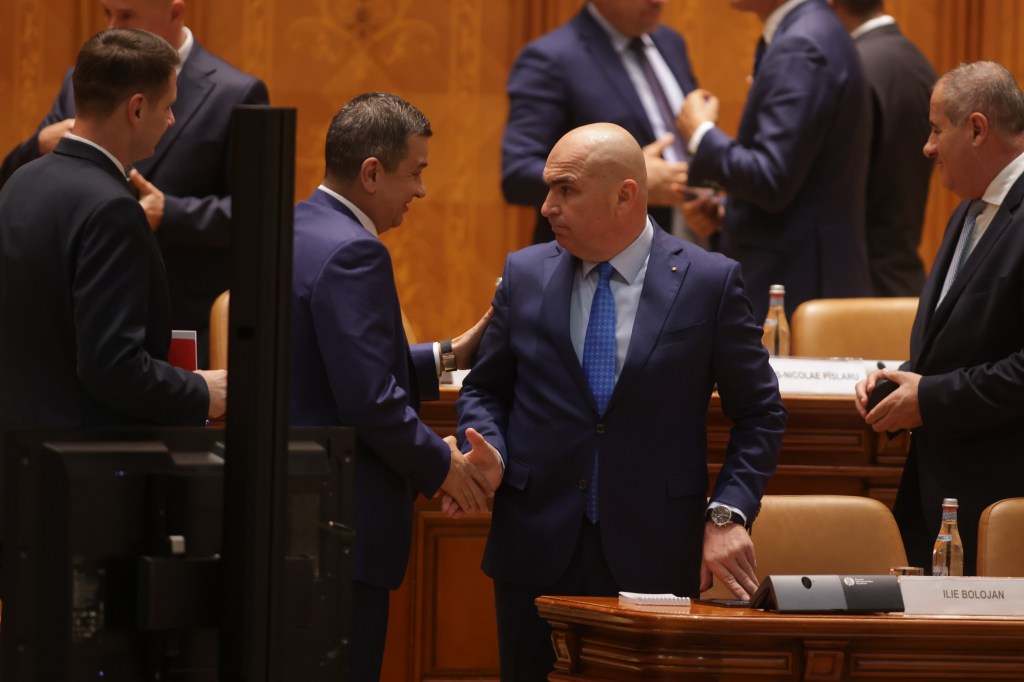 Sorin Grindeanu, attack on the Ministry of Finance on the subject of GEO 52: “You do those things stupidly, like idiots, and then ask for exceptions for yourself”
Why PSD, PNL, USR and UDMR do not agree on administration reform
If the PSD demands that mayors have a choice between staff reductions and salary cuts for mayors who cannot fire employees, PNL and USR only want staff reductions.
Moreover, the PSD demands that the reform at the central level be carried out together with the reform of the local administration. At the center, mergers of institutions, salary cuts and layoffs are taken into account – 10% or 20% of the positions filled.
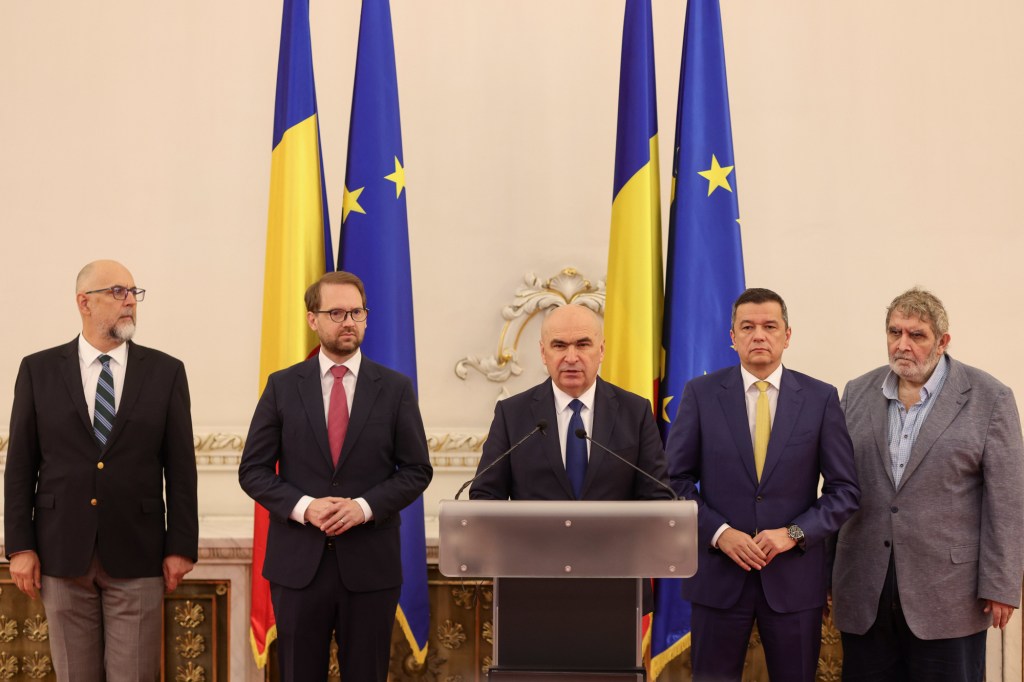 The condition set by the PSD in the negotiations for the reform in the administration, blocked for two months / A new meeting without an agreement in the coalition


