Postpartum hemorrhage treated in Germany. “Every minute lost dramatically decreases the chance of life”


Iuliu Torje, primary physician in anesthesia and intensive care at ECMO Center Klinicum Kassel, Germany, presented a case in which he treated, together with his colleagues, a patient affected by “one of the most severe obstetric complications”. “In centers without experience and without sufficient material resources, time becomes the main enemy,” the doctor pointed out.
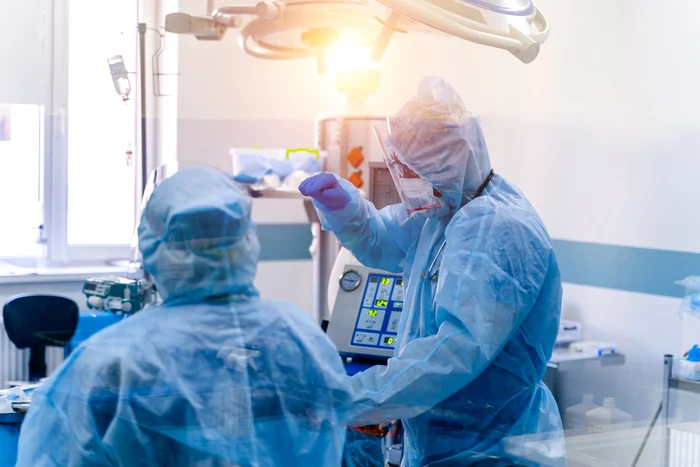
Experience and material resources, vital in emergency cases PHOTO: archive/Shutterstock
The honorary adviser to the Minister of Health, doctor Iuliu Torje, detailed, in a post on his Facebook account, a moment that he categorized as one of the hardest in his career. The case from Constanța, in which a young woman died a few hours after giving birth to a boy, due to a post-partum haemorrhage, brought the experience back to her memory.
“These days the case from Constanța has awakened in me the memory of one of the hardest moments in my career. A case that stuck in my mind and reminded me how relentless a postpartum hemorrhage can be. It is one of the most severe obstetric complications, an emergency that develops within minutes and, if not recognized and treated promptly, can become unmanageable.” the doctor began his exposition.
The case he brought to the attention of his readers is that of a young mother for whom the doctors threw their best into the fight, but it was not enough.
“Her case was already desperate when we were called by our colleagues from another hospital (somewhere 40 km away), following a severe postpartum haemorrhage.
I went to that hospital with advanced equipment, drugs, red blood cells, clotting factors, REBOA (Resuscitative Endovascular Balloon Occlusion of the Aorta – an emergency procedure used to control massive bleeding by temporarily blocking blood flow in the aorta) and ECMO.
When I arrived, I found the patient already hysterectomized, in severe hemorrhagic shock. Norepinephrine was flowing at a dizzying rate of 30 mg/h (150 ml/h) in a desperate attempt to keep his blood pressure up. She had just been resuscitated for 15 minutes and was experiencing severe coagulopathy. Cardiac tamponade and bilateral hemothorax brought her ever closer to the brink of the irreversible. Already received 10 units of blood, platelet masses, prothrombin complex, tranexamic, fibrinogen, but without any improvement”, explained the doctor.
They began a life and death fight, but they didn't hesitate for a second. The doctors, explained Dr. Iuliu Torje, brought with them another 8 units of blood, fibrinogen and prothrombin complex, rFVIIa, to save the woman. “I drained the thorax bilaterally, I drained the pericardium, from which I drained almost 3 liters of blood fluid. Having indications of persistent arterial bleeding in the abdominal area, I decided to install a REBOA catheter, to limit the distal flow and stabilize the patient hemodynamically. In parallel, I initiated the correction of severe metabolic disorders, metabolic acidosis, hypocalcemia and electrolyte imbalances arising in the context of massive blood loss and prolonged transfusion. At this stage, I also introduced vasopressin, needing a pressor agent that acts effectively regardless of pH, I also associated hydrocortisone, to support the vasopressor response, in the conditions of severe refractory shock.
We managed to stabilize her enough to transport her to our clinic, to the operating room, but there a new challenge awaited us. We found no active bleeding, but a diffuse hemorrhage on the background of a coagulopathy refractory to any therapy. In total, we transfused 40 units of blood, 20 platelet masses, 20 units of plasma, 22 grams of fibrinogen, 12,000 units of prothrombin complex, 7 mg of Novoseven, Desmopressin, Factor XIII – 7000 IU, Factor VIII – 7000 IU, and many others that were lost in the tumult of this battle”the doctor went on to detail what resources they had to call upon.
“The ROTEM image, completely flat thromboelastogram in all channels, was the one that sealed the patient's fate. Despite all efforts, we had to accept defeat”revealed Dr. Torje and the sad ending.
“When these cases are managed in real time the chances of survival increase considerably”
The doctor explained that the moments when the team fights to the point of exhaustion for a man's life and finally lose him are the hardest in professional life. “But these losses don't just stop at the patient. They affect the entire team. And yet, I feel the need to emphasize something important. None of the postpartum hemorrhages that have occurred in our clinic and have been fully treated in our clinic have resulted in death (at least in the last 6 years).”emphasized Dr. Torje.
In such cases, every minute lost counts, as does infrastructure, training and the ability to react quickly and coordinated, Torje also pointed out, again referring to the case of the young woman who was initially treated in the private clinic in Constanța and later transferred to the county hospital.
“When these cases are managed in real time, in an experienced center with multidisciplinary teams and complete resources, the chances of survival increase considerably. Unfortunately, in inexperienced centers without sufficient material resources, time becomes the main enemy. Every minute lost dramatically decreases the chance of life. The case of Constanța reminds us of exactly this… the infrastructure, training and ability to act quickly and coordinated in in the face of a major emergency.
Our purpose is not only to save lives, it is to never stop trying”Dr. Iuliu Torje concluded his message.
“What you are dealing with here is almost science fiction for Romania, and it will be a long time before we can hope for things to change”, his followers sent him in the comments.
“This is cutting edge medicine and it doesn't have coverage everywhere, nor can it for cost reasons. No health system could finance everyone's access to a medicine of this level. At Constanța, the mistake was that they accepted the natural birth that other x clinics refused. Medicine is not on demand but on what is possible, that it's not Mc Donald's. Further it is nebulous, but there are signs of refusal of hysterectomy, a real fault will be difficult to prove”another reader commented. Investments in health are extremely expensive, and for large-scale private hospitals to be profitable, the costs of a birth would be very high, being logistics, consumables, specialists, space organized in such a way as to respect the functional circuits, it was also mentioned in the comments.
Also in the comments, the issue of the blood product crisis in hospitals was raised.
“When I saw 8 units of CER, I blacked out, because we were happy if we received 2 units/day. I don't know how much the emergency workers receive/day for a patient”, is one of the comments.
“So that everything is complete, after you negotiate on the phone with the laboratory to give you at least 1 unit, if she has it, the nurse from the transfusion center cannot come because she is alone. If we put them all together, how to make guards in Romania. You must be a professional suicide. In the case of malpractice, the judge, who is not a doctor, does not know nor is he interested in these details… This is the difference between medicine in Romania and medicine in Germany.” was another observation.
The case of the 29-year-old policewoman who gave birth to a baby boy at a private clinic in Constanța, later her health worsened, which led the doctors to request the transfer to the state hospital, where the patient died, sparked a wave of reactions. The Minister of Health announced the results of the administrative controls carried out at the clinic, noting that the unit was approved despite the fact that it did not meet many of the conditions imposed by the regulations. The control report, the minister also sent, will be sent to the criminal investigation bodies.
In parallel, another investigation is underway that will establish the causes that led to the woman's death.