Putin against the wall. India and Europe are simultaneously turning off the petrodollar tap. “We won't stop there”


India has been one of the pillars of Russian oil exports for the last two years. After the war in Ukraine began, Moscow found in Delhi not only a trade partner, but also a political safety valve.
Now the situation has turned 180 degrees. The largest Indian refining companies are starting to sharply reduce imports of Russian oil. According to Bloomberg, leading Indian companies are to limit purchases in Russia practically to zero.
At the same time, the European Union adopted the 19th package of sanctions against Russia, extending restrictions to banks, technology and transport companies, as well as introducing a ban on the import of Russian LNG.
Both India's decision and the new European package show that the global front against Russian raw materials is starting to close. Within a few months Putin may lose his two largest sales markets — and with them the financial oxygen that has so far fueled the Kremlin's war machine.
After the launch of a full-scale invasion of Russia increased deliveries to India tenfoldselling barrels that European countries did not want.
Now the situation is changing. The Indian market is closing to Russian oil companies. The reason is the new American sanctions that affected the largest Russian oil companies, Rosneft and Lukoil.
Donald Trump's sanctions, which were announced by the US after months of unsuccessful attempts to reach an agreement with Vladimir Putin, will make the further flow of “black gold” from Russia to India almost impossible.
In September, India purchased 1.6 million barrels a day from Russia, covering 36 percent. its import demand. At the peak, at the turn of April and June this year, deliveries reached approximately 2 million barrels per day. For Russian oil producers, India has become the largest market for oil exported by sea and the second largest recipient after China, if all deliveries (including pipelines) are taken into account.
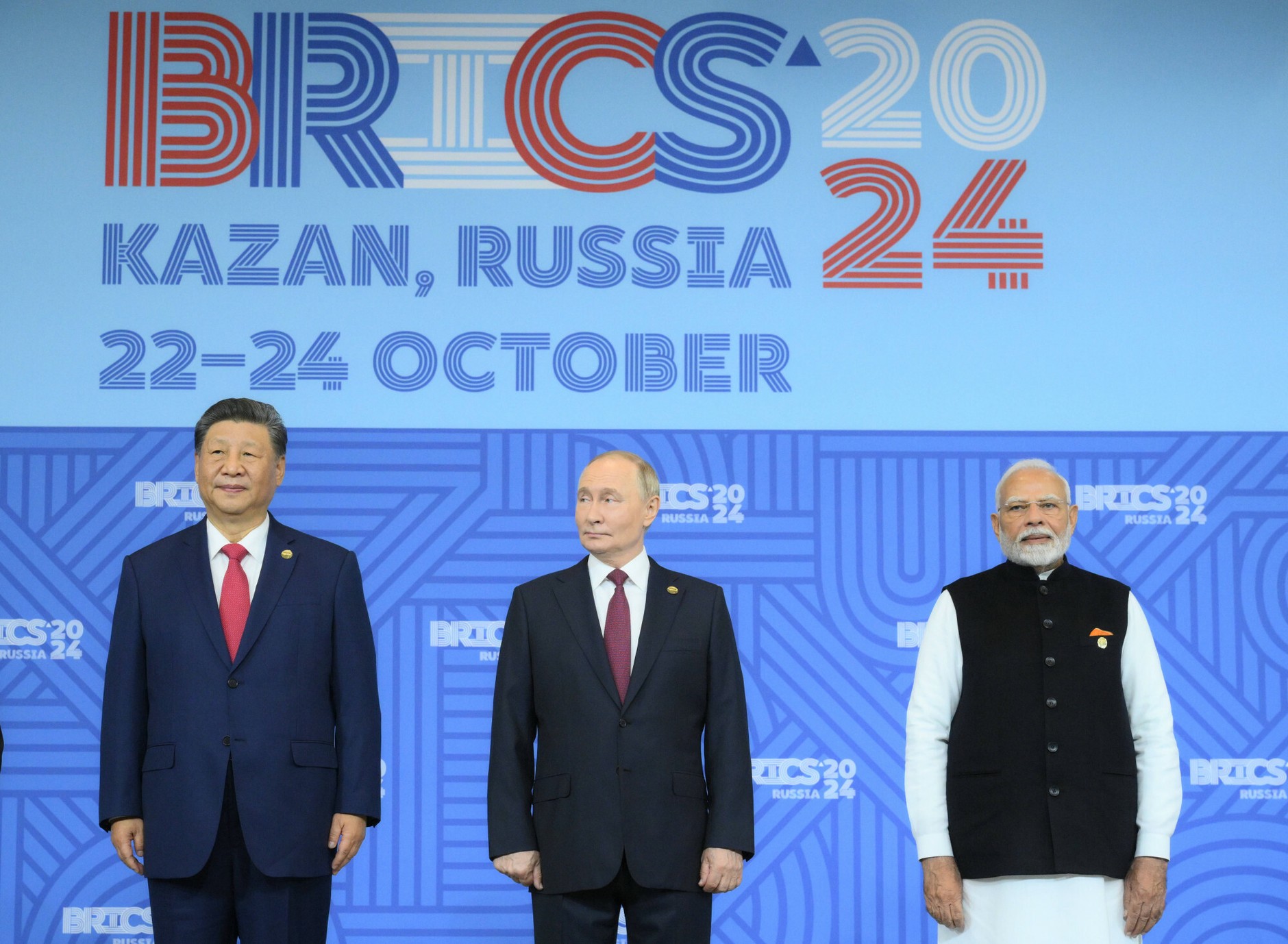
Russian President Vladimir Putin, Chinese President Xi Jinping and Indian Prime Minister Narendra Modi during the 16th BRICS summit. Kazan, Russia, October 23, 2024IMAGO/Sergey Bobylev/Imago Stock and People/East News / East News
Two experts from Reliance Industries, the largest Indian buyer of Russian oil, report that the company is to significantly reduce or completely stop its imports. Other local petrochemical companies such as Indian Oil Corp, Bharat Petroleum Corp, Hindustan Petroleum Corp and the Mangalore refinery are also considering similar steps.
According to Bloomberg's sources, the refinery's future contracts will mainly include crude oil from outside Russia. The only exception may be India's Nayara Energy, a Rosneft-dependent company that has been subject to EU sanctions since July.
Already in October, interest in new orders for Russian oil dropped. This happened after Trump said that Indian Prime Minister Narendra Modi had promised to give up Russian barrels.
Europe is tightening the noose
This is not the end of actions aimed at the Russian budget. On Thursday, October 23, the European Union adopted the 19th package of sanctions against Russia.
It is specifically aimed at Russian banks, cryptocurrency exchanges and organizations in India and China
– wrote the head of European diplomacy, Kaja Kallas, on the X platform.
The EU also decided to restrict the movement of Russian diplomats “to counter attempts at destabilization.” “It is becoming increasingly difficult for Putin to finance this war” – Kallas emphasized.
The new sanctions include a ban on the import of Russian liquefied natural gas (LNG). The restrictions will be introduced in two stages:
- short-term contracts will be canceled after six months,
- long-term contracts – from January 1, 2027
As part of the 19th package, the list of the “black register” of ships of the infamous “shadow fleet” was also expanded to include 117 tankers – the number will increase from 441 to 558. Additionally, a ban on reinsurance of previously purchased Russian aircraft and ships was introduced for five years from the date of sale.
The article continues below the video
Bloomberg reports that in total, EU funds will cover 45 organizations that helped the Kremlin evade sanctions – including 12 companies in China and Hong Kong. Operations with five Russian banks and cryptocurrency services for Russian citizens, residents and companies will also be banned. In addition, restrictions on Russian electronic payment systems, including the “Mir” system, will be extended.
The package included: sanctions against banks from Belarus and Kazakhstan and a ban on operations with banks, cryptocurrency exchanges and oil trading companies in Tajikistan, Kyrgyzstan, Paraguay, the United Arab Emirates and Hong Kong.
Diplomatic sources in the EU told Reuters that the restrictions would also affect, among others four Chinese companies related to the oil industry: two refineries, a trading company and an organization supporting Russia in circumventing sanctions.
The last country to inhibit the adoption of the new package was Slovakia. Its Prime Minister Robert Fico demanded from the European Commission a guarantee of controlling high energy prices and taking into account the interests of industry in the framework of climate policy. Bratislava's conditions were included in the final EU summit communiqué.
Head of the Chancellery of the President of Ukraine Andriy Yermak welcomed the new EU sanctions packagestating that many of Kiev's proposals were taken into account. “We will not stop there. Package No. 20 will be ready soon. The logic is simple – less money in Russia means fewer missiles in Ukraine,” he wrote on Telegram.