It's a Monday in March, just after midnight. The war with Iran has only been going on for a few days. An Iranian Shahid-class drone strikes the British Akrotiri military base in Cyprus. Cyprus is a member of the European Union, but not NATO. Article 5 of the alliance treaty, which states that an attack on one member is considered an attack on all, does not apply to this island state.
The drone incidents ended without major damage, only the runway was damaged. But what if there was a more serious aggression against Cyprus?
Or if Russian troops crossed the border into Lithuania, entering a NATO and EU country — and the U.S. administration signaled its intention to exercise military restraint? Who, if not NATO, will then defend the Baltic countries?
This is what the EU intends to check. After all, she too has a mutual aid clause. Article 42(7) of the Treaty on European Union (TEU) obliges Member States to provide the attacked partner with “all assistance and support in their power”. On paper, this is a far-reaching commitment. However, there is no procedure for implementing this clause.
This is about to change.
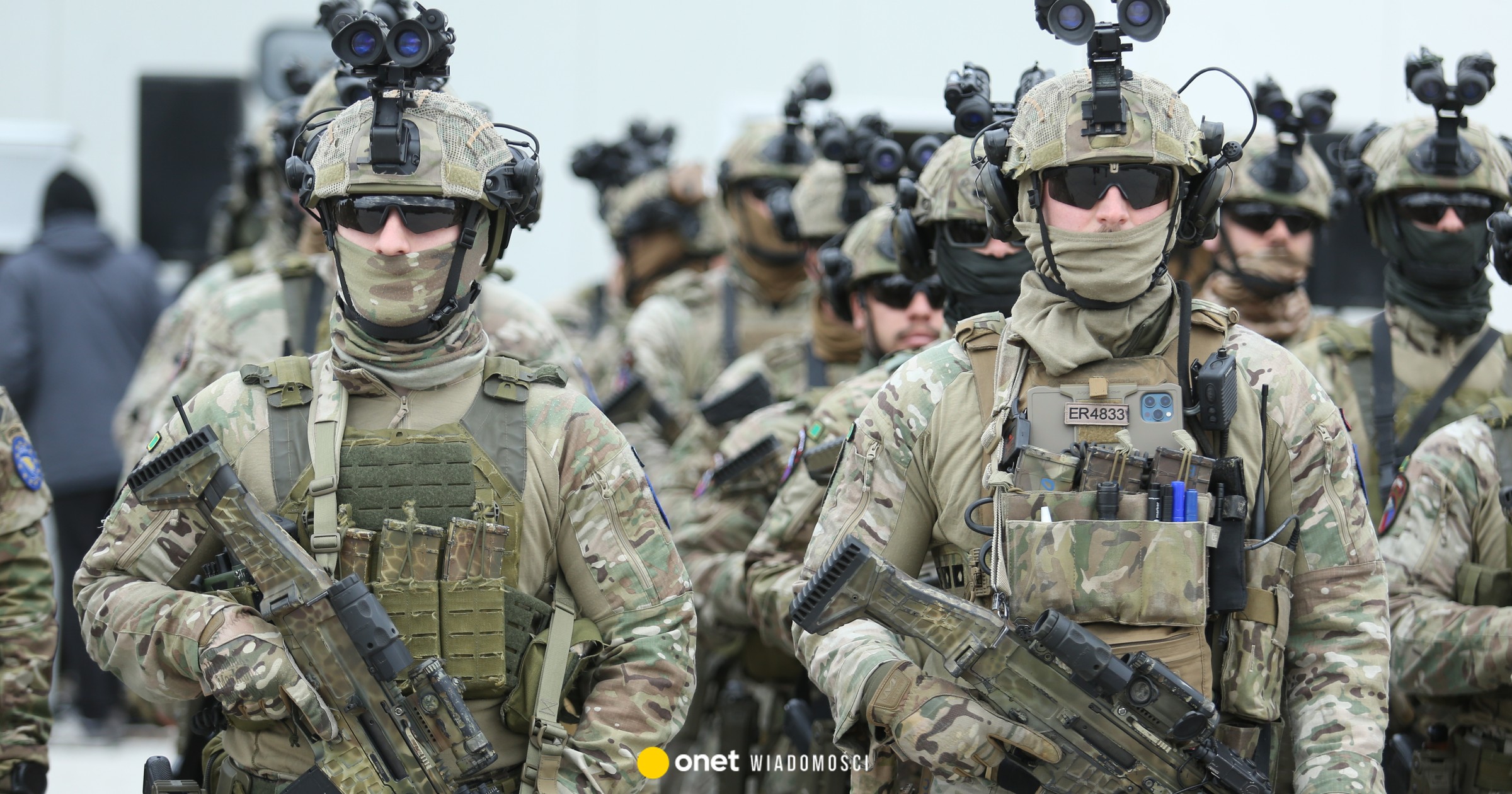
A war simulation is planned for May, during which representatives of European countries will practice for the first time what a situation requiring assistance to one of the Member States would look like. Exercises at the table will simulate a crisis situation step by step. All this in order to find possible action scenarios.
— When the head of state or government invokes Art. 42.7, many questions remain unanswered, says Klaus Welle, chairman of the Scientific Council of the Martens Center. This think tank is closely associated with the conservative European People's Party.
— What actually happens then? Who should I contact? Which body takes over coordination? Who can provide what resources? The May exercise aims to systematically practice this process for the first time, says Welle, who served as secretary general of the European Parliament until 2022.
Three threat scenarios
— The May simulation exercises will be held at the level of the Political and Security Committee [instytucji pomocniczej Rady Unii Europejskiej]i.e. ambassadors of the Member States dealing with security, says Niclas Herbst, who sits on the European Parliament's Security and Defense Committee. — Three scenarios will be analyzed separately: one [obejmujący działania] under Article 42.7, one in conjunction with NATO Article 5 and one below this threshold, for example in the area of hybrid threats.
Details of the exercises are not yet publicly known. However, it can be assumed that they will reflect different types of crises. One scenario could simulate an attack on an EU country that is not a NATO member, such as Cyprus or Austria. The second scenario may concern a situation in which both EU and NATO structures would be activated, for example in the event of an invasion of Poland or the Baltic countries. The third scenario may describe a situation where it is unclear whether and when collective defense mechanisms will be activated, for example in the event of sabotage of critical infrastructure.
The article continues below the video
There is indeed a precedent. In 2015, after the attacks in Paris, France asked other EU countries for help under Art. 42.7, specifically for support in counter-terrorist and other military operations. Germany then strengthened its involvement in Mali. However, this case is of limited usefulness. Back then, it was about fighting terrorism and relieving the French forces. The scenario of defending the country and the alliance is a completely different scale.
In such a case, it would be unclear how a decision could be made to trigger this clause. The article itself 42 section 7 does not specify any procedure. In practice, the principle of unanimity applies in European foreign and security policy – which involves the risk that individual countries may block decisionsjust as the recently defeated Hungarian Prime Minister Viktor Orban did for years.
Security expert Welle supports the creation of a European Security Council. The idea is to create a smaller structure in which decisions would be made by qualified majority. In the vision of the think tank for which Welle works, such a Security Council would be led by the President of the European Council. In addition to selected EU countries, Great Britain, Norway and Ukraine could also be included.
Complement to NATO
This idea is not new – former German Chancellor Angela Merkel presented it already in 2018. However, the pressure on Europe to increase its defense capacity without the US has increased dramatically and given it new impetus. A month ago, US President Trump again threatened to withdraw from NATO. Even without this step, Washington expects Europe to take more responsibility for security. — We feel compelled to prepare for scenarios without U.S. involvement — says MEP Herbst.
However, in Brussels, strengthening Article 42.7 is not seen as an alternative to NATO, but as a complement. In the event of a conflict, the alliance would still have priority. However, in situations where it would be blocked, the European pillar should be able to act independently. It remains an open question how the EU could use NATO's capabilities in such a case – and what will happen if American forces within it are not available at all.
According to a December report by Reuters, Pentagon representatives signaled to European diplomats that Europe should take over most of NATO's conventional defense capabilities by 2027. This includes reconnaissance and missile defense, among others. Otherwise, the United States may withdraw from some military coordination within NATO.
— At the same time, purchasing processes last on average three years or longer. It's a race against time, Welle says. He believes that building European defense capabilities within 10 years is realistic. “But it's questionable whether we have that much time before a serious threat occurs,” he says. European intelligence services assume that in the coming years Russia may be capable of further military escalation in Europe.
From Herbst's point of view, the moment to act is favorable because a new government has been formed in Hungary. “At the same time, we probably only have a limited time until the elections in France,” he says. According to polls, the right-wing populist National Rally is currently leading in this country. A change of power in Paris could slow down the development of European defense policy.
According to Herbst, in the current phase “key decisions need to be made.” Welle thinks the same. “It would be unacceptable if we did not clarify Article 42.7 now,” he says. So the willingness is there – the EU wants to organize the defense of its continent. He just doesn't know how to do it yet.
I’m Ashley Davis as an editor, I’m committed to upholding the highest standards of integrity and accuracy in every piece we publish. My work is driven by curiosity, a passion for truth, and a belief that journalism plays a crucial role in shaping public discourse. I strive to tell stories that not only inform but also inspire action and conversation.