

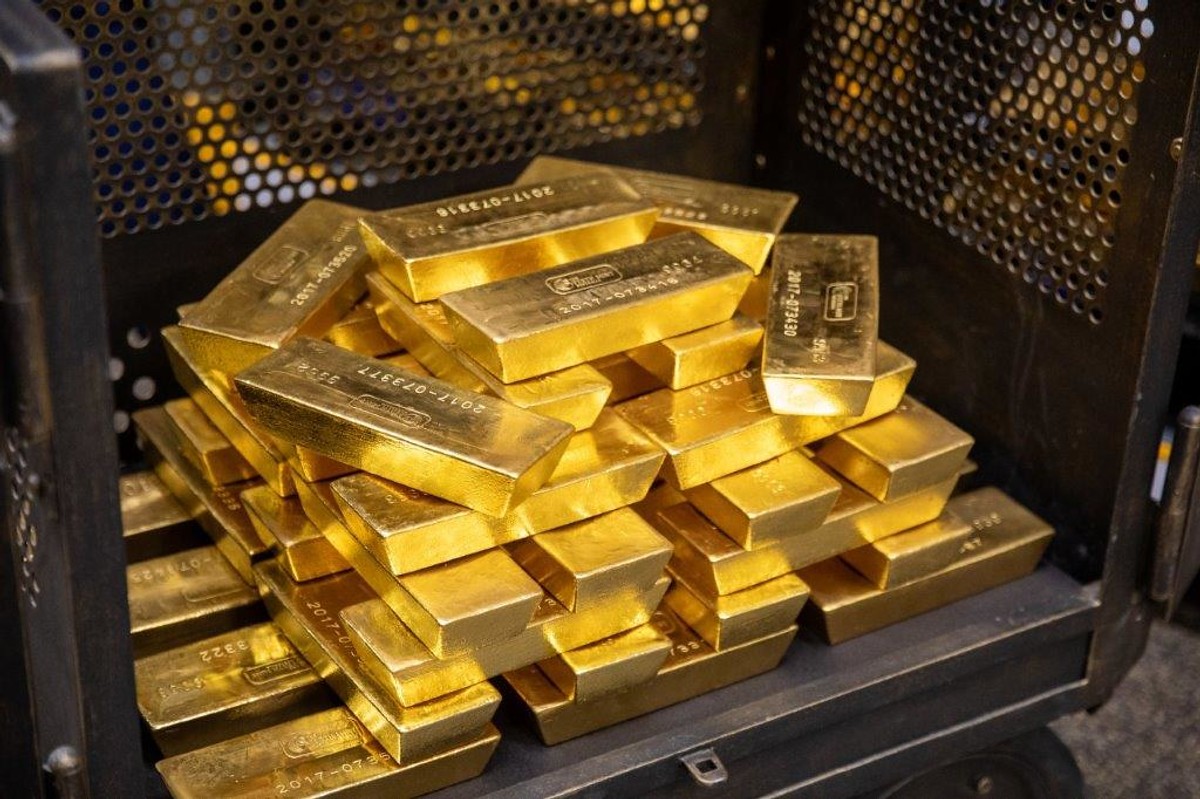
Gold prices fell by almost 4.3% on Tuesday afternoon Polish time, to $4,170. per ounce. Converted into Polish currency, the price of gold decreased by 3.9%, to PLN 15,235 per ounce. This is the biggest single-day sale in four years.
Other precious metals also fell in price on Tuesday, and an even stronger correction was visible in the silver market (where an all-time record was broken on Friday), platinum and palladium. The silver price fell by about 6.7% on Tuesday.
The golden streak of gold
Let us recall that on Monday, gold prices reached a new historical high of $4,381.2. per ounce. Gold is one of the investment hits of recent years. “The sharp rise in the price of gold, as indicated by indicators such as relative strength, indicates that prices have already reached overbought levels. The strengthening U.S. dollar has also made the precious metal more expensive for most buyers,” Bloomberg reported.
In 2023, the gold price jumped from approximately $1,800. to approximately $2,050. per ounce. In the fall of 2024, the price reached almost $2,800. Taking into account the 12-month rate of return, gold is astonishing and boasts an increase of 53.4%. Over the last two years, the price has increased by 111 percent, and in three years by 152 percent. (it is worth remembering that gold does not pay interest to its owners).
“The gold rally since late August remains the main anchor for the entire precious metals segment. The breakout after months of consolidation has pushed prices to historic levels. Short-term momentum is already somewhat drawn outbut background demand still looks solid. Correction of $200-300. would be normal breathnot a trend reversal; zone 4000-4100 dollars. would most likely attract new buyers,” Saxo Bank analysts wrote on Monday.
They added that the fundamental picture has not changed. “These are the same forces that pushed gold to new records: weakening faith in old a financial order supporting continued central bank purchases, renewed demand for ETFs among Western investors, sustained demand from Chinese households (looking for an alternative to a four-year housing market collapse), and a gradual erosion of confidence in fiat currencies and fiscal policy in the West. For decades, US Treasuries have been considered the global benchmark risk free. Today, the market message is more subtle: risk free doesn't always mean based on trust“- they wrote.
Is this the end of gold's upward trend?
In Tuesday's comment, Michał Stajniak, deputy director of the XTB analysis department, assessed that today's correction was not caused by any specific event, although – as he pointed out – there had been talk of a bubble for some time. “However, there was no increase in security on futures exchanges or any problems with deliveries. Yes, there were queues to gold and silver dealers all over the world, which also indicated that the so-called street. In most financial markets, this is often a contrarian signal that leads to a correction or even a trend change,” he added.
“Although the foundations for further growth in the long term remain unchanged, a potential correction could heal the market somewhat, as long as it is not drastic and could drag other markets down with itsuch as shares. At this point, the mood is supported by the expectation that the impasse in American politics will end and the financing bill will be passed even this week,” said Michał Stajniak.
He added that today's market movements do not have to be the end of the current strong upward trend, but just another short-term profit taking. “Gold it is still high, slightly below $4,300. per ounce, and silver is balancing on the border of $50, i.e. previous historical highs. This and next week we will learn many important financial reports from companies and macroeconomic data that may completely change the current market situation, so at this point absolutely nothing is certain,” said the XTB expert.


