10 years ago, a memorable referendum was held in Greece, which decided the future of this indebted country: even though the majority of voters voted against reforms imposed from outside, the government of Alexis Tsipras decided to continue them and remain in the euro zone. A third aid package was developed in the amount of EUR 86 billion (PLN 364 billion at the current exchange rate), associated with the obligation to achieve an annual primary surplus. Two questions arose: will Greece ever repay the almost 180% debt? gross domestic product debt? And is the country able to achieve a primary surplus?
Is. With the exception of the pandemic years, which is hard to imagine, a primary surplus has been achieved every year. It was particularly high in 2024, when it amounted to almost 5%. GDP, and the Greek government didn't know what to do with all the cash. As of 2021, the Greek economy is growing at a rate above the euro area averageachieving growth rates above 2%.
The public debt ratio has fallen to 155%, and Greek bond yields are even lower than those in Italy and France. In 2026, the aid loans are to be repaid early, which will further reduce this indicator. The labor market also recovered, and the unemployment rate dropped from 28 to 8 percent.
All this became possible thanks to reform rank and file. Under Tsipras's government, the changes were still carried out under pressure from creditors. Drastic pension cuts and tax increases were introduced. Both of these actions painfully restructured the deeply indebted budget.
The article continues below the video
Greek problems are not over yet
However, the government of Kiriakos Mitsotakis, which came to power in 2019, took “ownership” for the first time and replaced the mechanistic approach with more economically friendly reforms. In addition to accelerating privatization plans, far-reaching digitization of public services (Germany could take an example from this reform) and facilitating investment procedures the government has again reduced corporate and income taxes to acceptable levels. The latter has been made possible by a broad-based shift towards electronic payments. As a result, sales tax revenues have almost exploded. The reforms were recently rewarded with an increase in the rating of Greek government bonds to the so-called investment grade.
Everything seems to be fine. However, there is also another story to tell. Economic development is based on two sectors: tourism and construction. It is true that more people have jobs and earn money, but in these sectors wages are low and real wages have fallen even with recent inflation. Therefore, Greece's current level of prosperity is still about 5 percentage points lower than in 2007. The production and export of higher-value goods and services, which would enable higher wages, remain stagnant. As a result, labor productivity per hour is the lowest among all OECD countries. It doesn't even help that Greece has the highest number of working hours per year in the euro zone.
In addition, there are the latest ones government scandals: the wiretapping scandal, lack of explanation and allegations of cover-up in connection with the Tempi train disaster, and most recently the corruption scandal in which billions of euros of EU funds were systematically misappropriated. Under the eyes of politicians, subsidies were granted for non-existent flocks of sheep on non-existent pastures. These scandals have undermined confidence in the Greek government's intentions to clean up the corruption system.
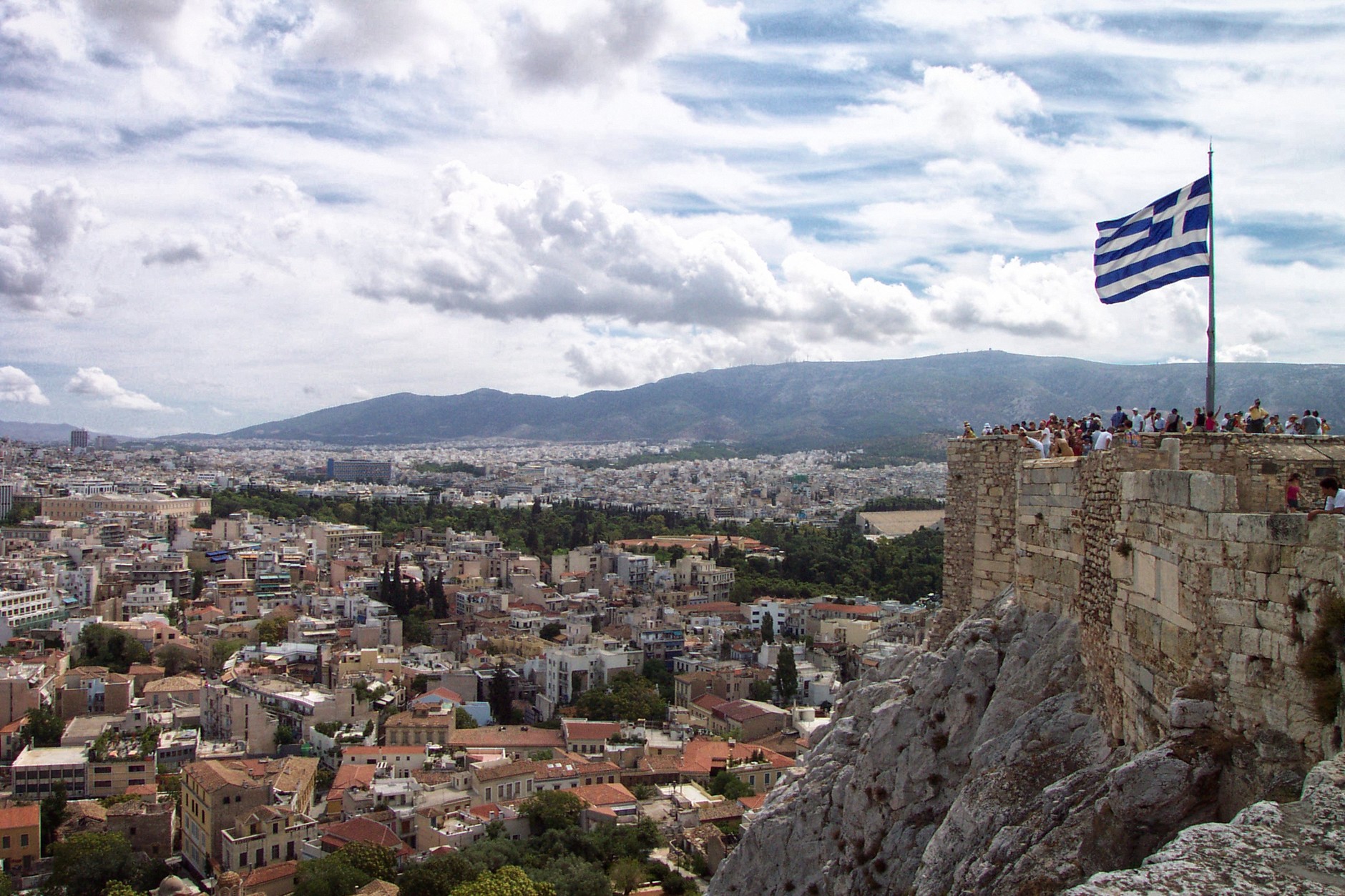
Athens (stock photo)Edoardo Frola/Getty Images
Missed opportunities
There are more to come structural problemsincluding the backlog of judicial system reforms. All this does not encourage investors and innovators who would like to produce higher-value goods in Greece. Such investors still rarely appear on the Greek market. Apparently they still see risk as unpredictable, huh discourages them from investing in the country.
How did this “narrative divergence” come about? Ultimately, the Mitsotakis government initiated the actual reform process, but stopped halfway. Greece has not yet made full use of it benefits of EU membershipto create institutions that would facilitate the implementation of innovative investments.
In this context, the Mitsotakis government's recent labor market reforms seem rather ineffective. Introducing a six-day week or a 13-hour workday to increase modest monthly incomes merely patches up the symptoms. This will not lead to an increase in labor productivity (rather the opposite) or to investment in higher value products.
So if the Greek government wants to ensure greater prosperity for the middle section of society, it must set itself more ambitious goals. In the long run, greater prosperity does not come from more tourists coming to the island, but from technological breakthroughs that lead to the creation of higher value products and therefore to increased exports and economic growth.
Athens' ace in the hole
Greece has the appropriate one human capital. According to the Global Innovation Index, this country is excellent in educating its generation, and scientific research is conducted there at a very high level. However, translating research results into the world of companies bringing innovative products to market rarely happens in Greece, and most often elsewhere.
The government should initiate three important reformsto become attractive to investors. First, Athens must invest more in research and development, and science and the economy must be able to exchange much more systematically than productively so far – in Greece, these are still two separate areas.
Secondly, the reform process must continue in many areas and the quality of public administration, but also of the justice system, must improve. Example: for investors, a sufficient reason not to invest in a given country is the fact that in Greece the enforcement of contractual claims takes 10 years. Third, a centralist government must begin to involve local politics and distribute responsibility among more actors. The attractiveness of a given location also depends on the local business climate.
The current government is already halfway through its term – public support, which was 41% in 2023, has now halved due to recent crises. This is reason enough to continue the urgently needed reform process.
I’m Ashley Davis as an editor, I’m committed to upholding the highest standards of integrity and accuracy in every piece we publish. My work is driven by curiosity, a passion for truth, and a belief that journalism plays a crucial role in shaping public discourse. I strive to tell stories that not only inform but also inspire action and conversation.