The only Romanian voivode who gave up the throne willingly. Reformer and visionary of Westernization


437 years ago a Romanian prince managed to conclude the first commercial treaty with a western western power. It was about Petru Șchiopul a unique figure on the throne of Moldova, the only ruler in the history of Romanians who willingly gave up the throne for reasons of honor.
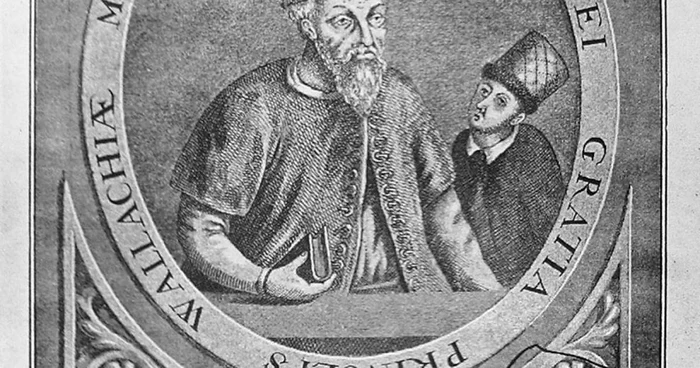
PETRU PHOTOP Wikipedia
In the second half of the sixteenth century, the Romanian Principalities were under the economic and political control of the Ottoman Empire, as a vassal state, from the “Peace House”. After a period of flowering under the reign of Stefan cel Mare, Moldova became more and more a marginal medieval state, far from the western European civilization and development, with a considerable gap. However, on the throne of the East-Carpathian Principality, unique leaders also climbed who, although they liked the Ottomans and boyars to resist on the throne, also achieved notable economically and administrative performances.
One of them was Petru Șchiopul, an enigmatic and atypical figure to the Romanian Middle Ages. In the sense that he was a voivode without warrior, a pacifist but a good politician and administrator. It is the first Romanian voivode who managed to conclude a commercial treaty with a western power and at the same time the only one who had a “resignation”.
The deformed ruler who had become friends with the Ottomans and boyars for the peace of the country
The principality of Moldova had become famous for his warriors. Ștefan cel Mare, Bogdan III the Chior, Stefaniță or even Petru Rareș, tried to consolidate the country's borders with the sword in hand. They were not given to the wars with the Turks, Hungarians or Poles. And generally with all those who threaten their borders. However, the Ottoman power increased, reaching the peak during the time of Soliman the magnificent and despite the resistance, the East-Carpathian Principality reached more and more under the Ottoman control. After a period of stability, especially in the time of Stephen the Great and his successor, the country's politics became dominated by all kinds of ephemeral gentlemen, reaching under the leadership of adventurers or people with questionable morality, such as Ilias Rareș.
Easy, the country has lost its prestige, but also from the economic importance of the Stephen's era, becoming a marginal principality of Europe, the vassal of the Ottomans and subjected to the economic interests of the gate. After a short, but intense resistance of John Voda the brave, the Turks bring the throne on a subject of theirs, Petru Șchiopul. It happened in 1574.
Petru Șchiopul was an atypical character on the throne of Moldova. He was neither an adventurer nor warrior, no rebel from a boyar family of places. It was a mountain, from the nation of the Bessabilities of Mircea III Bessarab and nephew of Mihnea cel Rău, ruler of the Romanian Country. It had a congenital deformity, a shorter leg. Maybe that's why, but also because of a peaceful nature, he detest the war and feared violence. Being married to a Greek princess from Rhodos, she had large amounts of money.
With the silver and gold in the chests he earned his peace and friendships. He bribed the Turks well to put it on the throne, to leave it on the throne and especially to be lenient with him. With the boyars he made peace and did not try to submit them with the force of the central power as the great voivodes had done before him. Instead, he knew how to buy them and thank them with gifts and privileges.
“He was a parent, the great ones in great honor kept them, and from their advice did not know.”wrote the chronicler Grigore Ureche in the “Letopise of the Country of Moldova”.
However, without escaping the power in his hand, proving a lot of mercy and skill from this point of view. And this because he wanted peace and stability first. “Mr. gentle, like a needle without needle, at judgment, no, non-aberous, non-removing, we can tell them all to the spring, so that they will not be lied to.”the same chronicler said.
The ruler who dreamed of the westernization of Moldova. The first treaty with the English
With the money and wisdom, Petru Șchiopul managed to stay on the throne in an extremely cloudy period. Although the reign was interrupted four times because of the suitors who gave more to the vizier, Peter managed to return every time, after short periods of privilege. He reigned four times in Moldova. During this time, although subject to the Turks and without leaving their word from a financial point of view, Petru Șchiopul tried to straighten Moldova to the West. First of all, he was the first Romanian ruler who tried to attract the merchants of a Western power in Moldova. On August 27, 1558, Petru Șchiopul offers privileges to English merchants, the famous Elizabeth I. More precisely, the British had to pay only 3%, from 12%. And this after signing an agreement with Sir William Harborne, the English ambassador to the High Gate.
“We, Peter, from the grace of God the Lord of the Romanian Country and of Moldova, make known to all those present and future, who are and will be interested, that we have concluded with the great Vilhelm Harbone, the ambassador of the pre -enlargement and the pre -land of Lord, Mrs. Elisabeta, from the grace of God, the Queen of England, Emperor of the Turks, the following convention: as a desolate before before they are completely free of his pre-humanity and all the merchants to sit in our country, to stand, to sell, to buy, even to do all the human society and the habit seeking for no life, or for no life, and for no life, Our customs, that is, for each thing worth a hundred leads to pay us three ducts.was shown in the trade treaty.
In addition, he had in his suite an Albanian adventurer, on Bartolomeo Brutti, a man with some influence in the West. With the help of Brutti, Petru Șchiopul thought even at the conversion of Moldova to Catholicism to win the pope's support and the favors of the West. In the hope of an exit under the Turkish influence. He even wanted to create a dynastic connection with Poland, wanting to put his son, Stephen, on the throne of this powerful kingdom.
In the administrative plane, Petru Șchiopul ordered the preparation of a fiscal catastrophe, to better know what taxpayers exist in Moldova. This led to a better tax collection and the country's tax organization.
Culturally he encourages education and supports the monk Azarie to continue Macarie's chronicle. In order to encourage the pattern and education, the first paper factory, in Moldova, in 1583. “He was a sweet man at the word, severely in the behavior, skillful to the facts, he knew the Turkish, the Greek and the Romanian language, and not only these gifts had them, but he was very tried at any craft and the letters and he liked the learned people, and asked them all about astronomy, about signs and other thin things. He liked the singers a lot and had a priest with craft, skillful”, The Patriarch Jeremiah also wrote about Petru Șchiopul. In addition he took measures to encourage a more organized agriculture but also to trade in fairs.
The first “resignation of honor” in the history of Moldova
But the ruler had aged and the Ottoman burden was increasingly difficult. Increasing the tribute and the claims of the high gate determined to voluntarily give up. Without support, neither from the Western princes, nor from the boyars who were looking to leave him without a throne, the old ruler decided to leave. “In no way, I would not want to take on that giving and take the curse on it.”is shown in chronicles.
In addition, he had fallen in love with a younger and humble woman. He was called Irina Botezata, she was a girl in the house and a beautiful and young Moldovan. The ruler was 70 years old when he decided to give up the throne. On that occasion he was able to marry Irina baptized, secretly. “Sunday evening, three hours, we met with Stefan Voda's mother, namely Irina Botezata. Truth I said, until I am in the country not to be told, to be hidden, no one knows. And when I will be out of another country, then to know how we are together.”is shown in the notes of Petru Șchiopul.
He settled in Vienna, under the protection of Emperor Rudolf II of Habsburg. From Vienna, Petru Şchiopul moved to a palace in the Tyrol area, given by the emperor. There he ended his days in 1594.