Russia prepares for prolonged conflict with NATO: Does it have enough resources for a new front?


In the fall of 2025, the President of the Russian Federation, Vladimir Putin, announced the mobilization of two million reservists, allowing their deployment outside the country's borders. The decision comes in the context in which international economic analysts signal difficulties in the Russian energy sector, and military experts note the intensification of the nuclear discourse and a possible escalation of tensions with NATO.
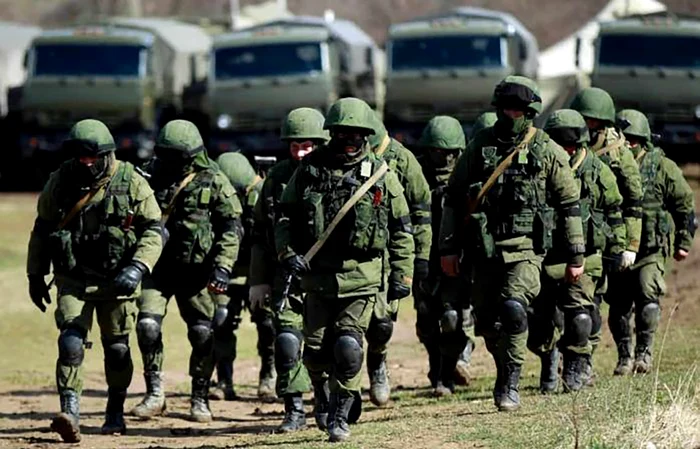
Russian soldiers/Profimedia
According to an analysis published by the Royal United Services Institute (RUSI) and signed by strategist David Roche, although Russia's economy is affected by the conflict in Ukraine, it could support, at least in the medium term, a new military effort – including one directed against Europe or NATO – especially in the form of a “hybrid” or “gray zone” war.
David Roche is a strategic analyst at Quantum Strategy, based in Singapore. Previously, he was Head of Research and Global Analyst at Morgan Stanley, as well as Chairman of Independent Strategy in London.
Russia's War Economy: Military Over Civilian Priorities
Data provided by the Bank of Finland (BOFIT), which has been monitoring the Russian economy for over three decades, does not indicate an imminent collapse. Instead, they suggest a profound reorientation of the priorities of the Russian state, which allocates a considerable share of resources to the military apparatus, at the expense of investments in civilian infrastructure, public services or the well-being of the population.
This “war economy” model involves sacrificing long-term development to support short-term strategic goals. Roche cautions, however, that progressive economic degradation does not necessarily imply an inability to maintain a sustained military effort.
Reduced costs for “hybrid” operations
According to the analysis, a possible conflict with NATO could be different from the conventional war in Ukraine. Rather than a direct confrontation, Russia would resort to “hybrid warfare” methods: disinformation campaigns, cyber attacks, sabotage and other forms of indirect pressure. The costs of such a conflict, estimated at around 2–3% of Russia's GDP, would be significantly lower compared to those of a conventional war – estimated at around 9–10% of GDP in the case of Ukraine.
The “sacrifice quotient” and the role of demographics
The analysis points out that, like the Soviet Union in the past, Russia today demonstrates a high capacity to redirect resources to the military effort. Roche introduces the term “sacrifice ratio”—the percentage of GDP allocated to the military at the expense of the needs of the population—and notes that it is much higher in Russia than in Western democracies.
However, a key issue for the viability of this model is demographics. Russia is estimated to have between 7 and 8 million men between the ages of 21 and 29, a human pool sufficient to recruit about 500,000 soldiers annually. Currently, approximately 600,000 Russian soldiers are involved in the “special military operation”, and annual losses – between casualties and completed contracts – are approximately 500,000 people.
Recruiting is done through considerable financial incentives: a signing bonus of $40,000–$50,000 and a monthly salary of $2,380—almost four times the average wage in Russia's impoverished eastern regions, where most recruits come from.
Army budget vs. fiscal sustainability
The costs of this system become significant: the annual payment of 500,000 new soldiers amounts to about 1% of GDP, that is, about 6% of the state budget. Added to this are expenses for compensation to the families of soldiers killed or wounded, which could increase the annual budget deficit by up to 1.5%.
Worse, the pace of economic growth has slowed to just 1.4% per year – from 4% previously – which could lead to a budget deficit of 8–9% over the next five years. However, Russia still holds significant domestic reserves – equivalent to 30% of GDP – largely inaccessible for export, and controls a compliant banking system that can be used to support deficit financing.
Moscow can continue, but at increasing costs
Although Russia is facing widespread economic decline, its ability to sustain a military effort remains viable in the medium term. According to the author, a possible sharp deterioration of the situation will not necessarily lead to an internal revolution or regime change. Russian society, Roche says, has demonstrated a high tolerance for human and economic loss—a trait deeply rooted in the country's political culture.
In conclusion, even if the Russian economy is not sustainable in the long term, this fact does not exclude the possibility that Moscow will continue military actions, including on new fronts. And internal degradation, while real, does not automatically provide cause for optimism for the international community.