Regional industrial exhibition in Birobidzhan. 1936
Photo: State Archive of the Jewish Autonomous Region
October 19, 1934
The organizing bureau of the regional committee of the All-Union Communist Party of Bolsheviks in the Jewish Autonomous Region determined the tasks of party, Soviet, and economic organizations to implement the resolution of the Council of People's Commissars of the USSR of October 1, 1934 “On measures for the economic and cultural development of the Jewish Autonomous Region.”
The adopted resolution sets out specific measures for the development of industry, agriculture and culture in the region.
October 19, 1941
In the issue of the newspaper “Birobidzhan Star” (12+) for October 19, 1941, on the first page there is a selection of notes under the general heading “In response to the appeal of the Kaganovich collective farm.” The materials tell how collective farmers of the region responded to the fervent call of the collective farm named after. Kaganovich on the delivery of agricultural products to the state. Leading collective farmers and regional workers sell potatoes, chickens, and ducks from their personal farms to the Red Army. Collective farmers of “Emes” and “Red Border Guard” at a meeting decided to allocate 50% of the potatoes that they should receive for their workdays for sale to the state for the needs of the Red Army. Potatoes and other agricultural products are brought to the receiving points by members of the following promartels: “Red October”, “Proletary”, “First of May”, “Far Eastern Collective Farmer”, “Red Partisan”, and the Sutara gold mines.

Day in the history of the Jewish Autonomous Region. Photo: Photo: Regional Library
On the third page of the issue, in the “Children to the Front” section, materials were published about how children did their best to help adults in all matters, often replacing the adults themselves. Collective farm teams of children were created to harvest the crops. We worked manually, in any weather, trying to fulfill the plan.
When the collection of warm clothes for the active army began, schoolchildren in the region collected money and used it to buy warm clothes, sent parcels for the Red Army soldiers with soap, socks and other things, and collected bonds for the defense fund.
Children, along with adults, also took part in this united patriotic movement to collect warm clothes for fighters.
October 19, 1942
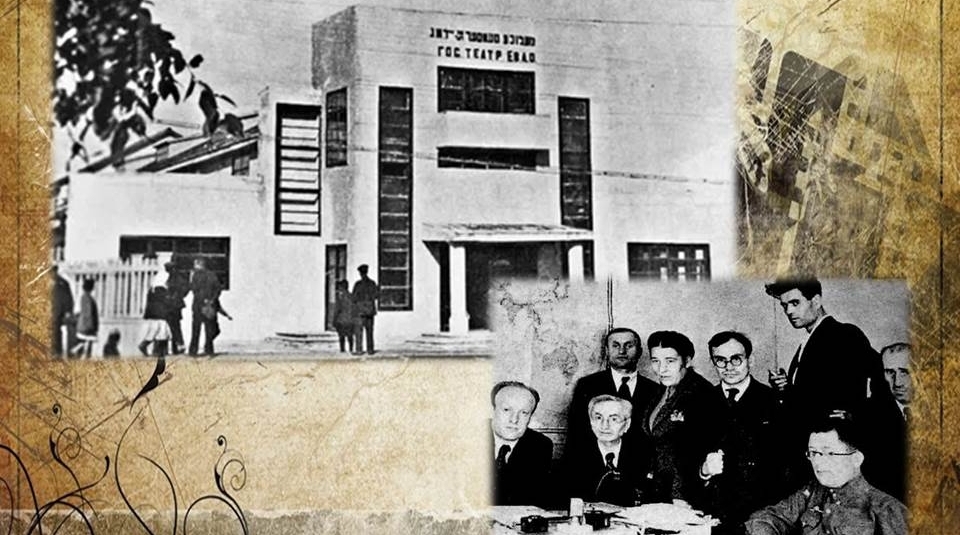
Day in the history of the Jewish Autonomous Region. Photo: Photo: Regional Library
In the hall of the Birobidzhan State Theater named after. L. M. Kaganovich held a large anti-fascist evening concert (12+), organized by a Birobidzhan group of writers and artists.
At this evening, the secretary of the regional committee of the CPSU (b) Kushnir made a report, who spoke about the current moment of the Great Patriotic War and the participation of Jews in the war. Then the figures that had already been contributed to the defense fund were read out.
The artistic part of the evening began with a screening of Y. Galitsky's play “Solomon Levi” (12+), directed by M. Friedman. The play told about the life of the Jewish intelligentsia under fascism.
At the evening, artists S. Fridman and I. Gross read anti-fascist poems by poets L. Kvitko and I. Fefer.
At the evening concert, songs about the war were performed by artists Shilman and Khaint.
“New works dedicated to the Patriotic War were read at the evening by Birobidzhan writers S. Borges, L. Wasserman, G. Rabinkov and B. Miller.
The entire collection from the concert evening in the amount of 10,000 rubles is sent to the Jewish Anti-Fascist Committee to fund funds collected for 500 aircraft for the Red Army.”
October 19, 1949

Day in the history of the Jewish Autonomous Region. Photo: Photo: Regional Library
In the newspaper “Birobidzhan Star” (12+) for October 19, 1949, there is a small note that on the days of the mass run of chum salmon team of the Nikolaev fish factory, caught a large kaluga weighing 296 kilograms, “…for which the brigade was awarded 1,180 rubles.”
October 19, 1961
The Bureau of the Regional Committee of the CPSU considered the issue “On the work of public education authorities in implementing the Law on Schools.” The adopted resolution noted that over the past two years, 15 new schools with 2,440 seats have been built in the region, 11 educational workshops, 17 seven-year schools have been reorganized into eight-year schools, and 10 secondary schools have been reorganized into secondary general labor polytechnic schools with industrial training. Activities have been planned aimed at further improving school management, implementing the Law on Universal Compulsory Education for Children and Adolescents, strengthening the educational and material base of schools, and working with teaching staff.