The chaos of the mobilization of reservists, explained by a security expert: “Logistical deficiencies, political decisions and zero defense culture”


National security expert Claudiu Degeratu explains for “Adevărul” how the chaos surrounding the MOBEX exercise came to be, pointing out political responsibility, logistical gaps, plans to expand the army and the absence of a civil defense culture in Romania.
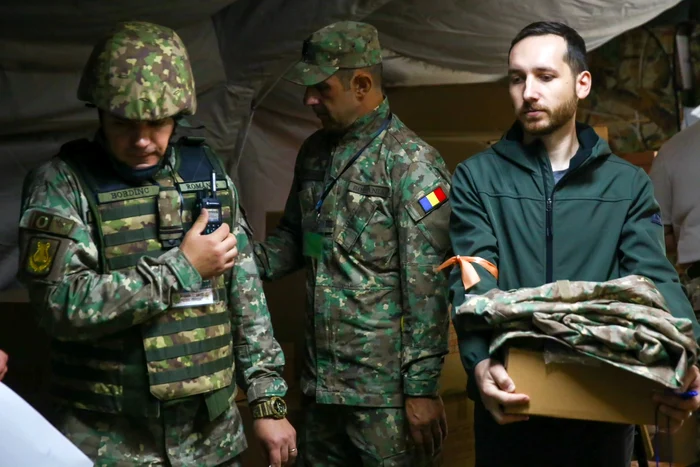
MOBEX B-IF-25. PHOTO: MApN
The scandal caused by the MOBEX mobilization exercise, carried out in Bucharest and Ilfov, brought to the fore an essential theme: how ready Romania is for a real mobilization and what the political reactions show about the way we understand defense.
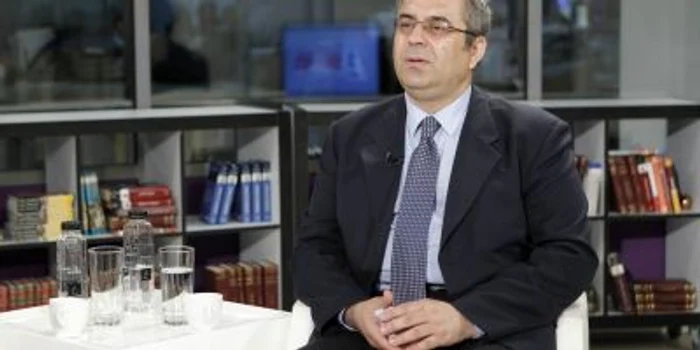
National security expert Claudiu Degeratu explained for “atruthul.ro” why the accusations of the former defense minister Mihai Fifor are a form of political opportunism, how we arrived at an aging reserve, but also why a defense economy cannot support Romania's growth.
A statement of political opportunism
We remind you that Mihai Fifor, former Minister of Defense, vice-president of the Defense Commission in the Chamber of Deputies, but also leader of PSD Arad, asked the resignation of Minister Ionuț Moșteanu after the MOBEX exercise, accusing “banter” to the reservists. He mocked the ministry's lack of reaction, stating that “no one takes the huge joke” and asking the minister to “get his scooter and go”.
A purely opportunistic reaction, draws Claudiu Degeratu's attention. “Mihai Fifor's statement is one of opportunism. PSD and PNL are directly to blame for the current state of the system. For years no resources have been allocated for reservists and mobilization. Fifor is now taking advantage of a situation that his party has generated”, says the expert.
He emphasizes that no party in the big governments can pose as innocent: “It got here because of a lack of vision and resources built up over time. It's hypocritical to blame the chaos, when you sponsored the underfunding.”
Degeratu warns that the constant politicization of military topics is dangerous: “It's sad that such moments are used for political gain. It creates distrust in institutions that really need to function in a crisis.”
MOBEX showed the reality: lack of logistics and chronic underfunding
The MOBEX B-IF-25 exercise, held between October 12 and 20, brought together thousands of reservists from the Capital and Ilfov for checks, data updates and standard mobilization exercises. The spokesperson of MApN, colonel Corneliu Pavel, explained that “the purpose of a mobilization exercise is precisely to identify these deficiencies.”
Claudiu Degeratu confirms that the problems that have arisen are not accidental:
“If you don't provide the logistical resources to mobilize the reservists, then how do you provide the logistics for the active troops in the event of a real alert? That's the big problem. The exercise showed the limits of capability, not just organizational, but also strategic planning.”
The expert points out that the primary purpose of such an exercise is to test availability and response to the call:
“The first objective is to see how many come. How many actually reach the facility. Without this indicator you cannot discuss efficiency. The rest of the logistical deficiencies are consequences of chronic underfunding.”
The reserve is aged. The goal of 120,000 troops is ambitious but unrealistic
Today, Romania has approximately 80,000 active military personnel, and the Ministry of Defense wants to reach 120,000. But Degeratu is realistic:
“We're not going to get there in the next five years. Even with 3.5% of GDP on defense we're not going to make it. We don't have the training base or the personnel to support that growth.”
And the current reserve has an average age between 45 and 55:
“We should have a young reserve, 30-35 years old. But we have a generation gap. It's a rift that directly affects combat ability.”, he also specifies
The Voluntary Reservist Act could bring change, but slowly:
“Training for 15 days a year is a start, not a solution. The state needs to invest in real training, for at least a year, to reach a NATO level. You can't train a modern army in the style of the 80s.”
Civil defense, a concept foreign to Romania
Asked about the preparation of cities for emergency situations, Degeratu says directly: “It's a foreign concept to Romania.”
“After the 60s, we completely lost the culture of civil protection. Countries like Poland or Finland invested in bunkers and modern shelters. We have blockhouses full of jars, not functional shelters.”
The expert believes that Romania must start from the ground up:
“The physical security of living space must be strengthened first, from plumbing and gas networks to water and electricity. Only then can we talk about urban shelters. Without secure basic infrastructure, any discussion of civil defense is theoretical.”
Degeratu points out that only the Department for Emergency Situations (DSU) currently deals with the continuity of essential services agreed with NATO: “There is no coherent plan for civil society, only minimal measures for strategic areas.”
The problem is not money, but lack of administrative capacity
Although Romania has access to European instruments such as the SAFE program for military procurement, the expert says that the problem is not the lack of funds:
“Money can be found. The problem is whether the projects are feasible and whether we have someone to carry them. You can't build a specialized manpower of thousands overnight.”
He explains the difference between investments in technology and those in human resources:
“For tanks or missiles you sign a contract. For people, you need programs, schools, time. Romania no longer has the administrative capacity to implement major defense projects.”
Degeratu also warns that politicians avoid investing in areas that do not bring votes:
“It's easier to raise teachers' salaries to get their votes than to train firefighters and emergency responders. The fact that we're in NATO is used as an excuse for passivity.”
The panic comes from the dishonesty of the leaders, not from society
Regarding public fears about mobilization, Degeratu rejects the idea that the population would panic if they were informed:
“Panic occurs when people are lied to. When you suddenly find out there's a problem that no one told you about, you react with anger and fear.”
He explains what a realistic strategy means:
“The ideal is to have our own capabilities for munitions, powders, armaments and a functioning shipyard. If we produce these essentials, we check security. But we must not delude ourselves that we will make a profit. It is an industry that supports defense, not the economy.”
Degeratu says that political deadlocks are delaying the updating of the National Defense Strategy:
“The priority remains the drafting and approval of the strategic document. The appointments to SRI and SIE are delayed, and the PSD is blocking the process. This directly influences the strategy as well.”
According to him, Romania urgently needs a new doctrinal framework adapted to the realities of 2025: “The context has changed radically after Russia's invasion of Ukraine. We need an updated defense strategy and clear coordination between services and ministries.”
Claudiu Degeratu is an expert in national, international, NATO, EU security, defense and strategic studies. He worked in MApN in various capacities for 13 years and is now an independent expert.
We remind you that, between October 12 and 20, reservists residing in the city of Bucharest and in Ilfov County were summoned to a mobilization exercise called MOBEX B-IF-25, which aimed to verify the completion of military units with personnel and equipment, as well as to strengthen the cohesion between reservists and active military.
Moșteanu, in inspection
On Friday, Minister Ionuț Moșteanu inspected how the MOBEX exercise is being carried out in Bucharest and Ilfov.
The official announced that the General Staff will conduct an analysis of the exercise and present details, including specific problems observed.
“It is an exercise in which all state institutions have responsibilities for defense, public order and security: the Ministry of Defense, the Ministry of the Interior, the General Inspectorate for Emergency Situations, SRI, the National Administration of Penitentiaries. If you have seen differences this week in the implementation of this program, it is because each of these institutions has specific objectives. MApN chose to do the sorting, the training inside the barracks. None of the queues was at the Ministry of Defense. And neither is the tape measure. In the MApN units, people received all the equipment and the exercises went according to plan“, declared Ionuț Moșteanu.
Minister Ionuț Moșteanu also explained that this mobilization exercise happens periodically, so that the Army can see the state of the reserve, and the people can be refamiliarized with the new operations and equipment.
In 2024, the exercise took place in Vrancea, Buzău, Călăraşi, Ialomita and several other counties. This year, it was in Teleorman, Giurgiu, Olt, Sibiu, Mureș, now in Bucharest and Ilfov. Next year, the MOBEX exercises will be in another 7-9 counties.
“I will say it bluntly: there is Russian propaganda that pushes certain narratives and wants to denigrate the Romanian Army. Russia wants to create a lot of stress and a lot of panic in Romania and beyond. I was in Brussels, I had many meetings at NATO and EU level, things like this happen in all countries“, stated Ionuț Moșteanu.