— If we spend citizens' money on defense, it is important for them to see that some of it comes back to their country, for example through factories. It's not just about buying missiles abroad, says the Romanian minister in an interview with POLITICO at NATO headquarters in Brussels.
— We want some of the production to take place in our country. We want to be part of the production chain, he adds. – Every country wants to have a large share, but so far only a few achieve this – he notes.
Western countries such as France, Germany, Italy and Sweden have the most developed arms industry in the EU and they win most of the lucrative arms contracts. Former Eastern Bloc countries such as Romania tend to have smaller arms companies that do not have the technological know-how necessary to produce the full range of weapons needed for rearmament, which means they are more dependent on external suppliers.
Russia's invasion of Ukraine opened the flow of funds to the defense sector. NATO countries agreed this summer to increase their defense spending from two to five percent by 2035. GDP. According to the European Commission, achieving the new target will require an additional EUR 288 billion (PLN 1,222 billion) annually in defense spending.
Romania wants to spend 2.3% this year. GDP for the army and plans to increase this amount to 3.5%. by 2030
One of the main challenges facing the country is the modernization of its armed forces, which for decades have operated mainly with obsolete Soviet-era military equipment.
Romania, bordering Ukraine, Moldova and the Black Sea, as well as EU countries, is crucial to regional security in southeastern Europe and is the headquarters of a NATO battle group led by France, which also includes American troops.
Romania does not want to be just a customer
Bucharest is to be the second largest beneficiary of the EU's SAFE program worth EUR 150 billion (PLN 636 billion 375 million) and is to receive low-interest loans for defense purposes in the amount of EUR 16.7 billion (PLN 70 billion 850 million). Mosteanu explains that two-thirds of these funds will go to military equipment and the remaining one-third to infrastructure; this also includes military aid to Ukraine and Moldova.
— The condition for any orders under the SAFE program – which is open mainly to European companies – should be industrial profits in Romania, says the minister.
One example of the country's desire to ensure that some defense funds remain in the country is the ongoing tender worth EUR 6.5 billion (PLN 27,576 million) for over 200 tanks, in which the condition is includedThatfinal assembly must take place in the country.
The article continues below the video
— In the coming years, it is very important that when we talk about spending money, we spread the “industrial return” evenly across the continent – emphasizes the minister, also referring to countries located further from the front line, such as Portugal.
He adds that if European producers do not accept the requirements for domestic production, Bucharest will give its money to non-EU companies that are willing to do so. – If some programs are not beneficial under SAFE, we will transfer them to the national budget – he announces.
The Romanian government is already a large customer of foreign arms manufacturers, especially those from the US, Israel and South Korea. It recently purchased American Patriot air defense systems and F-35 combat aircraft, as well as K9 self-propelled howitzers from the South Korean company Hanwha Aerospace.
Last year, Hanwha Aerospace executives told POLITICO that Romania may become a weapons production center for Europe, the Middle East and Africa.
Romania's strengths
Mosteanu argues that Romania, which is one of the most industrialized countries in Europe, has advantages that it can offer to weapons manufacturers.
It is already attracting some of Europe's largest arms companies: Bucharest and German giant Rheinmetall signed an agreement earlier this year to build a gunpowder factory, which will be partly financed by EU funds under an ammunition production support program.
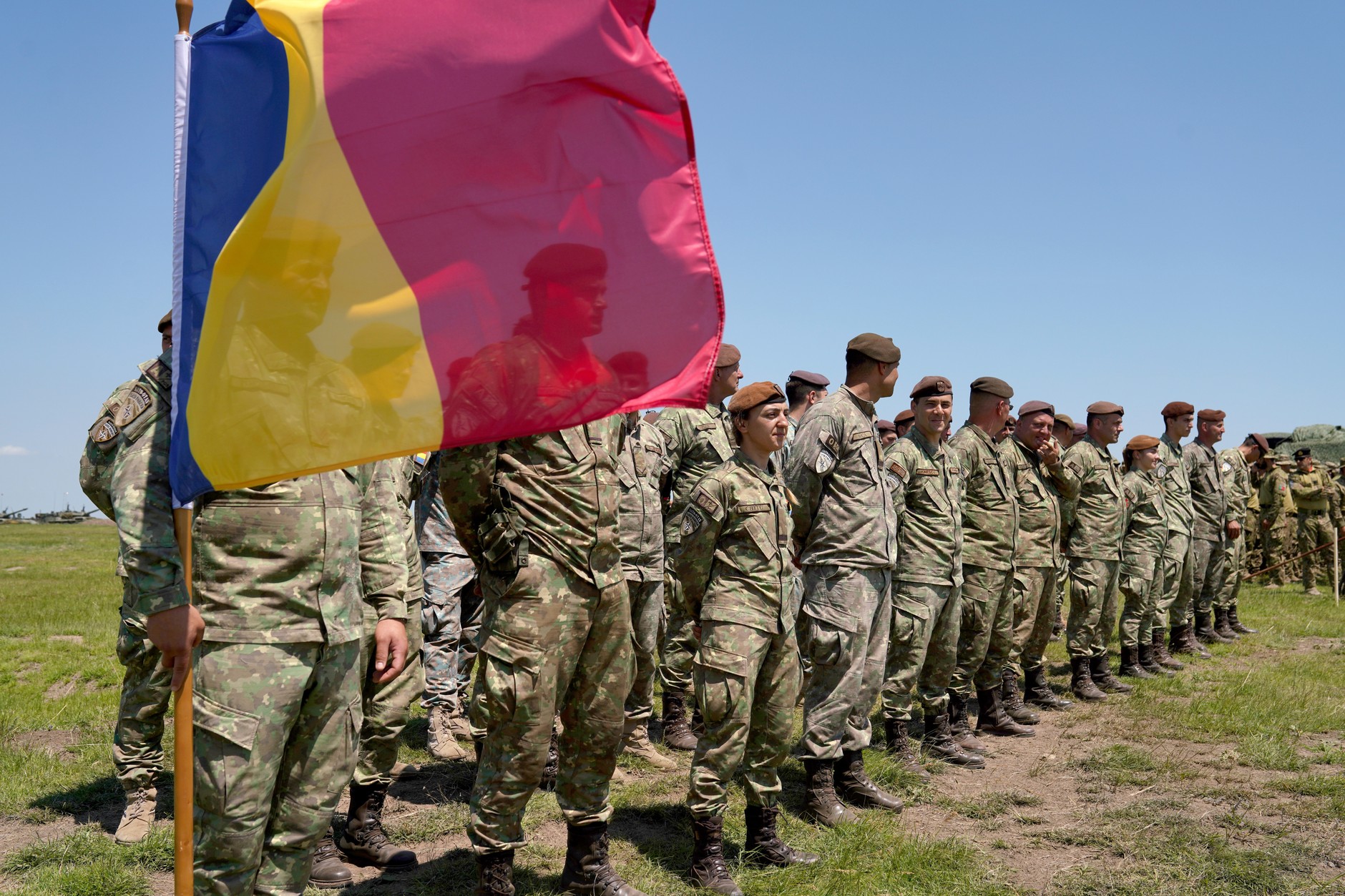
Romanian soldiers during NATO exercises, Smardan, Romania, June 3, 2022.Andreea Campeanu/Getty Images/Getty Images
According to the minister, in the near future, manufacturers will have to open new factories to meet demand, and Romania could easily host some of them. — We have defense production plants with all the necessary permits. They are not state of the art, but are a good starting point – claims.
Another strength of the country is its vibrant automotive sector, which can help arms manufacturers quickly increase production. Defense companies across the European Union are partnering with car manufacturers to take advantage of their mass production expertise.
— In Romania, we have a very strong automotive industry that can switch to the arms industry, says the minister, adding that the machines, production lines, expertise and supply chains are already ready.
Romania also intends to reduce bureaucracy. He wants to change the regulations to accelerate investments in the defense industry, without waiting for the simplification package being prepared in the European Commission. “I don't know when it will be adopted, but I'd like to have it soon,” adds Mosteanu.
I’m Ashley Davis as an editor, I’m committed to upholding the highest standards of integrity and accuracy in every piece we publish. My work is driven by curiosity, a passion for truth, and a belief that journalism plays a crucial role in shaping public discourse. I strive to tell stories that not only inform but also inspire action and conversation.