Plug-in hybrid cars pollute almost as much as petrol cars! Guardian report shakes up the car market


Article by Sergiu Alexandru – Published Thursday, October 16, 2025, 1:35 p.m. / Updated Thursday, October 16, 2025, 1:40 p.m.
An analysis carried out on 800,000 cars in Europe and published by the British daily guardian found that the pollution generated in real conditions by plug-in hybrid vehicles is almost five times higher than that indicated by laboratory tests.
Plug-in hybrid electric vehicles (PHEVs) emit nearly five times more pollution that contributes to global warming than official figures show!These vehicles, which can run on both electric batteries and combustion engines, have been promoted by European car manufacturers as a solution for cities, but also for traveling long distances without stopping, unlike fully electric cars. Basically, it was said that the pollution in the city would decrease, in the electric module, it would be the same over longer distances, hence an advantageous average for the environment.
But the data shows that PHEVs emit just 19% less CO2 than petrol and diesel cars, according to an analysis published on Thursday by the non-profit group Transport and Environment. In laboratory tests, they were supposed to be 75% less polluting.
The researchers analyzed data from the fuel consumption meters on board 800,000 cars registered in Europe between 2021 and 2023, the quoted source notes. They found that real-world carbon dioxide emissions of PHEVs in 2023 were 4.9 times higher than those in standardized laboratory tests, up from 3.5 times higher in 2021.
“Real World Emissions Rise, While Official Emissions Fall”
“Real-world emissions are increasing, while official emissions are decreasing,” said Sofía Navas Gohlke, a researcher at Transport and Environment and co-author of the report. “This discrepancy is getting worse and is a real problem. As a result, PHEV cars pollute almost as much as gasoline cars.”
The researchers attributed most of this difference to overestimation of the “utility factor” – the ratio of electric-mode kilometers driven to total kilometers driven. It was found that only 27% of the distance was covered in electric mode, although official estimates assumed a percentage of 84%. The European Commission has announced two corrections to this report, which will reduce the gap, but not eliminate it completely, according to the analysis.
Even when the cars were driven in electric mode, the analysis showed that pollution levels were well above official estimates. The researchers explained this by the fact that electric motors are not powerful enough to run on their own, with thermal engines burning fossil fuels for almost a third of the distance traveled in electric mode.
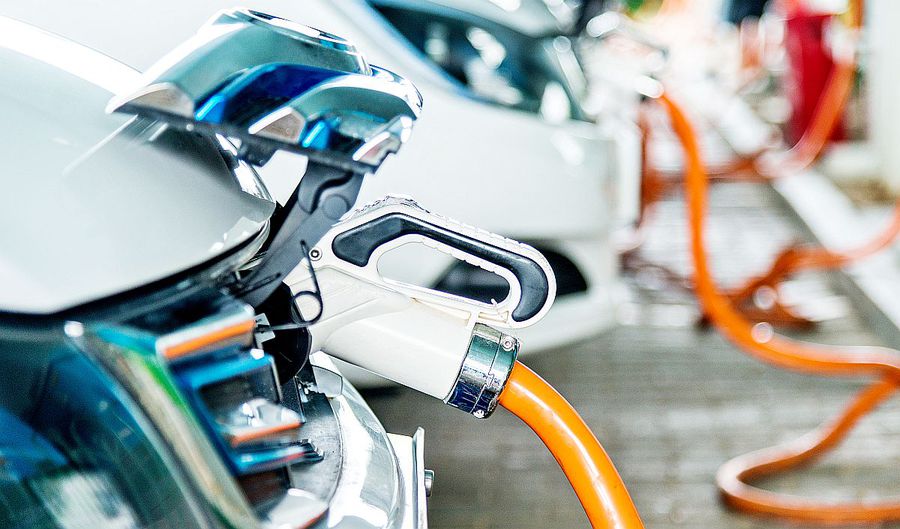
Electric cars charging, photo credit: Guliver/gettyimages
Lobbying heavily against combustion engines, China has won the race in Europe
Patrick Plötz, head of energy economics at the Fraunhofer Institute for Systems and Innovative Research, who was not involved in the study, said it was a “very useful contribution” after years of claims by some in the auto industry that there was not enough data to accurately assess real emissions.
“The results demonstrate beyond any doubt that the gap between official and actual fuel consumption and CO2 emissions of PHEVs is much, much greater than for petrol or diesel cars. Any changes to PHEV policies should be made with the utmost care and in light of this data.”
Hybrid cars are back in the political debate as carmakers press the EU to relax CO2 emissions targets. The ban on new cars with combustion engines in 2035 has been subject to intense lobbying by the car industry and opposition from member states with strong car industries.
- According to Reuters, Chinese automakers sold more cars in Europe than Renault and Audi brands in August, supported by strong growth in plug-in hybrid sales, with models from BYD, Jaecoo and MG in the top ten sellers in the category, JATO Dynamics data showed on Tuesday.
The researchers calculated that underestimating PHEV emissions allowed the big four automaker groups to avoid fines of more than €5 billion between 2021 and 2023, making it artificially easier to meet EU CO2 targets. They added that PHEV drivers would also pay around €500 more per year in running costs than the lab tests would suggest.
“The bold claims manufacturers are making about their plug-in hybrid vehicles are clearly far from the truth,” said Colin Walker, transport analyst at the Energy and Climate Intelligence Unit.
“Consumers are misled into thinking that by buying a PHEV they are helping the environment and saving money,” he said. “In reality, PHEVs are little better than regular petrol and diesel cars in terms of the fuel they use, the CO2 they produce and the money they cost to run.”