— What is particularly striking to me is the increase in violence among young people, and especially among children, said this spring Holger Muench, president of the Federal Criminal Office (BKA), during the presentation of police crime statistics, the annual “work report” of the police.
— We also see that it is an increasingly important factor [w rozpowszechnianiu się przestępczości] norms of masculinity legitimizing violence become. There is a growing number of people who agree with the statement that “a real man is always ready to strike,” he added.
The behavior of young people in Germany raises concerns among politicians and security authorities. As of 2022, statisticians have been recording high crime rate among children and adolescents. In addition, there are acts of violence characterized by exceptional cruelty, which – although rare – greatly inflame public opinion.
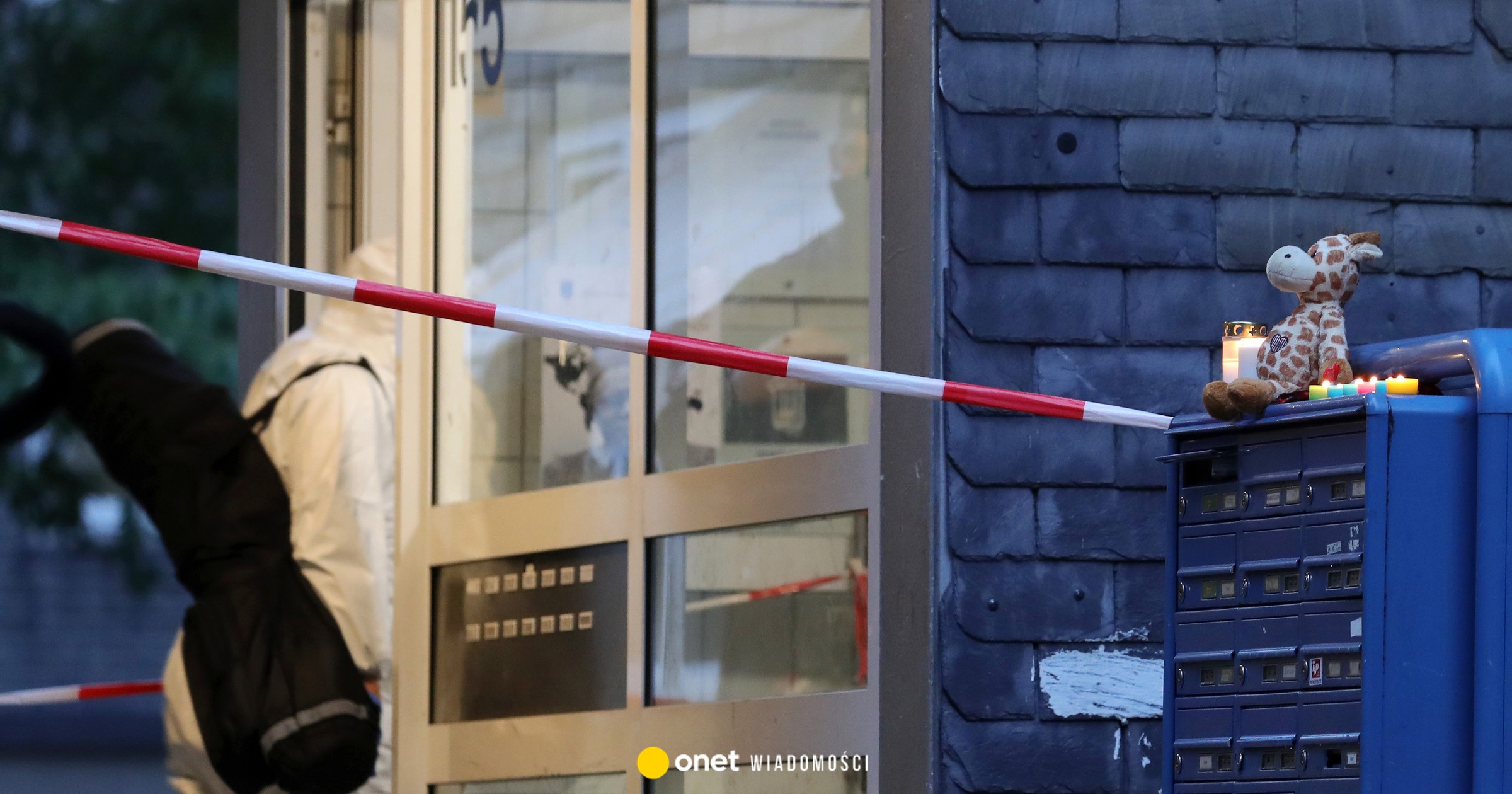
One example is the situation that occurred at the end of May this year in Spandau, a district of Berlin. A 13-year-old had an argument with a friend who was a year younger than him and stabbed him. The attacked child was taken to hospital, on the operating table. The incident at the end of January 2025 in Stuttgart was equally brutal.
Two children argued there at a tram stop. There was a struggle between them, as a result of which the 13-year-old pushed the 12-year-old into the path of an oncoming tram. He died as a result of his injuries.
Alarming data
Paramedics, police and firefighters report a growing number of victims of knife violence, an increasing number of younger perpetrators and new brutality on the streets. The causes of the rising tide of violence remain unclear. For a long time, the COVID-19 pandemic and the resulting enormous psychological burden on young people were considered to be the main factor explaining this state of affairs. However, the pandemic is over and the trend still persists. “This is more than just an effect of the coronavirus,” said Muench, president of the Federal Criminal Office (BKA).
The latest national figures he had to announce were alarming – the number of crimes involving minors in 2024 increased by 3.8% compared to the previous year. — up to 31 thousand 383 events. In the case of perpetrators under 14 years of age, the situation is even worse – the number of children suspected of committing a crime increased by as much as 11%. — up to 13 thousand 755. So much for “visible crimes”, i.e. those that are reported. Are German youth becoming more and more violent?
Unreported crimes
Since 2013, researchers from the Lower Saxony Institute for Criminological Research have conducted a survey of thousands of ninth-grade students every two years. Last year, 9,200 students took part in the “Niedersachsensurvey”. There is no comparable series of studies on a national scale, so the data from this analysis are considered representative for all of Germany. The survey collects data on risk factors for violence and gun ownership, but also includes questions about alcohol and drug use.
The data confirms what many practitioners observe every day – ninth-grade students experience violence more often than before, and its perpetrators are increasingly younger. Last year, more young people were victims of violence than ten years ago. While in 2015 about 15 percent respondents said they had experienced violence over the last 12 months, last year this percentage was approximately 20%.
The article continues below the video
Just under 10 percent adolescents experienced “bodily injury caused by one person”, which was the most frequently mentioned crime by study participants. 9.4 percent respondents reported that they had been victims of sexual harassment, and 3.8 percent — robbery and extortion. These types of crimes are committed primarily in schools and other public places.
Researchers also found that the age at which children come into conflict with the law is also decreasing. In 2013, juvenile perpetrators of violence committed their first crime on average at the age of approximately 12.17 years. Last year, this value dropped to 11.68 years. In an anonymous survey, approximately 6 percent ninth-grade students admitted that they had used violence in the last 12 months. The age of people committing their first crimes is decreasing, especially in the case of acts such as robbery and bodily harm committed alone or with the participation of several people.
Recently, information has emerged that young people are carrying knives in their pants pockets more often than before – and using them for illegal purposes. The number of crimes using them has increased throughout the country. The number of children suspected of committing a crime increased from 56 in 2020 to 117 in 2024, and the number of teenagers suspected of committing a crime increased from 256 to 365 during the same period.
The roots of violence
Can we conclude from this that we are dealing with new brutality on the streets of Germany? Scientists generally see no clear evidence that youth are becoming more violent.
About 15 percent young people report requiring treatment after being assaulted – this is roughly the same level as in 2013. This is a significant increase compared to 2019 – then it was only 7.9%. respondents.
Who is the perpetrator of the violence that ninth-grade students talk about? “First-generation immigrant youth are more likely to commit violent crimes than second-generation youth or youth without a history of immigration,” Muench's report said. Significantly fewer young people without a migration history (12.3%) admit to committing at least one violent crime during their lives than young people of the first (18.7%) and second generation of migrants (18.6%).
The first generation of immigrants includes young people who emigrated to Germany themselves, and therefore were not born in this country. Second-generation youth are people born in Germany, but at least one of their parents emigrated and therefore has a different origin.
I’m Ashley Davis as an editor, I’m committed to upholding the highest standards of integrity and accuracy in every piece we publish. My work is driven by curiosity, a passion for truth, and a belief that journalism plays a crucial role in shaping public discourse. I strive to tell stories that not only inform but also inspire action and conversation.