A Venezuelan dictator like Pablo Escobar? Donald Trump's risky but cunning plan


When President Donald Trump first tried to remove Nicolas Maduro from power, he didn't even hide it. He accused the Venezuelan dictator of rigging the electionsstripped Maduro's government of American recognition, imposed sanctions on Caracas and mobilized other countries to put pressure on Maduro to resign. To no avail.
In his second term, Trump is taking aim at Maduro very differently. His message is, uncharacteristically for Trump, less direct. Although Trump continues to claim that Maduro is in power illegally, he admits that there is “no way” of regime change in Caracas. Instead focuses on long-standing accusations that the autocrat is a drug kingpin and a dangerous criminal. People familiar with the situation tell me the plan is to force Maduro out as part of Trump's ongoing fight against drug cartels.
His efforts include labeling such groups as terrorist organizations, launching military strikes on ships allegedly carrying drugs from Venezuela, and raising the U.S. bounty on Maduro's head to $50 million. [ok. 184 mln zł] and breaking off diplomatic talks with Caracas. The campaign may not formally be about regime change, but if pressure from anti-cartel movements leads to Maduro's overthrow, well, the president and his team will be delighted.
“We will put a lot of pressure on him. He is weak.”
While Trump admires many of the world's autocrats, he has long seemed to sincerely dislike Maduro. The Latin politician has socialist roots, not far-right tendencies like Trump favorites such as Viktor Orban in Hungary or Vladimir Putin in Russia. I've heard from many U.S. officials over the years that Trump is also truly horrified by how Maduro has destroyed the economy of once-vibrant Venezuela.
— Would everyone like Maduro to leave? Yes, says a Trump administration official about the US president and his aides. “We're going to put a lot of pressure on him. He is weak. It is quite possible that he will collapse under this pressure without us having to lift a finger.
The article continues below the video
But would Trump be ready to “lift a finger”? Even send an invasion force to Venezuela or launch a missile dedicated to Maduro? It looks like Trump's team isn't ruling anything out.
Trump has multiple plans, including ones calling for raids on drug targets on Venezuelan territory, but has not issued any order to take out Maduro directly, the official says. Still, one person familiar with the discussions suggests that if Maduro is considered a drug kingpin and terrorist, he may become a justifiable target. — Don't we go after those accused of drug dealing and terrorism all the time? – this person asks. We granted both interviewees anonymity so that they could talk about sensitive considerations within the administration.
The White House did not respond to a request for comment.
The MAGA camp prefers the fight against drugs to political interventionism
I'm not sure if there is a specific term for this approach. Changing the regime “by the way”? Whatever you call it, may prove more difficult to implement than the steps taken by Trump so far.
The United States has tried a number of pressure campaigns on authoritarian authorities in the past. Some of them were based on severe economic sanctions (Iran, Cuba). Some involved arming rebels (Afghanistan). Some used the U.S. military in ways that may not have been intended (Libya) or intended (Iraq) to overthrow the regime.
These efforts can weaken autocrats and sometimes hasten their decline. But they can also last for many years and it is often unclear whether it was U.S. pressure or another factor that forced them to leave.
Divestment by the United States Manuel Noriega, Panama's military leader and longtime troublesome CIA collaboratoris an interesting comparison to the clash with Maduro. The United States imposed sanctions on Panama in the 1980s, accused Noriega of drug trafficking and refused to diplomatically recognize the puppet regime he oversaw.
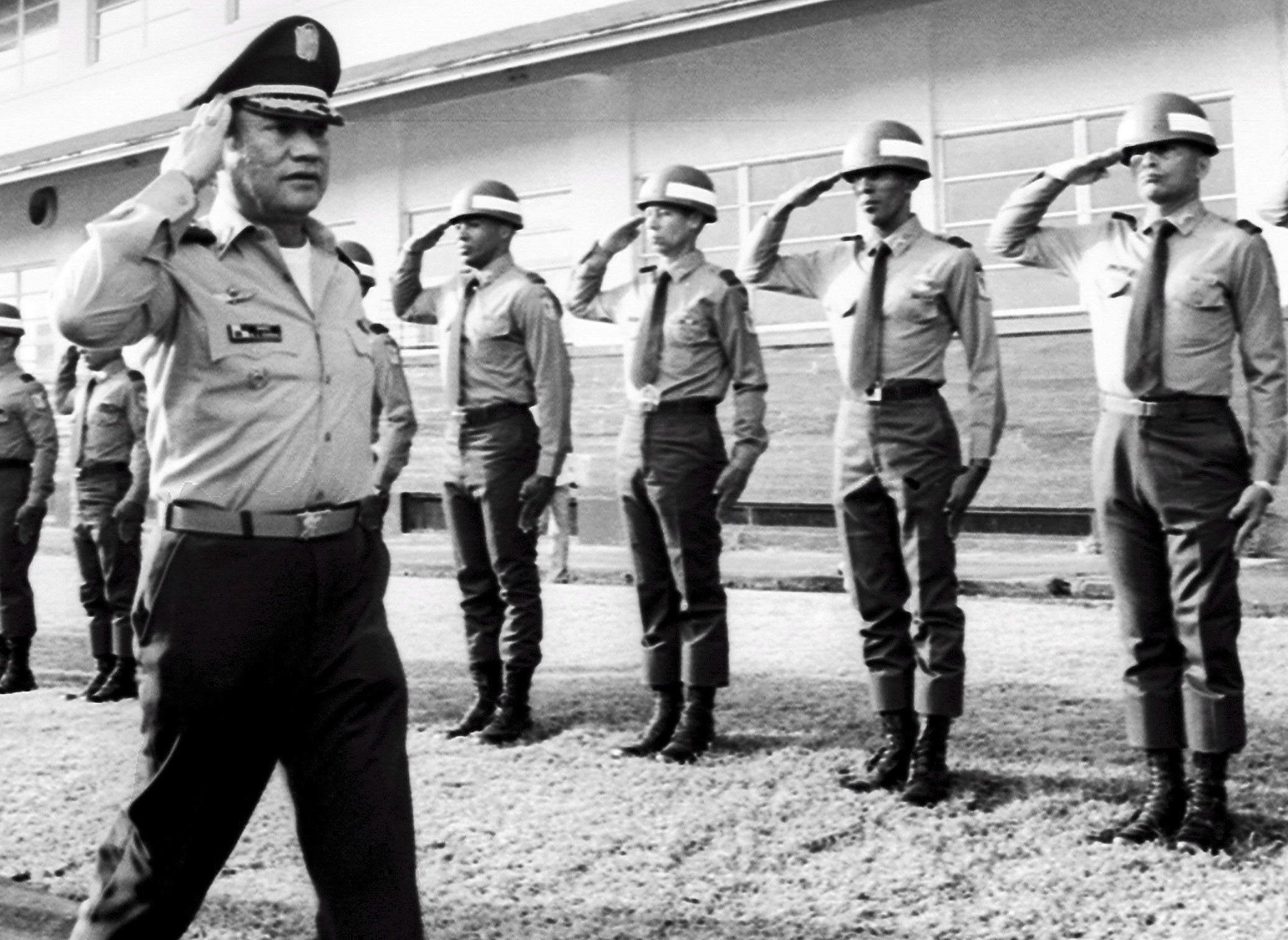
Gen. Manuel Antonio Noriega, Panamanian dictator, in 1985PAP/EPA/STF/PAP
But Noriega did not lose power until the United States invaded Panama with more than 20,000 troops. soldiers at the end of 1989 and detained him. The invasion was partly due to attacks by Noriega's forces on Americans in Panama, as well as concerns over control of the Panama Canal, but then-President George H. W. Bush did not forget about the drug charges when explaining his decision.
Venezuela is a larger and more complicated country, which makes Trump's approach even more unpredictable. Maduro has survived this long thanks to the support of the country's security forceseven if there is strong evidence that the country's citizens are voting against him.
I believe Trump is willing to escalate his anti-cartel campaign, but I'm not convinced he'll ever send a full-scale invasion force to take down Maduro. Partly because this could set off alarm bells within the MAGA base, which has a strong tendency toward isolationism. But smaller forces that are exclusively pursuing Maduro, the drug kingpin? Maybe. The MAGA base is much more supportive of the fight against cartels.
Former US officials tell me that sticking with the anti-Maduro campaign without officially calling it “regime change” has other advantages. Trump would look weak if he loudly announced that he was trying to overthrow Maduro, but it doesn't work (it actually didn't look good last time). The United States would also be less responsible for potentially costly consequences in Venezuelaif they avoided invasion and stuck to what they describe as a law enforcement mission.
— The Trump administration's calculation may be that Carrying out a regime change at a low cost will help them avoid penalties under the Pottery Barn Rule. – supposes Peter Feaver, former national security adviser in the George W. Bush administration. It was “former Secretary of State Colin Powell's famous aphorism that if you spoil Iraq, you have to buy Iraq and then you are responsible for stabilizing security.”
The Venezuelan opposition may turn out to be a US ally
There is a stable opposition in Venezuela that has various plans for what to do if the regime falls. The most famous opposition figure, Maria Corina Machado, received the Nobel Peace Prize on Friday — an honor Trump himself desires. Machado she dedicated her Nobel Prize partly to Trump “for his staunch support of our cause.”
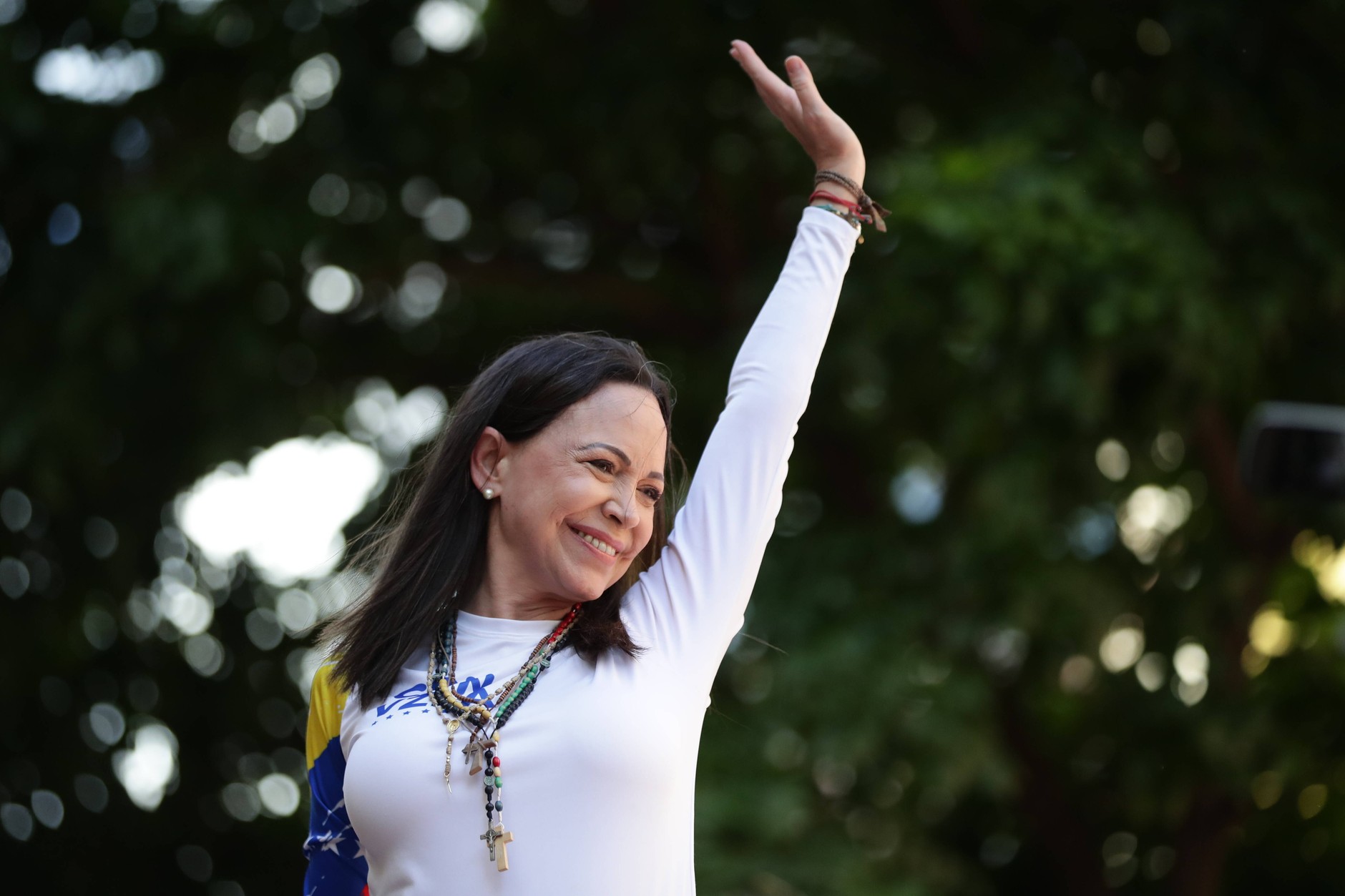
Maria Corina Machado at a rally in Caracas, January 9, 2025.EPA/RONALD PENA / PAP
A person familiar with the discussions tells me that the Trump administration is not coordinating with the Venezuelan opposition, although U.S. officials are in contact with it. David Smolansky, Machado's spokesman, refuses to answer the question of whether the opposition is coordinating its actions against the cartels with Trump's team. However, Smolansky says that Machado's office is in constant contact with the administration and Congressalso providing information on drug activity originating in Venezuela.
Leopoldo López, an opposition activist who spent years as a political prisoner in Venezuela, said the U.S. administration is now simply in sync with what he and others have been saying for years: that Maduro should be treated as the head of a criminal enterprise, not head of state.
López compares Maduro to the more famous “narco”. “If Pablo Escobar were president of Colombia, prosecuting Pablo would be the same as enabling political change,” López explains.
The US steps against Maduro – previously reported by The New York Times – are also consistent with the individual goals of some Trump advisers. Secretary of State and Acting National Security Advisor Marco Rubio — a Floridian of Cuban descent — has long wanted to eliminate the Venezuelan regime, in part because it could harm the regime in Cubaan ally of Caracas.
Trump adviser Stephen Miller, a tough anti-immigration advocate, hopes the new government in Caracas will make it easier to deport Venezuelans to the US, especially if the chaos following the fall of the regime is limited. Trump's advisers also hope so cracking down on Maduro will scare other leftist Latin American leaders and reduce drug flow.
People I talked to are not willing to predict how, if at all, Trump will escalate this regime change masquerading as a war on drug cartels. However, they announce that there will be no de-escalation in the near future. Above all, the president enjoys authorizing raids on boats allegedly carrying drugs. “It could put boats in the water every week for a long time,” a Trump administration official says.