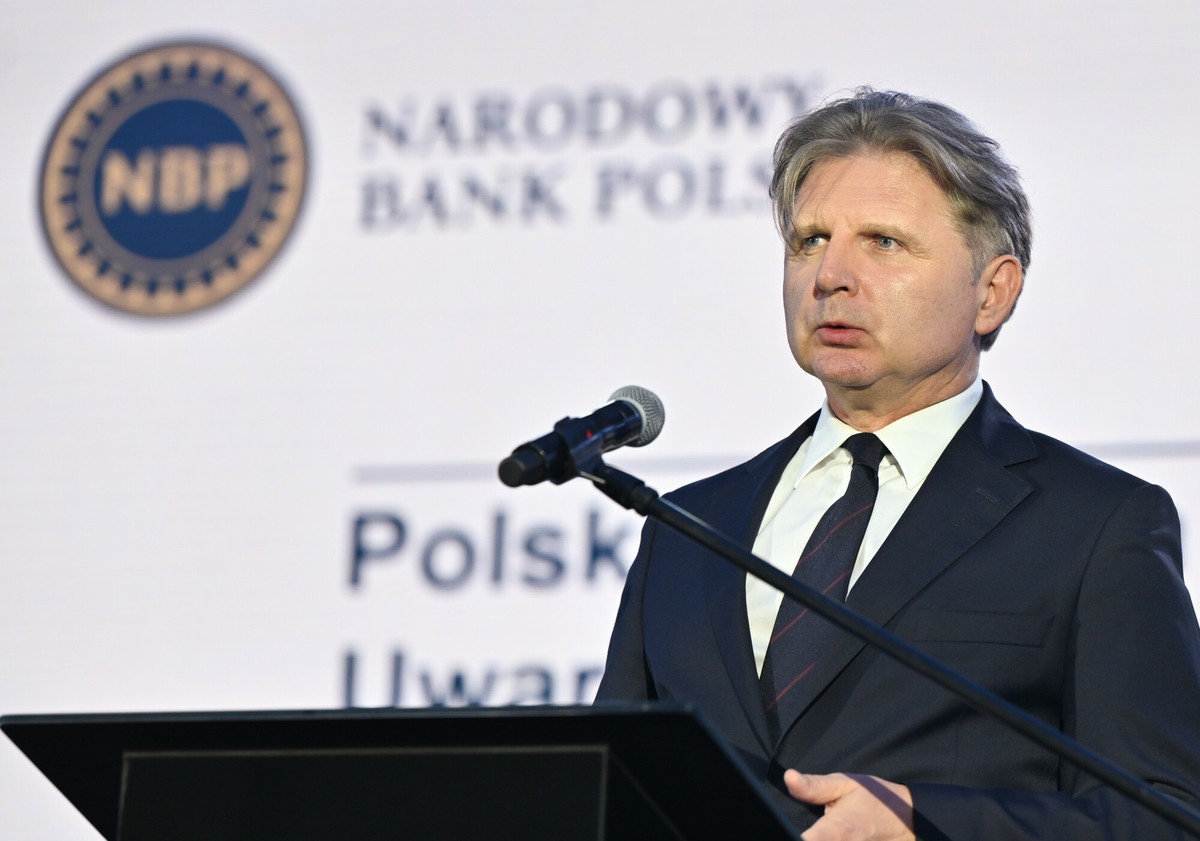
On Wednesday, the Monetary Policy Council decided to reduce interest rates by 0.25 percentage points. The main rate is 4.5%. Borrowers may be happy, but they expect more. When will the next interest rate cut occur? MPC member Cezary Kochalski had to face this question from Bloomberg.
As the agency points out, one of the decision makers on interest rates tries to cool down expectations regarding quick interest rate cuts in Poland, arguing that this week's cut significantly limited the scope for further monetary easing in 2025.
Cezary Kochalski said in an interview with Bloomberg that: inflation will probably not fall in the coming months to the middle value of the central bank's tolerance range of 1.5-3.5%. due to the risks associated with salary increases and other factors.
See also: President of the National Bank of Poland on inflation and interest rates. Will loans be cheaper?
He favors an “accommodative” approach to easing monetary policy and assigns a higher probability to a scenario in which interest rates will remain unchanged in November.
“While I didn't see much risk in deciding to cut rates in October, it did significantly limit the scope for further cuts this year” – he pointed out.
Cezary Kochalski, whose the six-year term of office at the Monetary Policy Council ends in Decembersaid that in November he would focus on the authorities' new inflation forecast. If the model shows a price increase approaching 2.5%. in the second half of next year, he would not “categorically” rule out another interest rate cut next month.
The MPC member admitted that before this week's two-day meeting he was leaning towards cutting interest rates in Novemberinstead of making a decision in October.
Interest rates. That's how they changed this year
Wednesday's decision of the Monetary Policy Council on interest rates promised to be particularly interesting. Usually, most economists' expectations are known before its announcement. This time, out of 18 analytical teams, nine predicted a reduction in interest rates, and nine predicted that the rates would remain unchanged.
There was no shortage of arguments for cutting interest rates: prolonged freezing of energy prices, lower than expected inflation and slowing wage growth. On the other hand, there were hawkish arguments related to the government's lenient fiscal policy and the increased growth of service prices.
The arguments of supporters of interest rate reductions prevailed. In its Wednesday statement, the Monetary Policy Council announced the updated value of interest rates after taking into account a cut of 0.25 percentage points:
- reference rate 4.5 percent on an annual basis
- lombard rate 5 percent on an annual basis
- deposit rate 4 percent on an annual basis
- rediscount rate of bills of exchange 4.55 percent on an annual basis
- bill of exchange discount rate 4.6 percent on an annual basis
Earlier this year, the Monetary Policy Council decided to cut interest rates three times, which meant declines for the main rate:
- by 0.5 percentage point up to 5.25 percent — May 8
- by 0.25 percentage points up to 5 percent — July 3
- by 0.25 percent up to 4.75 percent — September 4