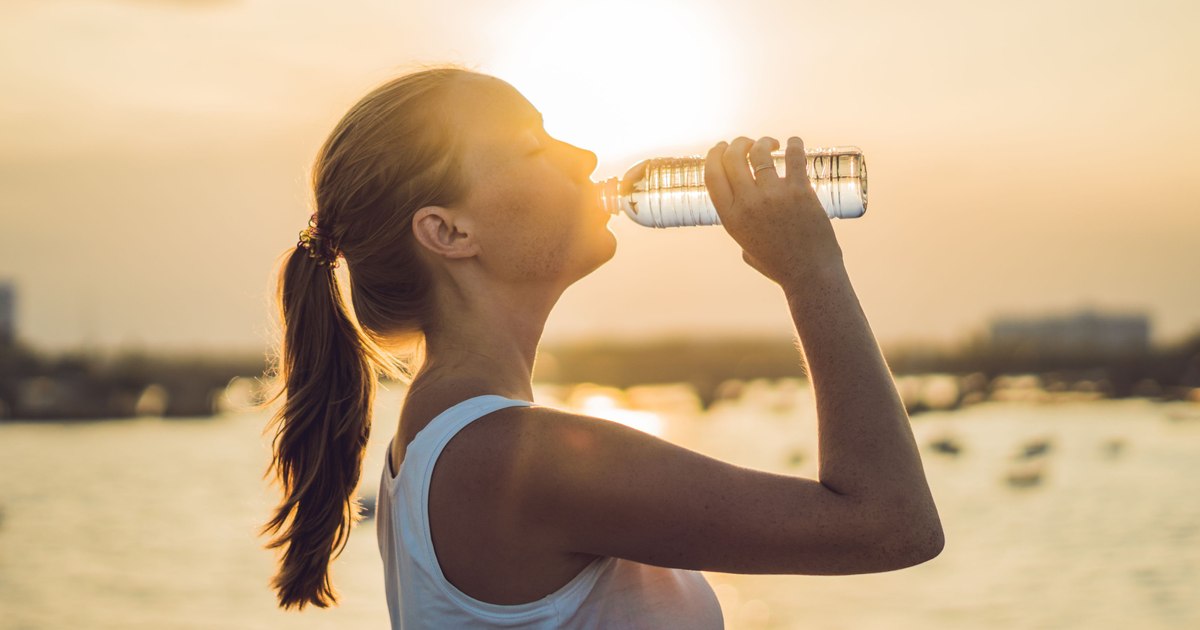
A post from Redit Romania has generated countless comments and reactions after the author compared the prices now with four years: “A bottle of water costs 2 lei in 2021, today is almost 5 lei. Will the salary increase by 250%?”.
Photo source: Shutterstock
On Thread, several users corrected the calculation. “It was 2 lei. Now it is 4.39 + 0.5, to have work with the return of the glass. explained a commentator. Another completed: “With 120%you want to say. If it was 3 lei it means a 50%increase, 4.4 eo 120%.”
Hidden costs of bottled water
However, the debate mixed two different realities. In supermarkets, a bottle of 2 liters water costs 3.85 lei today, respectively 4.35 lei with the included SGR guarantee. In contrast, 0.5 -liter small bottles, sold in gas stations or terraces, reach 4-5 lei – which explains why many consumers have the impression that water has “skipped 5 lei glass”.
The increase remains significant compared to 2021, when the prices were between 2 and 2.8 lei, but does not reach the threshold of 5 lei invoked in the comments. Even so, the financial impact is consistent. For a person who consumes a 2 -liter bottle of water daily, the annual cost amounts to 1,405 lei (or 1,588 lei with guarantee). For a family of four people, the amount of 5,600 lei per year (or 6,351 lei if we include the guarantee).
A study by Reveal Marketing Research in 2021, but published in 2023, offered a detailed image on the behaviors and preferences of Romanians regarding bottled water. According to the research, most Romanians preferred bottled flat water (33%) or carbonated (12%), while 21% used water filters, and 17% consumed water directly from the tap. However, 1 in 2 Romanians considered that the water from the sink was not completely drinkable if it was not filtered.
The study also showed that large packaging dominated the market: 60% of consumers bought 2 -liter bottles, and 56% chose 5 -liter cans. The Z generation, on the other hand, manifests a preference for small formats of 0.5 and 1 liter, easier to transport and consume “on the go”. The criteria of choice underlined in 2021 were the affordable price (56% for flat water, 50% for carbonated water), but count and the size of the packaging, the water composition and the previous experience with the brand. Among the essential attributes, the consumers mentioned the origin from natural sources (47-50%), the quality of the product (42-46%) and the accessibility of the price (40-43%).
“Shrinkflation” and maneuvers from the shelf
Currently, on Reddit, the dissatisfaction of consumers is not only linked to the exact value of the percentage, but to the feeling that the basic products become more and more difficult. “La Mega, near the Dorna Carbo 2l bottle at 4.17 lei, a new model of 1.5l at 3.99 lei has appeared. Soon the 2L will disappear and we will have 1.5l at a price of 2l”, noticed a user. Another reacted immediately: “Maneuvers … reduce the quantity by 25% and reduce the price by 1%.” Promotion “.”
The phenomenon of “shinkflation” (reducing the packaging at the same price) has been reported in other situations. “Do you want to talk about maneuvers? You go to the summer terraces and see how the 0.5 beer bottles disappear in favor of 0.33. But the price is the same, maybe even more expensive, that no, crisis.”wrote another participant in the discussion.
For many, the comparison between states is even more frustrating. “Honestly, I do not understand how some countries have some modest water prices, although it is drought, and with so many springs we pay for a price to buy a bottle of beer.”said a user. Someone else pointed out: “At this rate, over 4-5 years will be a bottle of water 9.99 lei.”
“I have not seen anyone mention, but the legendary pet of beer taken with the boys in the neighborhood turned from 2.5 liters to 2.25”, Points someone else.
Wages, between growths and stagnations
The discussion also reached wages. Some users said their revenues have grown in recent years: “Compared to 2021 my salary increased four times”someone wrote. “He increased by more than 120%”added another. However, many have drawn attention to the attention that these increases came by changing the job or leaving the country. “I get about 60% in addition to income, compared to 2021. But, the liabilities climbed me like the prices, the price of the buildings went up, at the commercial spaces he climbed even more in 4 years … so I did not see me. It is somewhat compensating with inflation, not so much, but there is something …”, added another user.
“I increased 4.5 times. I was engaged in another country, the water is 1 euros 1.5 liters, ie five lei”, noted a Romanian who went abroad. Instead, others spoke to much smaller growth: “With 100% and I am as poor”, “10%…”, “I have been unemployed for six years, so my answer is: no.”
The discussion also reached practical aspects. “Last days I forgot my water at home and close to work were not open shops apart from a gas station.wrote a user. Someone else came immediately with a solution: “The tap water is cheap. Buy filter or filter and that is. I am five years old, I have not bought plain water, only filters.”
Behind the price there are higher costs with energy, transport and packaging, but also the introduction of the guarantee of 0.5 lei for each bottle. However, the explanations do not convince the consumers, who feel on their own skin the difference from the shelf. “” With local recycling you can recover 50 money from the price of the bought glass “and then raise the price including the guarantee on the glass”, someone else commented.
Although the question “will you increase the salary by 250%?” It starts from a wrong calculation, has managed to capture a background reality. In the last four years, bottled water prices have increased by 120-140%, while wages, for most people, advanced much slower. In a country where the tap water costs a few money, but the bottled one has become compared to beer, the dissatisfaction on the Internet reveals a real social tension: the purchasing power decreases, and the basic products become the symbol of this gap.
Romania, leader in the EU at bottled water price
An analysis published at the end of July, carried out by Reveal Marketing Research, shows that Romania is in the first place in the European Union when it comes to the bottled water price related to the living level. Although the country has rich natural resources, with rivers, mountain springs and underground waters, the paradox is that on the shelf, bottled water has become more expensive than in states such as Italy or Greece.
In Romanian stores, a two -liter bottle costs between 3.5 and 4.7 lei, almost double compared to Italy, where the price varies between 0.3 and 0.5 euros (1.5-2.5 lei). In Greece, the same bottle is sold for about 0.5 euros, and in Bulgaria with 0.5–1 euros. In many cases, the price of water is close to that of soft drinks or beer, although the latter are additionally charged by excise duties.
Bottled water consumption remains high, but decreases compared to previous years. In 2024, Romanians will buy a total of about 2.4 million liters, on average 125 liters per person. However, the interest in bottled water decreased from 58% in 2021 to 45% in 2024, against the background of increased and inflation.
More and more consumers are looking for cheaper alternatives: 21% use filtration systems, and 17% say they drink water directly from the tap. According to calculations, monthly costs with bottled water can reach, for a family, at 300-500 lei, which makes daily hydration becoming a financial burden.
Despite the generous natural resources, Romania continues to be one of the countries where bottled water is perceived as a luxury product, related to population income.