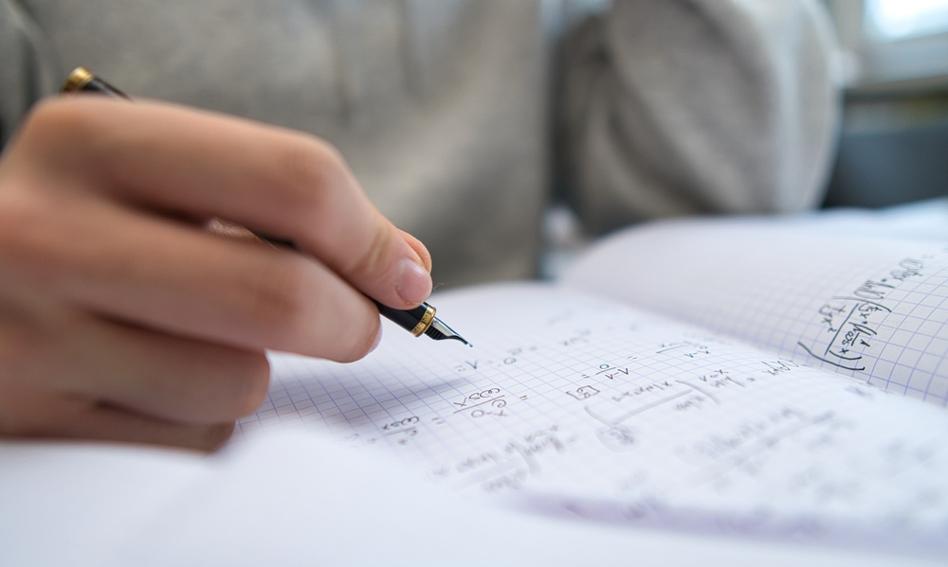
Mathematics at school will be more vital. We are moving away from complicated bills – PAP donated Marcin Karpiński, co -author of the project of the new core curriculum for this subject. Students will learn, among others, how to calculate credit costs and how not to be fooled by promotions.
From 2026, as announced by the Ministry of Education, a new core curriculum will enter schools. Work on 22 projects of core curriculum for kindergarten and primary school began in March 2025, and in half of September the Institute of Educational Research – the National Research Institute (IBE) published projects prepared by experts.
The changes will include mathematics. Now it is to be more vital.
– We move away from complex bills in favor of e.g. calculations on the calculator, but we do not give up basic accounting efficiency. It is a balance between relational and tool mathematics – said PAP Marcin Karpiński, coordinator of the Mathematics Team at IBE, academic teacher and longtime mathematics teacher at high school, editor -in -chief of the magazine “Mathematics at school”, co -author of programs, textbooks and task collections.
He reported that most content, concepts and property with a selection were preserved in the offer to use them from the practical side. He added that there is no need for students to recreate from memory what the separation of multiplication in relation to adding means, but they can use it.
– We suggested that in the core curriculum what was good and what, among others It translates into the results of Polish students in international research, such as Pisa or Timss, in which we do really well against the background of other countries – he said.
Timss is one of the most important international comparative educational research that checks the level of knowledge and skills. In 2023, Polish students of the 4th grade of primary school took the 10th place in mathematical achievements in 58 countries and regions.
In the last, from 2022, the PISA study (international student assessment program), which shows the level and diversity of the skills of fifteen -year -olds, the average result of Polish students in mathematical skills was 489 points. Among EU countries, only Estonian students achieved a better result.
The basis also assumes the use of digital technologies.
– We had to face it when you use a calculator, computer, application or artificial intelligence during mathematics lessons. It is not about giving up accounting proficiency, but about just reaching for a calculator in practical situations, as adults do, he said.
At the same time, he noted that the student should be able to use a calculator, but in grades IV-VI he should do this with caution, because at that time the understanding of the concepts and relationships between numbers as a result of performing bills is shaped.
A novelty in the core curriculum of mathematics is the separation of the financial module. – Mathematics will be interspersed with a practical aspect that children get tamed with him – said Karpiński.
In grades IV-VI, students will calculate the percentage of a given size on practical examples, e.g. compare the profitability of various purchase options-discount or promotion. In grades VII-VIII they will learn to apply percentage calculations for calculating, among others interest on an annual deposit, credit costs and tax amount.
The expert added that the modules are new in the entire core curriculum.
– There is no separate subject of finance, but there is a certain range of skills that students should buy. This also applies to some concepts, e.g. inflation, average pay or median pay and the difference between them – he explained.
This module, as he explained, is to teach children not only to read the data, but also their analyzes – what conclusions can draw from them and what they are drawn falsely. This is also to prevent adverse decisions, including financial decisions.
Experts also suggest that students can demonstrate the ability to, for example, counting and explaining according to their own strategies, which will give them greater freedom in solving tasks.
– We wrote there specific learning outcomes that students should achieve at the next stages of education. It is about checking how they deal with a mathematical problem: how to interpret data, how to save it, so that it is easier to resolve the problem of how to visualize data for the use of your own solution, how to communicate your way of solutions, how to argue – said Karpiński.
Preparation of a new core curriculum, including mathematics, is an element of the “Reform 26. Compass of tomorrow” spread over the years of education reform. From September 1, 2025, two new subjects have already entered schools – civic education and health education. A new core curriculum will also be introduced gradually: in September 2026, it will begin to apply in grades I and IV of the Primary School, from September 2027 in the first grades of secondary schools, and in elementary school it will cover another two years. In the following years, it is to cover subsequent years of primary school students and secondary schools. (PAP)
Pak/ JOZ/ MOW/