
Prime Minister Ilie Bolojan says that the minimum tax on the turnover must be re-analyzed, which he assumed in Parliament. What reasons invoke


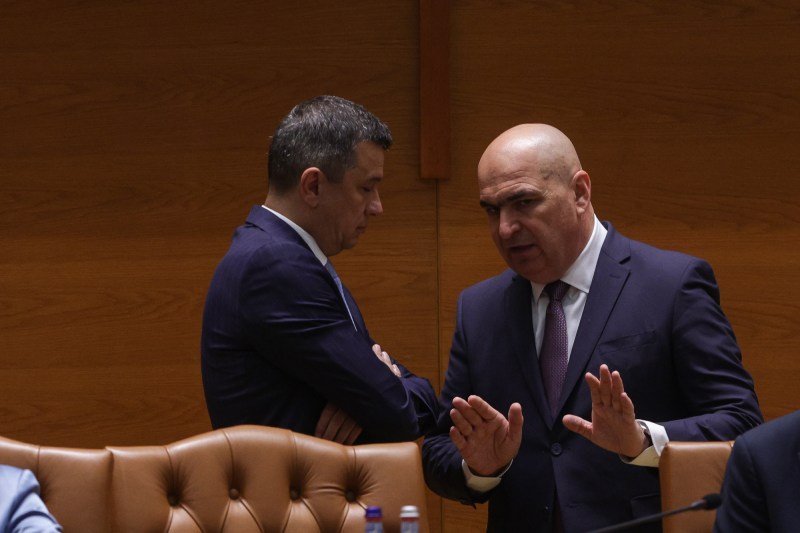
Sorin Grindeanu and Ilie Bolojan. Inquam Photos / Octav Ganea
Prime Minister Ilie Bolojan reopened on Friday the issue of multinational taxation on Friday, specifying that “the minimum tax on the turnover, the so -called imca, must be re -analyzed” in order not to penalize foreign investments, but to those who do not want to pay taxes “. The prime minister said that a decision should be taken by the end of this year, although the reintroduction of this 1% tax for companies with a turnover of over 50 million euros (IMCA) was an amendment proposed by the PSD that the Bolojan government assumed in Parliament.
Prime Minister Ilie Bolojan made these statements in a press conference at the Victoria Palace on the occasion of 100 days of mandate.
“An important element to be a country that is predictable with investments is to have a tax and tax system that does not discourage them. And the tax-the so-called IMCA, the tax on the turnover-is an element that I think must be re-analyzed in such a way as to penalize those who really abuse the transfer prices, but not to pay them, Romania, ”the prime minister said on Friday.
“I think that by the end of the year we have to think as well as possible”
The journalists asked Ilie Bolojan what will eventually happen with this tax, which was initially eliminated in the government meeting approving the draft law on package 2 fiscal measures, after which it was reintroduced in the draft law following an amendment of the PSD, the act being finally adopted by Parliament.
Bolojan admitted that “at the moment, this tax remained as it was, so nothing has changed”, but he claims that there are still discussions on this topic.
“There have been discussions about his re-establishment, his rethinking, but I think that by the end of the year, until we finalize the provisions that will enter into force next year, we must think as well as well, and in the field of tax legislation it is good to do things predictable, not to do them, because they need to prepare for them, if they need to prepare, Investments are taken a year before, so any measure of this kind will generate effects not in 2026, but possibly in 2027. We will see to what extent a conclusion is reached on this topic, but in all the discussions we had with the big companies, with those who wanted to invest in Romania, this tax has always been a problem, which should be a problem.
How was it removed then reintroduced the minimum turnover tax to big companies
The government introduced in January 2024 the minimum tax on the turnover of large companies, which have businesses of over 50 million euros. The quota applies if the profit tax (a standard 16% share) is less than 1% of the turnover.
In the Government meeting of 29 August 2025, the Bolojan Government initially approved the draft law proposed by the Ministry of Finance, led by Alexandru Nazare (PNL), by which this tax was eliminated. Instead, the project provided a new tax on affiliates.
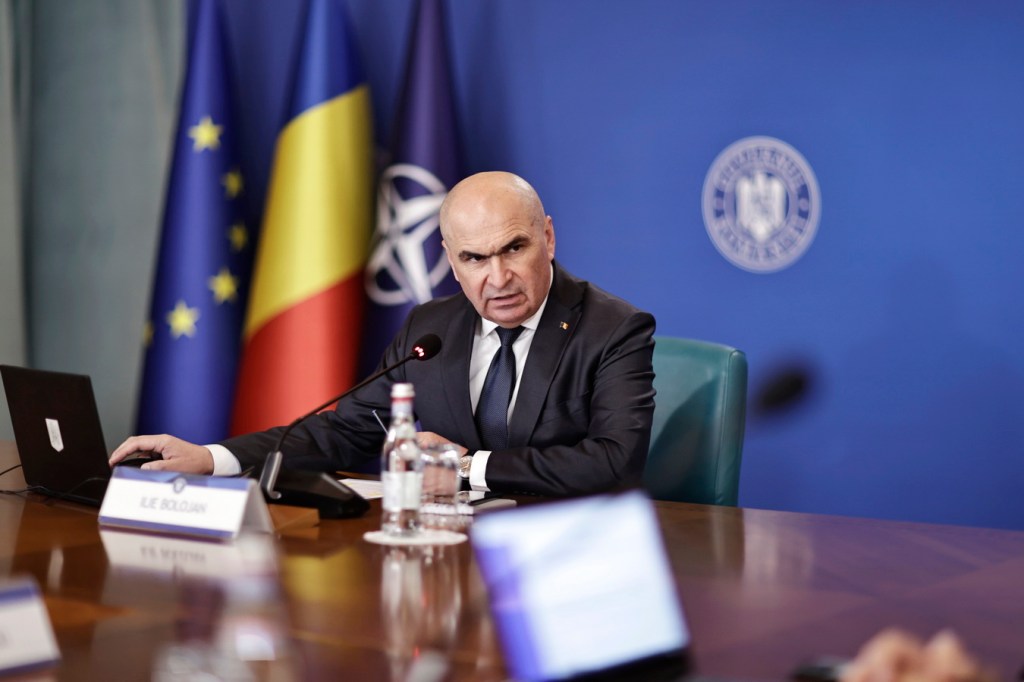 The government has adopted package 2 of austerity measures. The project that provides the redundancies in the town halls was removed at the last moment from the agenda and will be redissed in the coalition / the executive members did not accept questions from journalists after briefing
The coalition returned to this tax in the meeting of September 1, 2025, when the parties sent amendments to the draft law before the Government assumes their responsibility in Parliament. Thus, following an amendment of the PSD, it was decided to reintroduce the tax of 1% for companies with the turnover of over 50 million euros (IMCA).
 Package 2 – Taxes and taxes: Last -hour changes, as the PSD and USR amendments show / from cars and high -value houses to the conditions of the child raising
The coalition then decided to maintain the tax on affiliates, the mechanism of limiting the deductible expenses to 1% for companies that register a turnover of less than 50 million euros per year.
The Bolojan government then assumed responsibility in Parliament on this draft law with fiscal measures.


