
Conflict between two central figures of the left in Greece. “Everybody hated Varoufakis,” says Tsipras. “Tsipras is the greatest achievement of the Troika,” replies Varoufakis

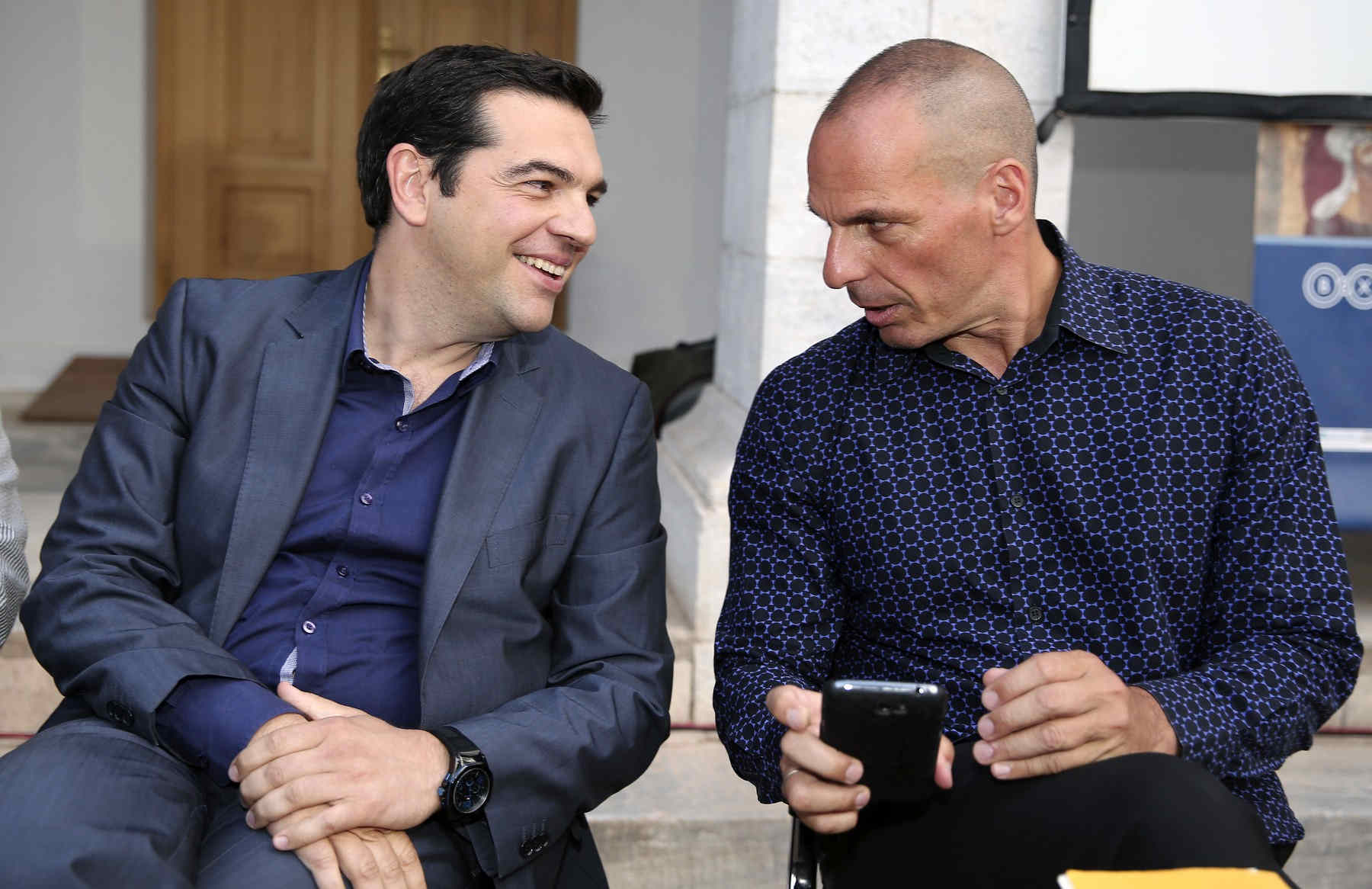
The former Syriza prime minister and his former finance minister have revived an older conflict from the dramatic period in 2015, when Greece was on the verge of exiting the euro zone amid a deep financial crisis, write Kathimerini and Politico.
If the troika of Greece's creditors (the European Central Bank, the European Commission and the IMF, no) were asked what was its “greatest achievement” during Greece's austerity crisis, “Alexis Tsipras would answer,” Yanis Varoufakis, the country's former finance minister, said in an interview with public broadcaster ERT on Tuesday.
Varoufakis – known for his anti-austerity positions, currently founder of the left-wing anti-establishment party Mera25 – responded in this way to the attacks launched by his former boss, ex-prime minister Alexis Tsipras, in his memoir, “Ithaki” (Ithaca), writes the English-language edition of Kathimerini.
Varoufakis, a former member of the troubled Tsipras government in 2015, has never hidden his critical stance on the deal offered to Greece by European creditors and the conciliatory position eventually adopted by the Syriza party-controlled executive, which initially opposed austerity measures.
On the other hand, Tsipras is showing signs that he is preparing to form a new party, after resigning from his position as an MP and leaving Syriza.
Varoufakis' regrets
Tsipras “gave the troika everything, and they still wanted to punish him. They didn't just want to sign the memorandum, they wanted to humiliate him,” Varoufakis told ERT, adding that Tsipras continued, with the summer 2015 referendum, to “turn a 'no' into a 'yes'.”
Varoufakis went on to criticize Tsipras for rejecting his idea of a parallel system of payments should negotiations with creditors fail and Greece exit the eurozone, saying the idea simply involved giving out “vouchers” instead of pensions and wages.
“It was an innovative solution for maintaining domestic liquidity,” Varoufakis said.
Speaking about his brief tenure, from January to July 2015, Varoufakis admitted he had made “communication errors”. He said his biggest regret was signing the February 20, 2015 agreement with the Eurogroup of eurozone finance ministers, which granted Greece a four-month extension of its bailout deal.
Tsipras, he claimed, “took advantage” of the extension to eventually sign a new austerity deal later that year.
Varoufakis also expressed regret for agreeing to take part in a photo shoot for a French magazine with his wife in their luxury home in crisis-hit Athens, a decision for which he was criticized.
Tsipras “is interested in becoming prime minister – that's understandable,” Varoufakis commented.
“More of a star than an economist”
Tsipras released his memoirs on Monday, in which he looks back on the period when Athens was in a dramatic financial situation and harshly criticizes his former finance minister, Yanis Varoufakis, writes Politico.
Tsipras admitted he “underestimated the human factor” when he chose Varoufakis, saying he was “more of a star than an economist”.
Tsipras was 34 when he became the leader of the Syriza party and led the party from 4.6% in 2009 to 36.3% in 2015.
The radical left party rose to prominence across Europe at the height of the 2015 financial crisis, when Tsipras and Varoufakis looked set to force Athens out of the euro zone in high-stakes negotiations with German-led EU partners.
In July 2015, after winning a referendum in which Greeks rejected the EU's proposed bailout terms — a symbolic victory that ultimately didn't change much — Tsipras reversed course, accepted a new bailout plan to keep Greece in the euro zone, and was re-elected in September.
“We wanted an honorable agreement within the eurozone,” Tsipras wrote, “but we did not hide the fact that we wanted a radical change in Europe, that we wanted to end the imposition of the economic absurdity of neoliberalism not only in Greece, but from one end of the continent to the other.”
The former prime minister, who left office in 2019, repeatedly says in the book that he never considered the idea of leaving the euro zone, but confirms that the risk was real and part of former German finance minister Wolfgang Schäuble's plan as Athens' fiscal woes rocked the single currency.
“I didn't know whether to cry or laugh”
Tsipras wrote that Varoufakis facilitated this with his confrontational approach and risky strategic policy until he was “fired” from the Finance Ministry.
“Varoufakis has gone from being an asset to being a negative protagonist. It's not just our potential allies who can't stand him, so can his own colleagues,” he said.
Tsipras finally got mad at his finance minister when Varoufakis presented him with “Plan B”, which called for the introduction of a parallel currency using vouchers.
“Instead of giving money to pensioners and employees, we would print vouchers that they could use to buy goods and services,” Varoufakis said.
“When I heard that, I didn't know whether to cry or laugh. I reacted: 'Are you serious?'” Tsipras recalled.
Putin did not help Tsipras, but urged him to accept the deal with Merkel
In his book, Tsipras also described his government's attempts to appeal to the Kremlin for financial aid.
On 19 June 2015, during a meeting in Saint Petersburg, Tsipras suggested to Russian President Vladimir Putin that he make a symbolic investment of 200–300 million euros in Greek government bonds.
“His answer was honest and direct,” Tsipras said.
“Putin said he would rather donate the money to an orphanage because, according to him, giving it to Greece would be like throwing it away,” Tsipras said. He suggested Greece reach an agreement with the Europeans, especially German Chancellor Angela Merkel.


