
How do you teach your child not to be a puppet, but a future adult who thinks independently, not how those around him dictate

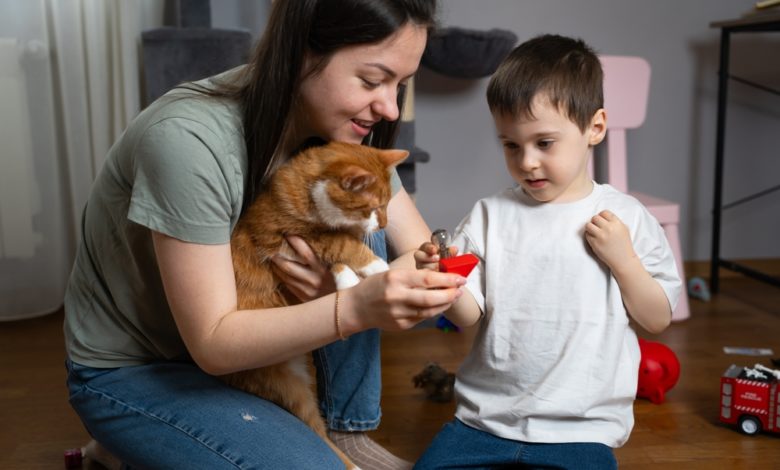
Critical thinking-that is, that ability that helps a man to ask questions about all things, but also find the right answers-has been formed since the child is little. Help him think alone and well with simple games to play at home. Photo: Shutterstock
Lately, he has been talking about “critical thinking”, an extremely important concept in the way we understand the world and how we act. In the absence of critical thinking, the child becomes easier to manipulate – by colleagues, adults, publications, social media. It can have difficulty making good decisions, especially when they are experiencing new situations. He loses his self -confidence, because he is not used to analyzing options and choosing what's best for him. It can be more vulnerable to the dangers: misinformation, negative influences, risky choices. Critical thinking is learned.
Therefore, it is important to give your child contexts in which to practice choice, analysis and logic. And the simplest way is through simple games that helps them move from “Why?” at “Aha!”
At school we were taught to memorize and repeat what we memorized, without asking us any questions. But the modern world forces us to teach children to think alone and do it properly. To ask questions, not to learn about it. To think, not to repeat the parrot. A child who asks questions and is looking for answers is a child prepared for life. By playing together, he learns to think alone, to ask relevant questions about the world around and, finally, not to be easy to manipulate.
What can happen in the absence of critical thinking?
The lack of critical thinking means that a person, a child or adult, accepts the information and situations as they come, without questioning them, without wondering “why?”, “Is it true?”, “Is it good for me?” or “What could happen after that?”. And not because he would not want answers, but simply because he was not encouraged and supported at home and at school to find out. “The curiosity of the children does not disappear, what disappears is only its verbalization,” says Maria Kovacs, an education specialist for over 20 years. “If a child asks and does not receive answers or is discouraged, he believes that his questions do not matter. Then he stops from asking them – not because he is no longer curious, but because he has no more to ask.”
Read the continuation of the article HERE


