
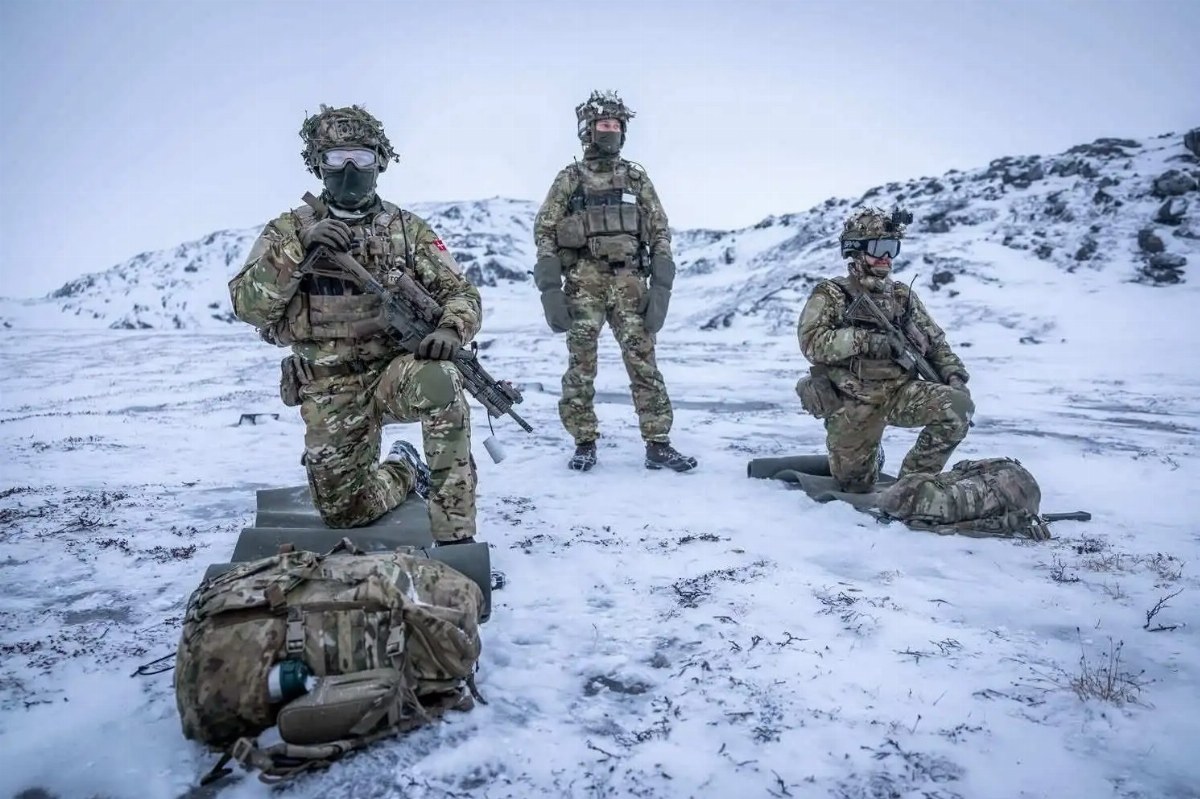
The European Union has announced a new Arctic strategy focusing on security, driven by Russia and China’s increasing activities in the region, as well as concerns over former President Donald Trump’s claims on Greenland. European Commission President Ursula von der Leyen emphasized the need for a strategic shift in the Arctic, asserting that military presence in the area can no longer be taken for granted.
According to von der Leyen, “The Arctic is where the tectonic plates of geopolitics clash. It is not another’s frontier; it is part of the European Union.” The strategy was introduced as competition heats up in the region due to climate change, which is causing sea ice to melt. Countries like Russia, China, and the United States have ramped up their activities in a race for natural resources and new maritime routes.
With three Arctic countries among its 27 member states—Denmark, Finland, and Sweden—the EU has a direct interest in Arctic affairs. Concerns have been heightened by Trump’s repeated threats to bring Greenland under U.S. control.
Key Priorities of the Strategy
The new strategy outlines four main priorities: enhancing security and resilience, addressing climate change in the Arctic, promoting prosperity, and creating opportunities for local communities. However, security remains the cornerstone of the EU’s strategy in light of escalating Russian and Chinese endeavors.
This approach marks a significant shift from the EU’s 2021 strategy, which primarily focused on international cooperation, climate issues, and environmental protection. Kaja Kallas, the EU’s foreign policy chief, stated, “As Russia and China amplify their presence and ambitions, the Arctic has become a frontline in the global competition among major powers.”
Enhancing Icebreaker Capabilities
The strategy indicates that the EU will work with member states and Arctic partners, in complementarity with NATO, to improve preparedness, protect critical infrastructure, and bolster Europe’s operational capacity in Arctic conditions, which includes expanding its icebreaker fleet. Currently, the 27 EU countries own approximately 10 icebreakers compared to around 40 operated by Russia.
To promote a common awareness of the situation and increase vigilance, a new maritime security center will assist member states and partners in information exchange and enhance monitoring of maritime activities in the Arctic.
Monitoring Undersea Cables and the “Phantom Fleet”
As an initial step, the EU will support the establishment of a coordination center for Arctic cables to monitor, protect, and contribute to the repair of undersea cables in the North Atlantic and Arctic. Additionally, the EU plans to invest in smart technologies to detect potential threats to this critical infrastructure.
The center will evolve to include monitoring of vessels from the “phantom fleet,” detection of illegal fishing, pollution, and improved coordination of search and rescue operations, targeting Russian activities specifically.
“The merger of the Russian Baltic and Arctic fleets shows that Moscow views the two regions as interconnected. We must do the same,” stated a senior EU official prior to von der Leyen’s announcement.
Developing Secure Undersea Cables
Some initiatives outlined in the strategy aim to reduce dependence on Washington. The plan includes a “secure” undersea cable linking Greenland to mainland Europe as part of a broader pan-Arctic cable project that will also connect Canada, Japan, and South Korea. The EU is also working on ensuring satellite connectivity in the Arctic through the IRIS² satellite constellation project, designed to compete with Starlink.
Commitment to Environmental Protection
The EU remains committed to ensuring that oil, coal, and gas stay underground, including in Arctic regions. The strategy states that the Commission will collaborate with partners to protect the Arctic environment and prevent any exploitation of hydrocarbon reserves that threaten the Arctic ecosystem.
This document does not reiterate the previous commitment made in 2021 to pursue a multilateral legal obligation preventing any further exploitation of hydrocarbon reserves in the Arctic or neighboring areas and to refrain from purchasing products derived from such exploitations. An EU official noted that this change reflects the evolving situation in the region, explaining that after five years since the strategy’s launch, reaching a multilateral decision-making process has become more challenging due to the positions of various parties involved.


