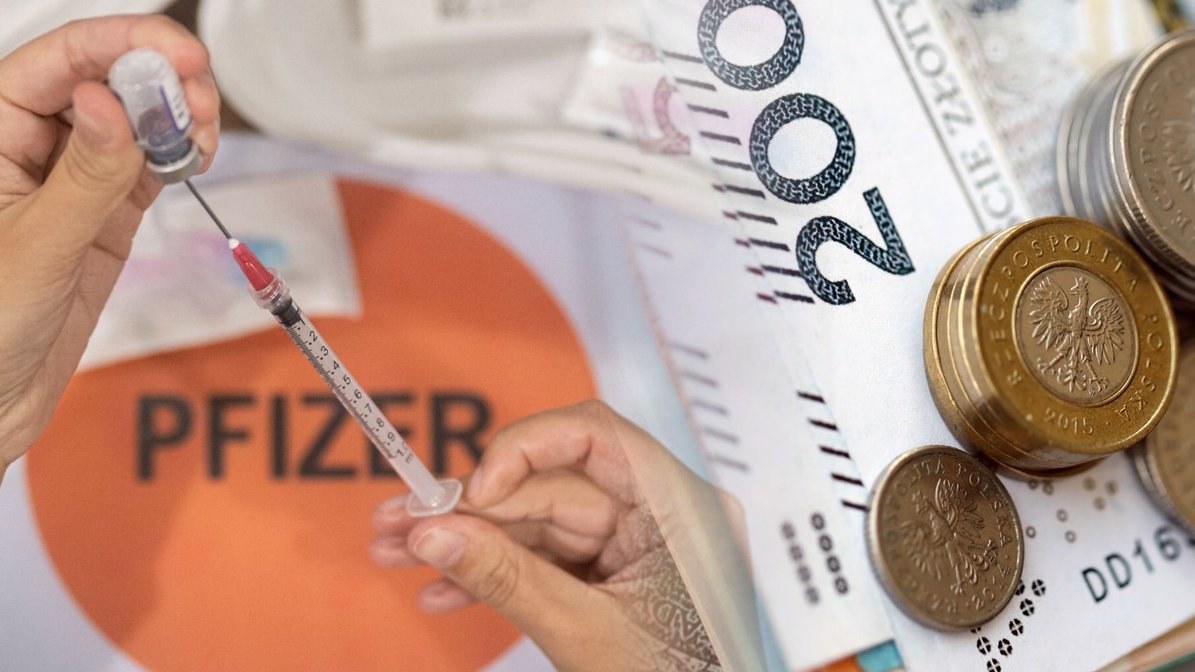
A contentious legal battle has emerged involving $1.5 billion linked to Poland’s air navigation agency, which is caught in an ongoing dispute with Pfizer over COVID-19 vaccine deliveries. On October 15, a Belgian court will determine whether to continue freezing funds belonging to the Polish Air Navigation Services Agency, funds that were seized as part of Pfizer’s debt recovery efforts against Poland. Janusz Janiszewski, the former head of the agency, warns that the outcome will not just affect the agency’s financial standing but also the security of NATO’s eastern flank and the European Union.
This dispute traces back to Poland’s failure to accept part of its ordered vaccine doses, leading a Belgian court to initially rule in favor of Pfizer for billions in payment. Despite Poland’s appeal, Pfizer has initiated legal actions to claim the awarded amount.
As part of these actions, Pfizer has seized revenue streams belonging to the Polish Air Navigation Services Agency, which derives its income from fees charged to airlines using Polish airspace. Notably, the agency is not a defendant in the dispute with Pfizer. According to agency reports, the freeze affects around 80% of its revenues. The agency has lodged an objection against this seizure, which the Belgian court will address on October 15.
Janiszewski, now an expert in air traffic management, emphasizes the gravity of the situation. He describes the seizure of funds as a significant threat to the operational integrity and strategic resilience of NATO’s eastern flank and the EU, not merely a financial dispute.
1. Drones, Warfare, and Airport Closures
Poland’s airspace is under constant strain with nearly daily incidents involving unauthorized drones approaching its borders. The temporary closures of airspace in key areas, such as Rzeszów and Lublin, alongside proximity to active conflict zones, necessitate that the agency’s management remain fully focused on safety and protection.
The air navigation services entity is not a typical market enterprise; it plays a crucial role in national defense infrastructure. Its operational capabilities and liquidity resources must not be subjected to international enforcement actions or collateral claims.
2. The October 15 Court Ruling Will Not Resolve the Issue
Some public discussions suggest that the upcoming court session will definitively resolve the matter through a new protocol regarding Eurocontrol treaties, but this overlooks the complexities of European legal processes. There are significant hurdles ahead:
- Legal challenges against the foundational law in the Belgian Constitutional Tribunal:
The Belgian law enacted on July 9, 2026, which approved the protocol expanding Eurocontrol’s immunity, has been formally challenged, with two cases already logged against it. This includes a suspension request and a procedural error noted by the Belgian Council of State.
- The principle of non-retroactivity of law (lex retro non agit):
The funds were seized in early July 2026, while the new protocol took effect in Belgium on August 9, 2026. Pfizer could argue that the seizure, executed before August 9, was a valid security measure, implying that the release of €115 million already blocked will be contentious.
- The Romanian ROMATSA precedent is for suspension, not victory:
In a similar Romanian case, the Belgian court imposed only a temporary measure, delaying substantive hearings until 2027. PAŻP might expect a similar interim ruling rather than a conclusive resolution.
- Disregarding legal separateness:
The law specifying PAŻP’s non-liability for state debts is a domestic norm, but creditors often invoke international enforcement doctrines that could complicate the agency’s position.
3. The State Lends PAŻP Billions, but Accounting Issues Remain
The government has swiftly responded to liquidity needs by securing funds for 2026 and proposing an interest-free loan of up to PLN 1.5 billion in the 2027 budget bill. However, the regulatory framework for European air navigation agencies poses challenges:
- Determined cost principle:
Under EU regulations, only strictly approved costs may be counted, meaning PAŻP cannot raise fees to repay state loans.
- WACC mechanism and zero-interest loans:
Replacing standard financing with a government loan will significantly lower the agency’s revenue base for future years.
- Inability to transfer risk:
The civil dispute over vaccines does not qualify as an unforeseen cost of air navigation, leaving PAŻP with growing obligations without means to alleviate them due to frozen Eurocontrol revenues.
4. Temporary Assistance is Insufficient
While budgetary aid provides essential support for liquidity, it does not address the core issues. Prolonging the current situation could jeopardize investments and hinder necessary upgrades to radar and anti-drone systems.
To ensure lasting security for Polish airspace, integrated actions are required from the Polish state. Air navigation services need predictability, financial stability, and protection from unrelated disputes to function effectively and secure Poland’s skies.