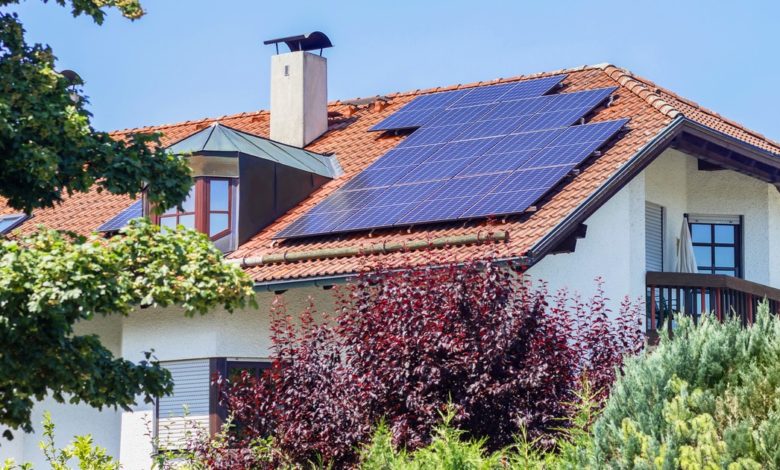
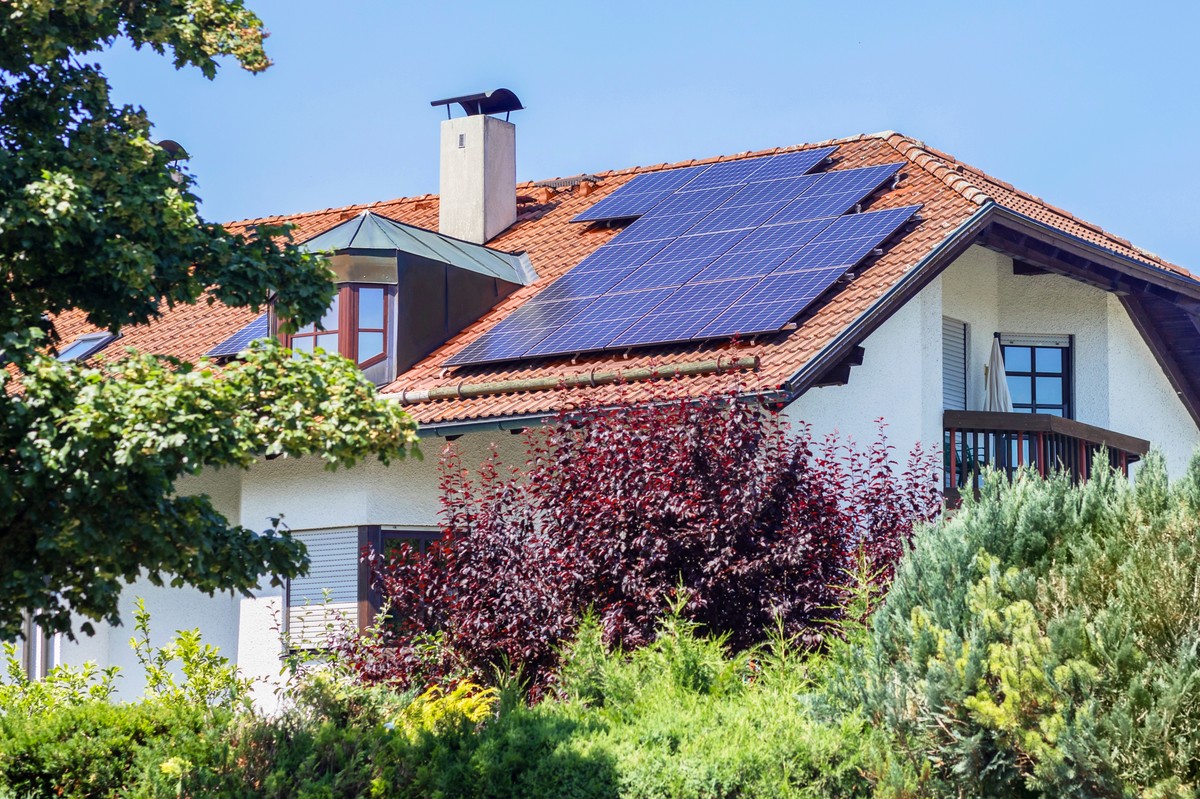
In Poland, there are over 1.5 million prosumers, who, in the vast majority of the production of electricity used later for their own needs or storage or released to the network, use photovoltaic micro -installations (up to 50 kW of installed power).
Micro -installations are still a pillar of the Polish solar sector – according to data from the latest report of the Institute of Renewable Energy, at the end of the first quarter of this year, they constituted over 59 percent power installed throughout the solar energy (12.9 GW). In 2024, prosumers with their own panels introduced to the network 8.3 TWh electricity.
Months from spring to autumn are a traditional harvest period for photovoltaics, when intensive sunlight results in high production, but do not high temperatures strain the efficiency of devices? WITHWe have been invited to experts.
Read also: Photovoltaics on new terms. The government gave details
A decrease in performance included in the costs?
As explained by Dariusz Jóźwiak, a photovoltaic expert in E.on Polska, photovoltaic cells that change the energy of solar radiation into electricity, are made of silicon, which at high temperatures absorbs less light. In the heat, modules cannot work with their nominal powerand the decrease in their efficiency is determined by the maximum power parameter.
– Manufacturers serve it in the product cards of modules. According to the commonly used NOKT standard (nominal operating temperature of the cell), standard temperature it's 25 degrees Celsiusand the power loss factor is OD 0.3 to 0.5 percent More for every degree of Celsius – explains the specialist.
Practical consequences are illustrated by Bogdan Szymański, president of the Trends Institute and vice president of the Photovoltaic Industry Association and Energy Storage. – In a simplified way, the air temperature in the shade around 35 degrees Celsius, which are expected in Poland, will cause heating the module to about 70 degrees C. Its efficiency will then drop by about 20 percent. In relation to the nominal power, which is saved in the rated plate – he says.
The module with the highest power of 400 W begins to work with the power of 320 W. Values can impress, but the expert reminds that In the summer, the performance of the panels is practically never 100 %.
-the best conditions when it comes to PV productivity, they are de facto at the turn of March and April, when the temperatures are relatively low-about 5-10 degrees C.-and sunlight. IN reality, however, the conditions for which nominal power is determined are very laboratory and do not occur too often – says Szymański.
As he reports, a summer decrease in productivity is somehow “included in costs” – lower performance is taken into account when choosing prosumer micro -installations. The modules have up to 30 percent higher power than inverters that change the current into use possible to consume or introduce Various current into the network; Just to compensate for the loss.
Doubtful efficiency of older devices
Tomasz Matuszak, an expert from 2LOP Tech solar panels specializing in recycling, adds that rapid temperature changes clearly reduce the life of the installation – this applies above all, above all, places such as desert areas, where 40 degrees Celsius can go down to 0 degrees C. at night during the day.
– In our geographical conditions, however, the impact of temperature changes to the life of PV installations is much lower. For prosumers, the impact of shading is much more important. Older panels, or newer, but with a weaker quality, may not produce energy at all, if half or even only a quarter of the panel remains shaded – he says.
The expert recommends caution when choosing older installations that appear on the Polish market, e.g. as previously used and withdrawn products from Germany. – The use of panels to the end and giving them a second life makes sense from the point of view of closing the circuit and the idea of zero waste, but you need to thoroughly check their actual rather than nominal efficiency – he says.
He adds that repowering, i.e. modernization of older devices, although theoretically possible, is very difficult in practice – the replacement of individual links would lead to the destruction of the entire panel. – Manufacturers should strive for panels to be more “dismantle on parts” – says Matuszak.
The modules must be airy
A summer drop in performance, increasing at very high temperatures, in the end, however, does not harm so much prosumers or solar energy at all. Experts agree – At long days with high sunlight, the panels in the summer and so reach the highest annual production levels.
Due to the increasingly functioning air conditioning, the hotel demand is also growing, prosumers settling in the Net Billing system (based on market energy prices) can therefore benefit from better price conditions.
– Among the prosumers, there is also the awareness that the most profitable solution today is important, exceeding 50 percent. auto -consumptionthat the energy warehouse enables, reflecting in the evening and the surplus of electricity accumulated during the day. My observations show that at least every second micro -installation is mounted today together with the warehouse, which is helped by subsidies from the My electricity program, but also a clear decrease in magazine prices – says Bogdan Szymański.
Read also: Will there be a lower VAT rate for photovoltaics? We have the position of the ministry
Although summer favors prosumers, a decrease in module performance in hot weather can be counted. It is important that the installations are … airy. Prof. Barbara Tora from the AGH University of Science and Technology in Krakow, chairwoman of the scientific council of 2loop Tech, talks about the so-called Photovoltaic roofs – modules as a tile element in them are free of insulation from below, so the heat is discharged.
– Of course, in our climate it will not be an optimal solution for residential buildings, which must also be prepared for low temperatures, but it is worth considering, for example, in roofs in parking lots or garages – says prof. Torah.
The price may be an obstacle to disseminating these solutions; As Dariusz Jóźwiak says, solar roofs are still expensive. Active cooling and ventilation is also ensured by the combination of PV installations with a solar collector, which uses energy from the Sun to produce heat, e.g. to heat utility water.
– Common production of electricity and heat reduces the module temperature. This is used, for example, in Israel, where at very high temperatures the efficiency of the modules themselves would be too low – explains the representative of E.on Polska.
Excessive performance loss can also be prevented by avoiding errors in installing panels on the roofs. – The module should keep the right distance from the roof surface itself – The greater the distance, the better the air flow and cooling. However, there are installations mounted on very short bridges, only a centimeter from trapezoidal sheet, which later negatively affects productivity – continues Jóźwiak.
Another solution is ground installations, where ventilation is the largest. Bogdan Szymański talks about them, at the same time indicating that with falling prices of photovoltaic installations such optimization activities are not always necessary.
– At the current costs of modules, it is often more profitable, for example, add two more on the roof than to choose a complicated ground assembly, which will increase the performance by several percentage points. This made much more meaning a decade ago, or even in the past, when the module accounted for 90 percent. installation values - he explains.
The mere increase in the number of days with very high temperatures, as Dariusz Jóźwiak reminds, is the result of a warming climate. In the opinion of Tomasz Matuszak, potential technologies that reduce the susceptibility of modules to heat may increase the competitive advantage of individual manufacturers – in the spirit of adaptation to changing conditions.