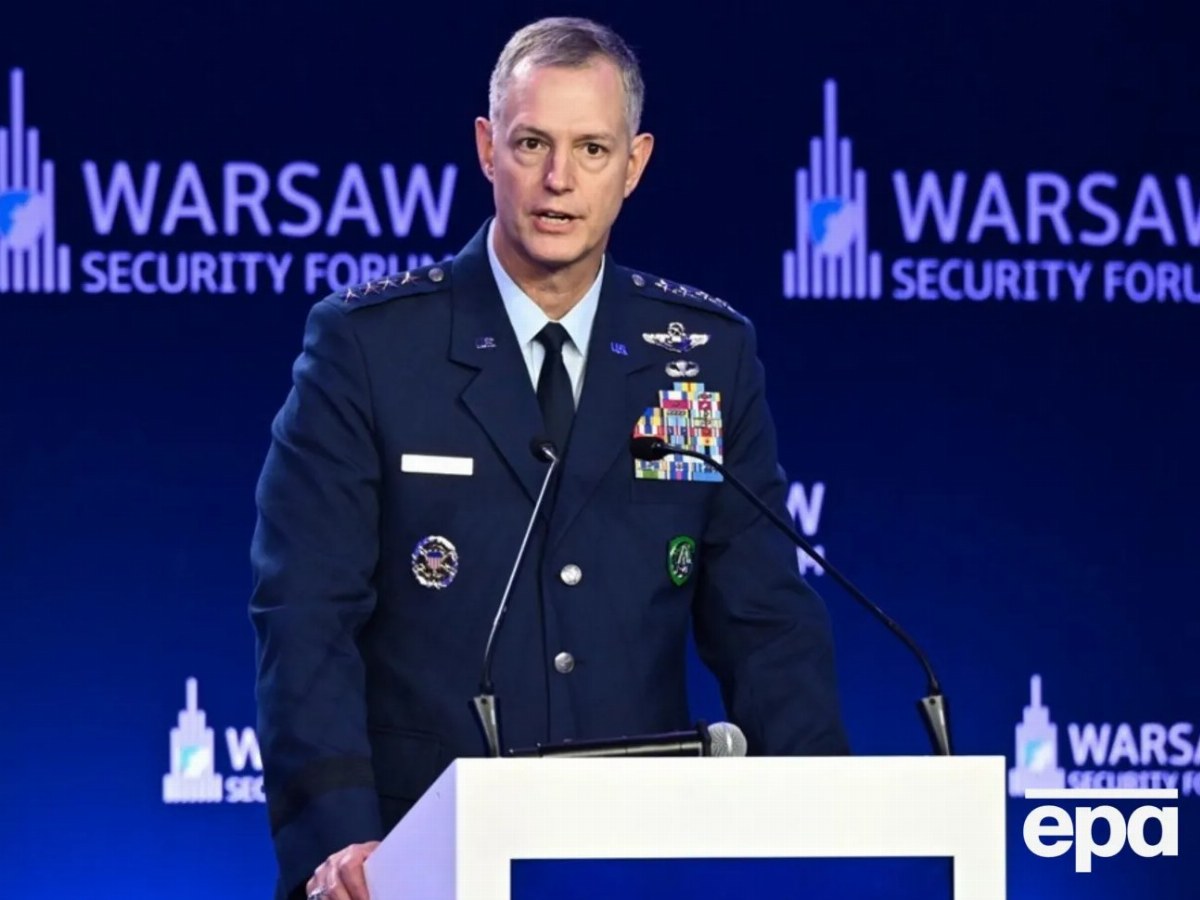
NATO’s Commander Grinkevich has articulated a new strategy, dubbed the “Theory of Victory,” aimed at addressing escalating fears in Europe regarding possible Russian assaults amidst its ongoing war against Ukraine. This announcement comes as reports suggest that a confidential NATO document will be unveiled in Poland at an upcoming forum.
The proposed plan focuses on preemptively countering enemy strikes while mitigating the risks of nuclear escalation. Grinkevich explained that the strategy aims to dismantle the command and supply systems of any aggressor, effectively halting an invasion without necessitating complete destruction of enemy forces. He emphasized that the intent is to reassure European nations and send a clear message to anyone considering an attack on NATO territories, without explicitly naming Russia.
Details of the strategy include the use of long-range missiles targeting Russian command centers and air defense installations in the exclave of Kaliningrad, near Saint Petersburg and in Belarus. These actions are designed to disrupt Russian aerial control and facilitate a counteroffensive by NATO ground forces, including the U.S. Fifth Corps.
Grinkevich noted that a classified version of this plan was finalized three months ago, which includes investments in relatively inexpensive drones to complement NATO’s advanced weaponry. This decision was influenced by insights gained from Ukraine’s combat experience. NATO forces are expected to rapidly engage Russian reinforcements heading to frontline positions while also targeting other strategic objectives in the rear. Attacks will be supported by a “data highway,” a secure, instant communication system for sharing intelligence among allies, previously tested during U.S. operations in the Middle East against Iran.
This approach is referred to as the “Initiative for Eastern Flank Deterrence,” with the goal of compelling the Russian president, Vladimir Putin, to reconsider aggressive actions in light of NATO’s defensive posture.
Earlier in September, Grinkevich commented on the possibility of a Russian attack on NATO countries, asserting that while unlikely, it cannot be dismissed. He rejected the notion that Putin might exploit any perceived weakening of U.S. precision missile stocks as an opportunity to strike, stating, “Let him not even attempt it while I’m here,” affirming NATO’s capability to defend every inch of its territory.
On September 29, the Russian embassy in Ireland publicly claimed to have information regarding NATO’s preparation for an air and sea blockade of Kaliningrad, stating that Russia would be prepared to utilize its entire arsenal, including nuclear weapons, to defend its territory against any NATO attempts to isolate the region. In response, Putin affirmed the accuracy of the embassy’s statements, as well as the contents of letters sent to NATO countries.
In the context of rising tensions, warnings have been issued across Europe regarding potential Russian incursions into NATO territory. In August, Germany’s Minister of the Interior, Alexander Dobrindt, noted that the country is a daily target of hybrid warfare from Russia, encompassing espionage, sabotage, cyberattacks, and covert operations. Reports have also surfaced indicating that Russia is recruiting criminal groups for sabotage operations on European defense sites in an effort to circumvent direct NATO reactions, with Russian drones frequently detected within EU borders, and provocations involving airspace violations by Russian aircraft against NATO countries.