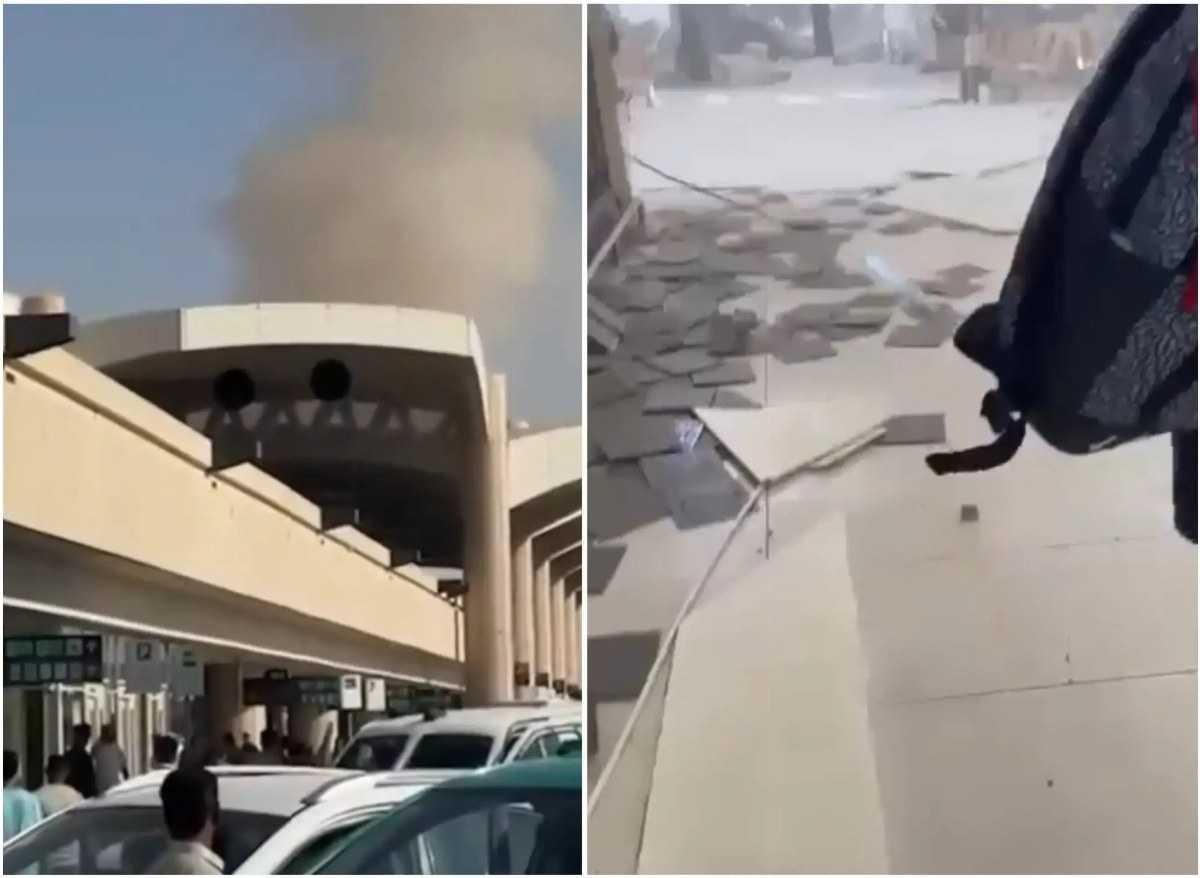
A missile attack on King Khalid International Airport in Riyadh occurred on Saturday, marking the third such incident this week. Authorities reported at least 12 deaths and over 300 injuries in the assault, attributed to the Iran-backed Houthi movement, according to reports.
The deceased include four Saudi nationals, two individuals from Bangladesh, and one person each from the United States, Jordan, Palestine, Syria, Sudan, and Egypt, as confirmed by Saudi civil aviation authorities. The injured count has risen to 309, with hospitals overwhelmed by casualties transported via ambulances and helicopters, some in critical condition.
Flight tracking service flightradar24 indicated that all flights to Riyadh were either rerouted or canceled, with only a helicopter observed flying over the airport at one point.
Images from the scene depict significant damage within the airport, with reports detailing “apocalyptic scenes” following the ballistic missile strike, which severely impacted the civilian aviation infrastructure.
Alarm Systems Failed to Activate
This attack is the deadliest on Saudi soil in over a decade and occurred without any prior warning, as the country’s alert systems failed to activate. Earlier attacks this week at the same airport led to four deaths and substantial damage to a parked commercial aircraft.
These deadly incidents have highlighted vulnerabilities in Saudi Arabia’s defense capabilities, especially as it continues an aerial campaign against the Houthis to support the Yemeni government in its ground conflict against the Iran-backed group.
Saudi Arabia Promises Retaliation
The Saudi-led military coalition has stated that it will respond to the attack. Both Saudi and Yemeni officials reported conducting hundreds of strikes against Houthi controlled territories, which the Houthis claim have resulted in civilian casualties, including women and children.
All flights from Riyadh were suspended temporarily, affecting an airport serving a city of approximately 8 million residents, according to Saudi aviation authorities. Following the attack, a Houthi spokesperson claimed responsibility, asserting that they had effectively shut down the international airport.
The Houthis further declared Saudi airspace a military operation zone, urging airlines to avoid it in response to recent offensives launched by the Yemeni government.
Trump Comments on Possible U.S. Involvement
U.S. President Donald Trump addressed reporters outside the White House regarding potential U.S. involvement in the Saudi operations against the Houthis. “It’s possible. We will analyze the situation. We just learned about the recent attack, so we will make a decision. We act very quickly,” he stated.
U.S. Secretary of State Marco Rubio condemned the attacks, labeling them as a blatant disregard for innocent civilian lives. A wounded traveler recounted witnessing something flying overhead just before part of the airport’s ceiling collapsed near a boarding gate.
The U.S. Embassy in Riyadh noted that it is aware of the attacks and strongly advised all American citizens to avoid the airport and surrounding areas.
Renewed Conflict in Yemen
Saudi Arabia entered the Yemen conflict in 2015, leading an Arab coalition to oust the Houthis from the capital, Sanaa, which they had captured a year prior, displacing government forces. The war has resulted in a bloody stalemate, with hundreds of thousands of Yemenis losing their lives due to combat and famine. In 2022, a ceasefire was agreed upon, temporarily halting hostilities.
However, this truce collapsed this summer, leading to a renewed Houthi offensive that saw them seize control over the Bab el-Mandeb strait from government forces. The Yemeni government, backed by Saudi Arabia, recently launched an operation to reclaim this territory, making slow progress while the Houthis have taken the third-largest city in Yemen, Taiz.