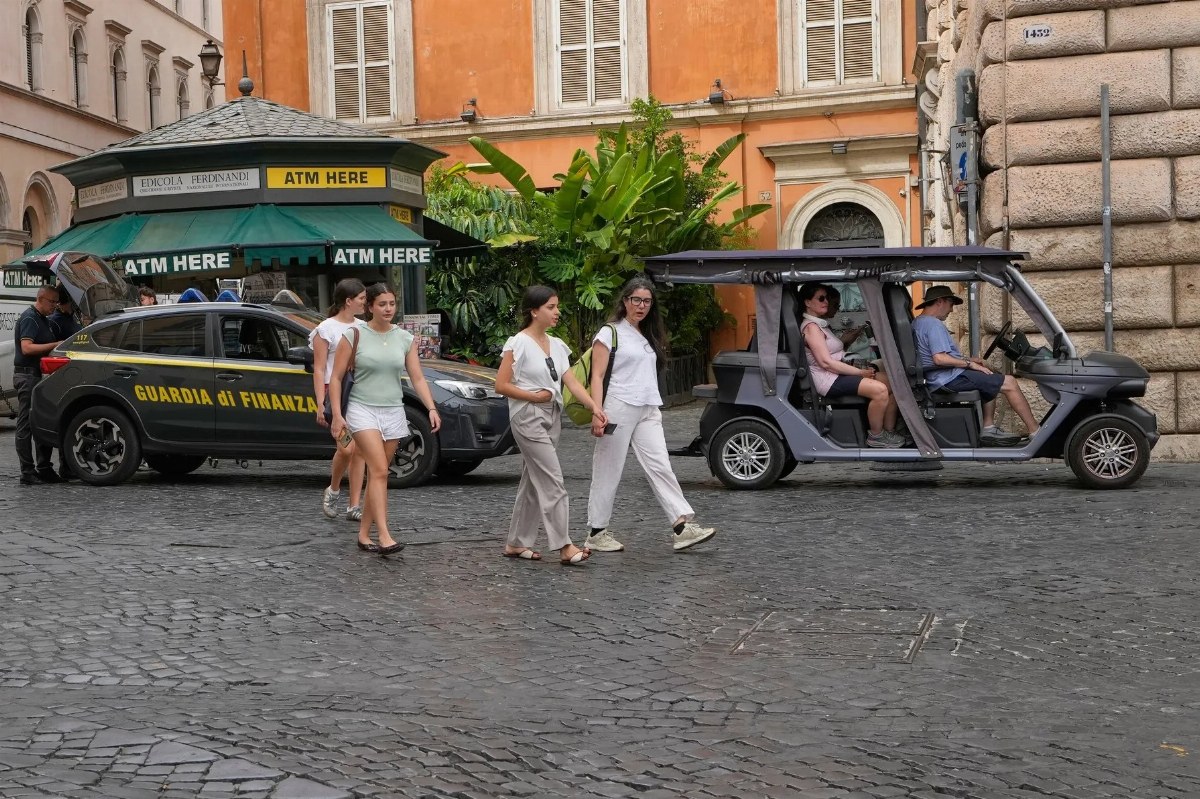
Rome, a city known for its challenges in navigation, is witnessing a surge in the use of golf carts by tourists seeking a comfortable way to escape the heat and crowds. However, this trend has become a source of frustration for residents, who are already contending with heavy traffic and rampant tourism, as highlighted by reports from The Guardian.
Taxi drivers, in particular, are expressing their discontent, arguing that these golf cart operators are taking away their customers. A local newspaper has even claimed that the city has been “taken hostage” by these vehicles.
In response to the growing issue, Rome’s authorities have begun to crack down on the rapidly expanding golf cart business. Police intensified their inspections this week after Adnkronos reported that approximately 90% of the roughly 500 golf carts operating in the city are doing so without the necessary permits.
At the edge of Piazza Navona, one of Rome’s most stunning squares, Barry and Linda, tourists from Texas, exited a golf cart. They planned to walk across the piazza, possibly stopping to admire the famous Fountain of the Four Rivers.
After a strenuous first day exploring the city on foot, enduring three hours in the heat navigating through a crowded route to the Sistine Chapel, they opted for a golf cart tour on their third day. Their decision reflects a growing trend among visitors seeking convenience in the face of the city’s overwhelming tourist traffic.
Authorities Ramp Up Enforcement Amid Complaints
Recently, police have stopped 131 of these vehicles in prominent areas such as Piazza Navona, the Pantheon, and the Spanish Steps, issuing fines totaling €38,000 for violations ranging from operating without permits to illegal parking.
Rome’s leadership is under pressure to implement regional regulations to manage this activity, with mobility counselor Eugenio Patanè stating that the situation “risks spiraling out of control.” Prices for golf cart tours vary depending on the type and duration, starting at €100 per person and exceeding €400 for half-day excursions. Barry and Linda paid €310 for their three-hour ride, with Barry commenting, “But it’s worth it.”
The traffic dilemma in Rome is not new; Julius Caesar attempted to address it over 2,000 years ago by banning private vehicles and commercial carts from the streets during daytime hours.
Currently, pedestrians, cars, scooters, delivery vans, and the occasional horse-drawn carriage vie for limited space on the streets. Tourists can also explore the city in Fiat 500s, on Vespa scooters with sidecars, or in tuk-tuks, but golf carts have ignited particular outrage among locals.
One local woman remarked, “What do they actually see or learn about Rome while riding in one of these carts? I constantly have to dodge them. Rome is chaotic; it’s like a jungle.” Amid the intensified enforcement, many golf cart tour operators have instructed their staff not to speak with the press. However, Leo Pavoncello, a driver for one such operator in the Jewish Ghetto, defended the practice publicly.
“Golf carts are quiet and eco-friendly. Rome is not an easy city to visit, but these vehicles allow persons with disabilities and families with children to comfortably see the sights. Plus, they create jobs for young people,” he stated.
Pavoncello, who has been checked by police and confirmed to be operating legally, believes that the reputation of the entire industry is being tarnished by a few non-compliant operators. “I don’t understand why we are being targeted,” he said, suggesting that the pressures may stem from “the interests of taxi drivers.” He added, “But Rome is a tourist city that has always been crowded, and golf carts are just another means of transport.”