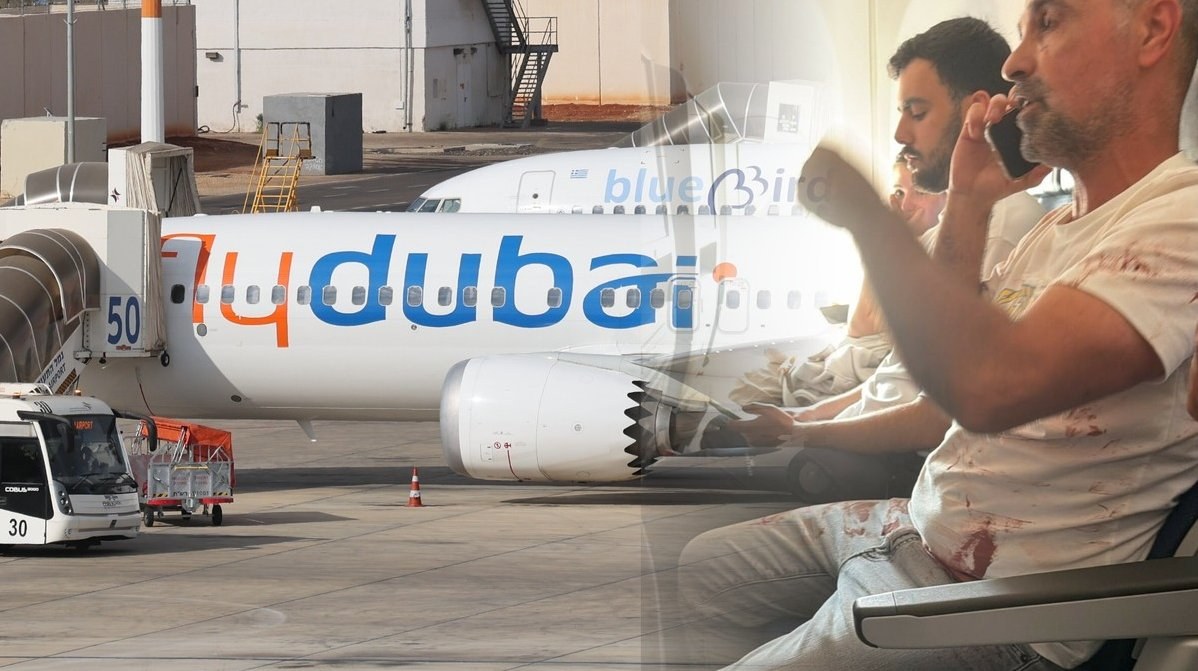
Flydubai, a major airline based in Dubai, made headlines Wednesday after a serious incident aboard a flight en route to Tel Aviv. The situation escalated into a violent confrontation between the pilots, causing the aircraft to lose altitude abruptly. Following the incident, the airline announced a halt to all flights to and from Israel.
The incident occurred on a Flydubai flight from Dubai to Tel Aviv, where the first officer reportedly attacked the captain, attempting to initiate a crash. Fellow crew members and passengers intervened, subduing the second pilot. Additional pilots on board, who were serving as reserves, took over control of the plane, ensuring a safe landing.
The aircraft was redirected to Tabuk in Saudi Arabia, landing without further incident.
This event has raised significant concerns regarding flight safety to Israel. In response, Israeli authorities announced plans to tighten regulations for pilots operating flights to the country. Flydubai also decided to temporarily suspend all flights to and from Israel, stating the action was taken in conjunction with relevant authorities during the ongoing investigation.
Flydubai’s Origins and Growth
Founded in June 2009 by the Dubai government, Flydubai aimed to enhance air travel accessibility from the emirate and expand connections to previously underserved markets. The airline is owned by Dubai Aviation Corporation, a government entity.
Initially focusing on a low-cost model for short to medium-haul routes, Flydubai has since diversified its service offerings, now including business class alongside economy.
By 2025, the airline transported a record 15.7 million passengers and operated over 126,600 flights, generating revenues of 13.6 billion dirhams (approximately $3.7 billion) and a pre-tax profit of 2.2 billion dirhams (around $591 million).
Since its inception, Flydubai has served over 137 million passengers.
Fleet and Future Plans
Flydubai’s fleet predominantly consists of Boeing 737 aircraft. As of the end of 2025, it operated a total of 98 Boeing 737s, including 25 Boeing 737-800s, 69 Boeing 737 MAX 8s, and four Boeing 737 MAX 9s, with an average fleet age of 5.5 years.
In a significant shift, Flydubai ordered 30 wide-body Boeing 787-9 Dreamliners in 2023, marking its entry into larger aircraft operations, with deliveries expected to commence in 2027. Additionally, in 2025, the airline signed agreements for 150 Airbus A321neos and 75 Boeing 737 MAXs, with options for another 75 Boeing 737s, highlighting its ambitious growth strategy.
Expanding Network and Partnerships
By 2025, Flydubai had built an extensive network serving 140 destinations. The airline launched over 100 routes that previously lacked direct connections to Dubai or were unserved by any national carrier of the United Arab Emirates.
A key aspect of its business model is the collaboration with Emirates Airlines, allowing passengers to benefit from interconnected flight networks. In 2025, more than 2.5 million passengers utilized this partnership, which encompassed 243 destinations across 103 countries.
Despite this collaboration, Flydubai operates independently from Emirates, while both airlines leverage Dubai as a global aviation hub.