
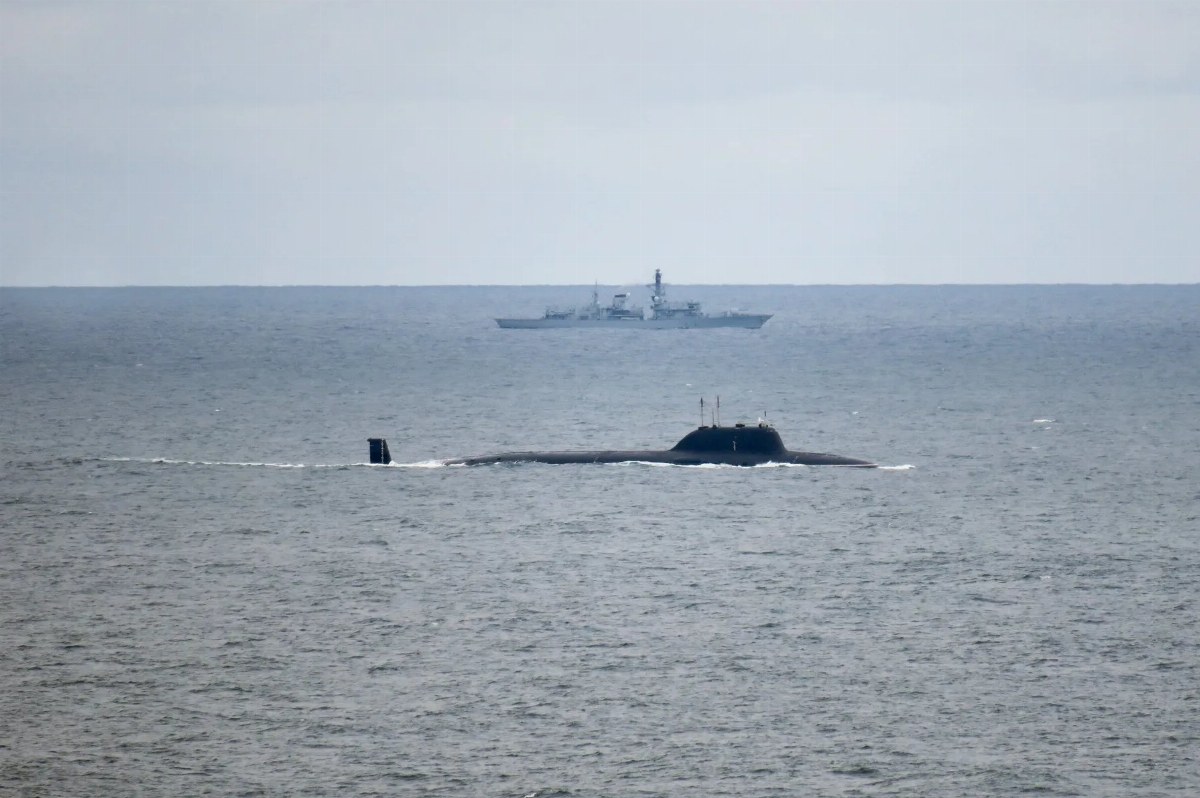
NATO allies have uncovered a Russian submarine operation in the depths of the Arctic waters near the remote Svalbard archipelago. This spring, Russian submarines were spotted training to deploy a secret weapon designed to disable critical undersea cables without leaving a trace.
The covert Russian operation, reported to Reuters by two Western officials, was conducted by GUGI, the Russian authority responsible for underwater warfare. It involved deep-sea submarines simulating the deployment of sophisticated and destructive technology.
A joint operation involving the United Kingdom, Norway, and the United States aimed to monitor and confront the Russian vessels at sea, ultimately preventing them from completing their exercises. The submarines left the area afterward, according to unnamed sources who spoke freely about the situation.
In April, the UK and Norway disclosed their discovery of a clandestine Russian operation in Arctic waters, but details about the new weapon, the specific location of the operation, and the involvement of the United States had not been reported until now.
This underwater confrontation comes as some Western intelligence officials express concerns that the Kremlin is intensifying sabotage operations in Europe and preparing for a potential conflict with NATO.
Three American officials stated to Reuters that some analysts within Washington’s intelligence services are increasingly worried that Russia may test NATO’s mutual defense clause, known as Article 5. They suggest that disabling undersea cables could be a critical component of such an endeavor.
Importance of Undersea Communication Cables
These cables, which are no thicker than a garden hose and lie on the seabed or buried just beneath it, are essential for global internet connectivity and financial transactions. Their economic and strategic significance has made them targets in past conflicts, including during World War I and World War II, when they were crucial for telegraph and telephone communications.
Two fiber optic cables linking Svalbard to mainland Norway stretch 1,400 kilometers each and are situated at depths of up to 2,700 meters below the sea surface. They carry vast amounts of satellite data that are downloaded at the SvalSat ground station, the largest of its kind in the world and part of NASA’s Near Space Network.
The global network of undersea electrical and telecommunications cables expands every year, driven by increased demand for data and electricity, partly fueled by artificial intelligence. Analysts warn that Europe remains vulnerable.
Bruce Jones, a senior fellow at the Brookings Institution, explained, “In the past 25 years, Europe has done two things simultaneously: dramatically increased its reliance on undersea infrastructure while significantly reducing its capacity to protect it.” He added, “It is only now beginning to rebuild this capacity, faced with a growing Russian threat.”
The Russian Ministry of Defense did not respond to a request for comment regarding the incident, and the Kremlin consistently denies conducting sabotage operations in NATO countries or preparing for any confrontation.
Growing Concerns Over Moscow’s Subversive Actions
Western officials claim that Russia’s actions targeting European states have intensified in recent months as the front lines in Ukraine have largely stabilized. Countries like Poland, Lithuania, and Romania have confirmed violations of their airspace and other alarming activities. Recently, an attempted drone attack on the Leipzig/Halle airport triggered strong reactions from Germany, including the closure of a Russian consulate in Bonn and a cultural center in Berlin.
Subsequently, U.S. Central Intelligence Agency (CIA) Director John Ratcliffe met with his counterparts in Moscow’s intelligence services partly to caution Russia against escalating sabotage operations in Europe, according to reports in American media.
Reuters notes that it could not establish whether Ratcliffe raised the issue of Russian covert operations in the vicinity of the Svalbard archipelago. The Kremlin declined to comment on the discussions or provide further details.
What Happened in the Arctic
The two Western officials who reported the incident to Reuters noted that, alongside the maritime confrontations, British and Norwegian officials traveled to Moscow to present their findings and indicate awareness of the new technology. They made the trip in hopes that the Kremlin would hesitate to use the new capability once informed that the West was aware of it.
Ultimately, Russia did not damage any cables. The exercise focused on simulating the deployment of the technology in the event of a conflict with NATO, according to officials who declined to provide details on how the technology operates.
When requested for comment, NATO directed reporters to the Norwegian and British authorities.
Norwegian Defense Minister Tore Sandvik stated in a release, “Through our joint operation, we sent a clear message to Russia: it cannot operate in secrecy.” He added, “We have unequivocally conveyed to the Russian authorities that any attempt to target our critical infrastructure will be detected and have consequences. Escalating tensions in the far north is not in anyone’s interest.”
The British Ministry of Defense referenced statements made on April 9 acknowledging Russian clandestine activities or attempts in Norwegian and British waters, carried out by Russia’s Main Directorate for Deep Sea Research, known by the acronym GUGI. Both the U.S. and the UK have imposed sanctions against this secretive agency.


