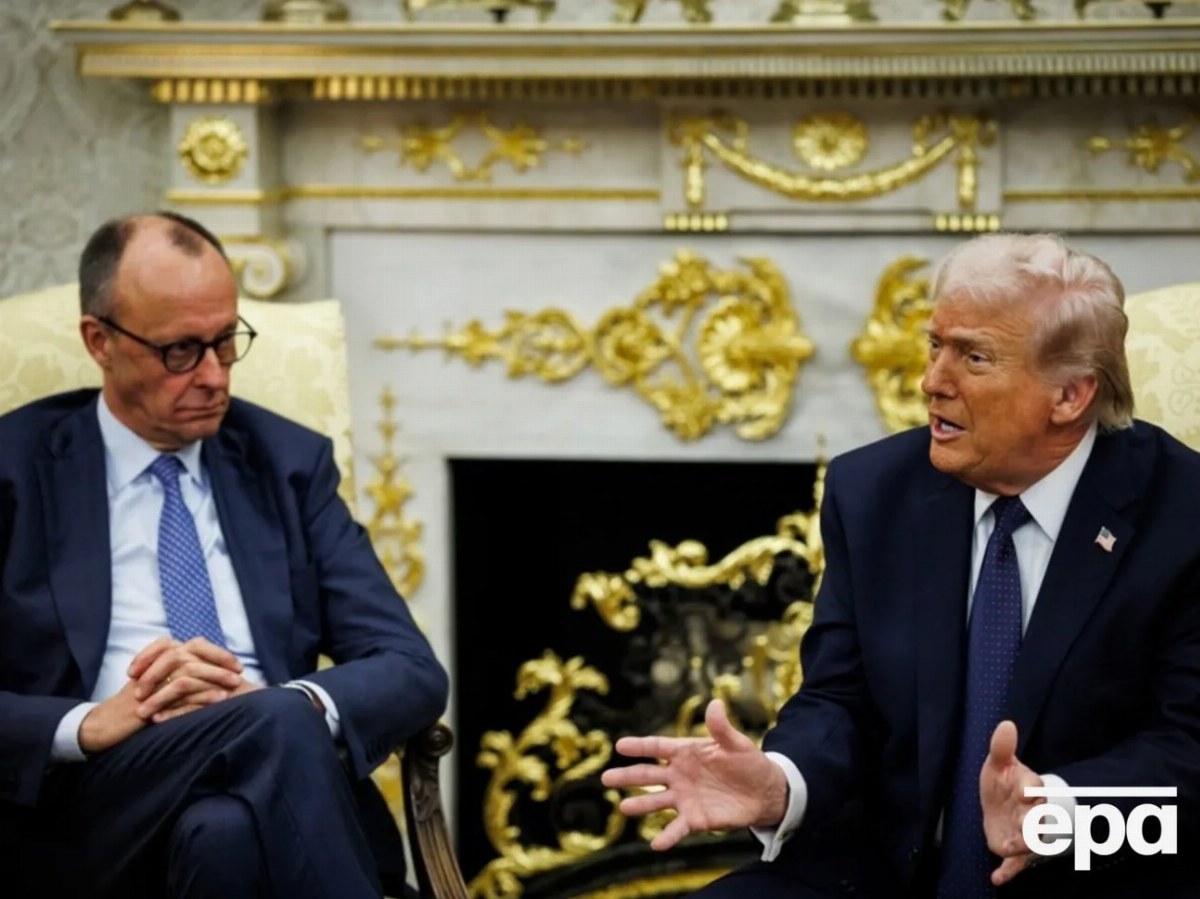
The timing of a phone call between U.S. President Donald Trump and German politician Friedrich Merz remains uncertain. According to German government spokesman Stefan Cornelius, the call was set to commemorate the 25th anniversary of the September 11, 2001, terrorist attacks.
While Cornelius did not provide an official reason for the postponement, he hinted that it was not merely a scheduling conflict.
Speculations indicate that the postponement could be related to the White House’s reaction following the Alternative for Germany (AfD) party’s victory in the Saxony-Anhalt state parliament elections on September 6. Trump congratulated the AfD, which opposes Merz, citing “terrible” immigration policies in Germany as a factor in their success. Recently, Merz and AfD leader Alice Weidel engaged in a heated debate in the Bundestag over the concept of “remigration,” or forced expulsion of individuals.
German officials have refrained from commenting on whether the call’s delay correlates with Trump’s remarks. However, Cornelius reiterated Merz’s long-standing position that any interference or commentary regarding Germany’s internal political matters, especially in relation to elections, is “unacceptable.”
Meanwhile, Dirk Wiese, head of the Social Democratic Party (SPD) faction, has called for the German government to respond to Trump’s statements, asserting, “Such interference is unacceptable. We cannot tolerate this.” Wiese drew a comparison, questioning how the German government would react if it celebrated a Democrat’s victory in a U.S. gubernatorial election. “I think Truth Social would have trembled at the reaction from the U.S. president,” he stated.
- The far-right AfD aims to solidify its political presence to promote its agenda, which includes restoring relations with the aggressor nation Russia, reducing support for Ukraine, and exiting the eurozone, as reported by Reuters. The election results have reportedly dealt a significant blow to Merz, whose approval rating has dropped to an all-time low.
- The implications of the election results in Germany for Ukrainians were addressed by the publication “GORDON.”