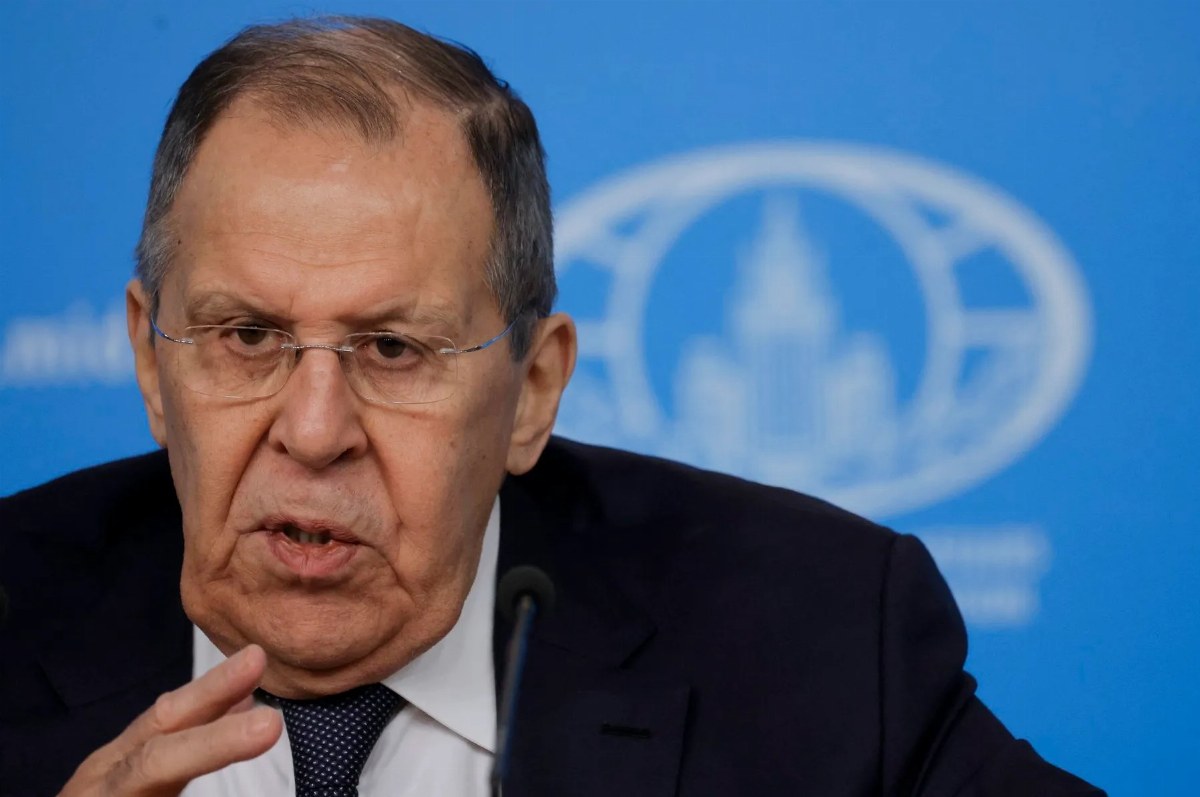
Russia has announced the closure of its Goethe-Institut cultural centers in Germany, according to Foreign Minister Sergey Lavrov. This decision comes in response to Germany’s accusations against Russia regarding a drone incident at Leipzig/Halle Airport.
The tensions escalated after Germany closed the Russian cultural center in Berlin and its consulate in Bonn. Lavrov accused Germany of deliberately acting against Russia, stating that they could not have misunderstood that this action signifies the end of German cultural presence in Russia.
Lavrov emphasized that the cultural centers in Moscow, St. Petersburg, and Ekaterinburg will be shut down as a direct consequence of Germany’s actions. He noted that these centers had remained operational despite the complexities arising from the ongoing Ukraine crisis.
The first Goethe-Institut in Russia opened in Moscow in 1992, shortly after the dissolution of the Soviet Union. This latest move echoes a previous incident in 2018 when Russia ordered the closure of the British Council following diplomatic tensions with the UK.
On Wednesday, Lavrov’s deputy, Alexander Grushko, indicated that Russia would respond “very soon” to the closure of the Bonn consulate.
Heightened Diplomatic Tensions in Europe
Germany reached the conclusion that Russia was responsible for the drone incident at Leipzig. Moreover, the country is on high alert following two sabotage attempts on its electricity grid and an explosion at a train station in Augsburg.
The EU and several member states summoned Russian ambassadors regarding last month’s attempted drone attack from Leipzig/Halle Airport. The Russian ambassador to Bucharest was also called in by the Romanian Ministry of Foreign Affairs, which conveyed that “we will not tolerate hybrid actions.”
This drone attack attempt attributed to Russia represents a further escalation in Europe and is likely to reinforce the EU’s resolve to apply increased pressure on Moscow, as stated by European Commission President Ursula von der Leyen. Dmitry Medvedev, a key ally of President Vladimir Putin on the Russian Security Council, remarked that military factories aiding Ukraine “deserve a direct hit,” similar to “other locations in Berlin.”