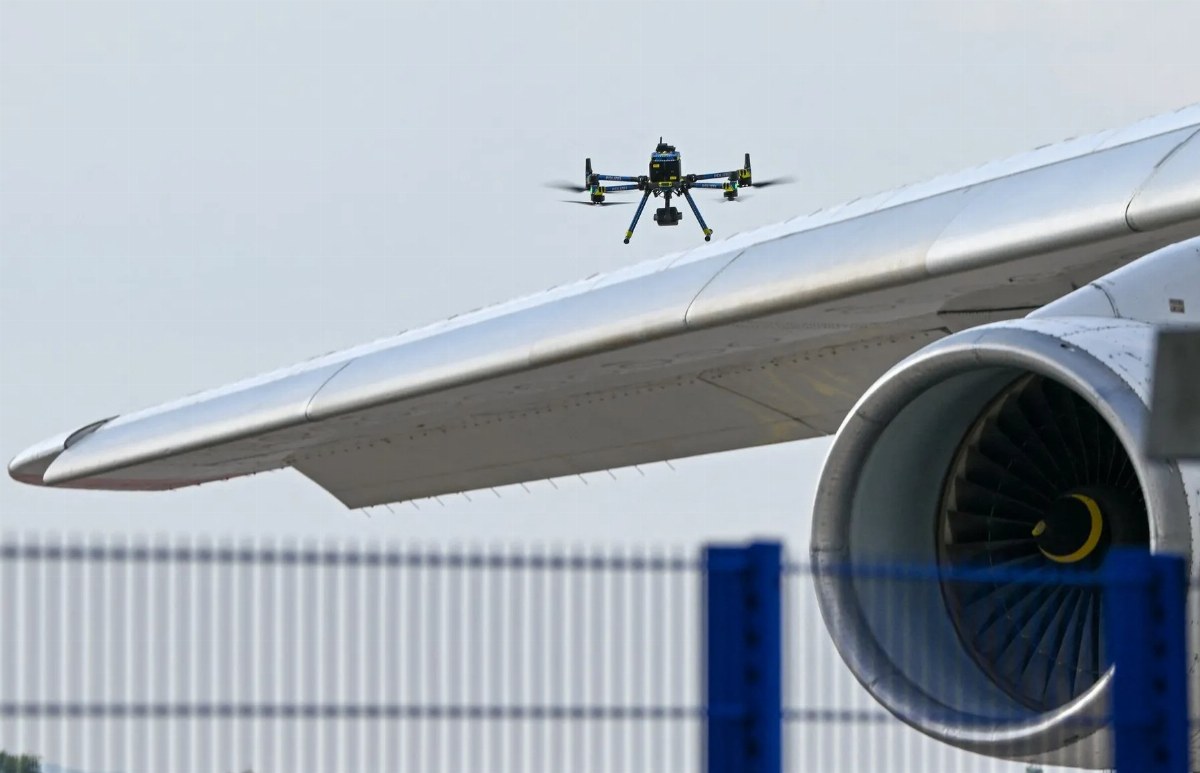
Germany has officially accused Russia of being responsible for a failed drone attack that occurred last month at Leipzig Airport. The drone, which was reportedly loaded with explosives, was discovered at the airport, a crucial base for the German military, NATO, and logistical support for Ukraine, as stated by German Interior Minister Alexander Dobrindt on Tuesday.
According to the minister, investigations and intelligence reports clearly demonstrate Russia’s involvement in the attempted attack on Leipzig Airport. “The overall police investigations and operational methodologies affirm Russia’s responsibility for the incident,” Dobrindt remarked in a brief statement.
Dobrindt Highlights Hybrid Warfare Tactics
On August 4, a drone carrying an explosive device was found near Ukrainian cargo planes at Leipzig/Halle Airport in eastern Germany. Fortunately, the device did not detonate due to a suspected malfunction of its detonator. Investigators also suspect that a second drone may have collided with a cargo plane nearby. Reports indicate that a third drone was found near the airport ten days later.
Dobrindt noted that the attack aligns with Russia’s established pattern of hybrid operations in Europe and warned that Germany may again become a target for such attacks. Security experts have speculated about Russia’s potential involvement, although Moscow has consistently denied any allegations of participation.
The Leipzig/Halle Airport serves as a critical hub for military cargo transport by both the German armed forces and NATO allies, as well as a base for Ukraine’s Antonov Airlines, which handles most of the country’s air cargo.
Closure of Russian Consulate in Bonn Announced
German Foreign Minister Johann Wadephul, who accompanied Dobrindt at the press conference in Berlin, announced the closure of the Russian consulate in Bonn and the termination of the contract for the “House of Russia” in Berlin. Observers have claimed that this building has been used for espionage and spreading Russian propaganda.
NATO Secretary General Mark Rutte expressed full solidarity with Germany, stating, “The evidence is clear. I commend the measures announced by Germany in response.” This issue was set to be discussed later Tuesday during a meeting of EU foreign ministers in Ireland.
Germany is among several NATO member states that have reported sightings of drones near airports, military bases, and industrial sites over the past year. Until now, Berlin had refrained from disclosing the identities of potential perpetrators behind the Leipzig attack, only indicating that “foreign powers” might be involved.
American media has indicated that U.S. officials have attributed the incident to Russia. Berlin has warned that the country faces a “daily target” of hybrid warfare, with Chancellor Friedrich Merz cautioning last week that those responsible for hostile acts against Germany will “pay a price.” The government plans to enhance the capabilities of its intelligence services, which have faced criticism for being relatively ineffective, to counter such threats.
Political Tensions for Merz’s Government
Germany is a key supporter of Ukraine, with Merz publicly expressing his backing for Kyiv. It is easy to see why Ukrainian cargo planes at a significant German logistical hub could be targeted by Moscow, according to BBC analysis. However, this announcement comes at a sensitive time for Merz’s government.
Crucial elections in the eastern state of Saxony-Anhalt could potentially elevate the far-right Alternative for Germany (AfD) party to power regionally for the first time. The AfD, the largest opposition party in Germany, advocates for stopping support to Ukraine and restoring relations with Russia.
Separately on Tuesday, German police reported investigating the discovery of improvised explosive and incendiary devices at an electrical substation in Brandenburg, eastern Germany. A power line was damaged, leading to a temporary electricity outage. Currently, it is unclear who placed the devices.