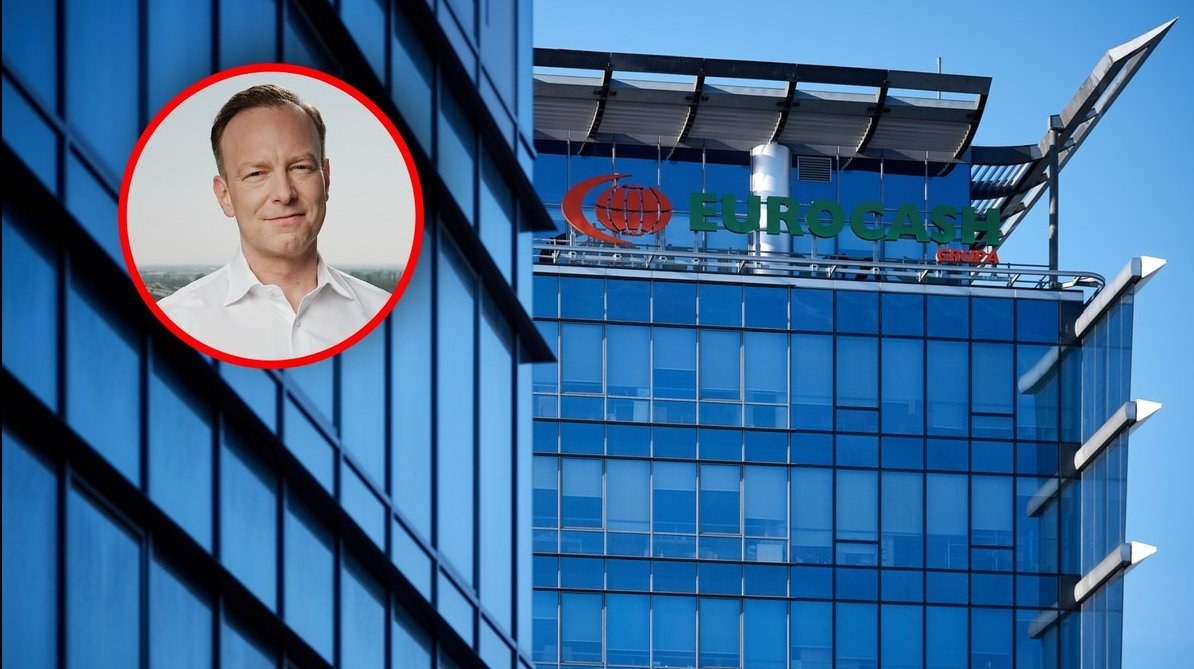
In the first half of 2026, Eurocash Group focused on transformation and cost reduction, maintaining its goal of achieving 400 million PLN in targeted savings by 2027. Starting in the second half of 2026, the company plans to concentrate on building sales and further development.
Eurocash operates as a franchisor in the FMCG retail sector in Poland, managing a network of nearly 15,000 stores under brands such as ABC, Groszek, Euro Sklep, Gama, Lewiatan, Delikatesy Centrum, and Duży Ben, as well as developing the online shopping platform Frisco.
According to President Paweł Surówka, the company has implemented or is in the process of implementing measures aimed at achieving 279 million PLN in annual targeted savings, representing 69% of its 400 million PLN goal for 2027. “This is not the end, as the entire savings program is expected to run until early 2027. However, we have already reached two-thirds of the targeted effect halfway through the period, which bodes well for the future. We feel comfortable with our goal of achieving 400 million PLN in savings by 2027,” Surówka told PAP Biznes.
Major Transformation at Eurocash
The company claims that this is one of the most comprehensive transformations in the Polish FMCG retail market, impacting nearly all key areas of its operations.
“In recent months, Eurocash has undergone fundamental changes. Five purchasing departments were merged into one, five operational structures were replaced with a unified model, and four separate expansion teams were combined into one department. Some employment was reduced, and buyers and sales representatives received new tasks, now representing all formats of Eurocash,” the president explained.
The group reduced the number of distribution centers from 15 to 10, consolidated six separate headquarters into one group office, and lowered the average SKU count per warehouse from about 13,000 to 10,800. A consumer department was also established, which analyzes consumer trends and competitors’ activities in line with the company’s retail focus strategy.
The program for closing unprofitable stores was completed by approximately 73% within six months, with 73 outlets transferring to franchisees by the end of July. Eurocash also closed 14 out of 16 unprofitable Cash & Carry locations. In the second quarter, the group’s total costs decreased by 9.6% year-on-year.
Most Challenging Phase of Changes Completed
The company reported a net profit of 1.3 million PLN after several quarters of losses, showcasing improved profitability that positively influenced the stock price rebound. On Thursday, shares rose by 5.2% to 5.420 PLN, reaching as high as 5.76 PLN in the morning, the highest level since late April.
As noted by Surówka, the organizational changes significantly impacted Eurocash’s sales in the second quarter. “In the first part of the year, the organization was focused on implementing these changes, and our buyers and sales representatives were learning their new roles. However, since June, we have returned to normal operations. In April and May, sales and margins were heavily influenced by the restructuring, but in June, we returned to normal margin levels and sales dynamics,” he said.
Responding to questions about sales in July and August, he added that the beginning of the third quarter confirms the stabilization observed since June. He assessed that the company has already passed the most challenging phase of the changes. Eurocash is close to completing the cost-related portion of its strategy and will now focus on building sales and expanding its franchise network.
Surówka emphasized, “After the changes, the group can concentrate on further development and increasing market shares. When we announced our strategy, most analysts agreed with the direction of our changes, although some pointed out the risks associated with achieving the savings target and questioned how consistently we could implement such an ambitious plan. Therefore, we decided to approach this in a disciplined manner, tackling the most challenging tasks first.”
“The first half of the year was marked by cost-saving efforts. In the second half of this year and in 2027, we will focus on sales. The organization has undergone transformation; therefore, we will now direct all efforts towards building sales, expanding, and acquiring new customers. We aim to develop the wholesale business while also supporting our stores in increasing retail sales,” Surówka concluded.
Eurocash remains ambitious about generating 600 million PLN in EBIT before IFRS 16 by 2027, though, as noted by the president, results may be influenced by external factors such as market conditions and deflation.
After the first half of 2026, the group reported revenues of 13.859 billion PLN, reflecting a year-on-year decline of 6.1%. EBITDA decreased by 7.9% year-on-year to 323 million PLN. The net loss attributable to the parent company amounted to 85 million PLN compared to a loss of 99 million PLN a year prior.
In the second quarter alone, Eurocash’s EBITDA profit reached 201.6 million PLN, down from 229.5 million PLN a year earlier. Adjusted EBITDA, excluding one-off effects of the reorganization, was 251 million PLN. The PAP Biznes consensus anticipated an EBITDA profit of 135.8 million PLN for the second quarter.
The group’s consolidated sales in the second quarter of 2026 fell by 8.7% year-on-year to 7.202 billion PLN, while the consensus expected 7.272 billion PLN. Eurocash explained that the decline was due to a shrinking wholesale market and deflation in key categories, as well as deliberate decisions made as part of the transformation.
Surówka pointed out that the second-quarter results confirm the relevance of franchising in the Polish retail market. “In the second quarter, the like-for-like sales of our franchise networks—Delikatesy Centrum, Groszek, Euro Sklep, ABC, Lewiatan, Gama—were slightly negative, yet our like-for-like figures aligned with the market. We are investing in prices and marketing, and the results of these efforts are visible—our networks are defending their market shares significantly better than the rest of the independent market,” Surówka said.
“It seems that the price war among discounters is losing significance for consumers, as food prices are decreasing, and additional promotions no longer attract customers as they once did. Moreover, consumers are allowing greater variety in their purchases, and supermarkets provide them with a wide choice. Deflation continues to impact us, especially in the franchise network Delikatesy Centrum, where fresh products make up a large portion of the offering—this category has seen the most significant price drops. In the medium term, we expect gradual normalization,” he added.
Market Shrinking, Eurocash Reduces Debt
According to Eurocash, the overall value of the FMCG market grew by 0.5% year-on-year in the second quarter, compared to 5.9% a year earlier, while the Wholesale Relevant Market, encompassing traditional retail, shrank by 7.6% year-on-year and by 6% in the entire first half.
From the second quarter of 2024 to the second quarter of 2026, the WRM’s market share in the overall FMCG market decreased by 4.7 percentage points. During the same period, Eurocash’s franchise network share in the overall market fell by 0.9 percentage points. Consequently, the group’s network share increased from 33.2% to 35.7%.
Piotr Nowjalis, Eurocash’s CFO, stated that the second quarter was decidedly positive, with improvements in all key indicators related to financial leverage and debt, which are of concern to shareholders and lenders. “We have significantly reduced net debt to 500 million PLN, reduced the adjusted net debt to EBITDA ratio from 1.8x to 1.6x, and markedly improved operational cash flows. In the second quarter, we generated over 312 million PLN in cash from operations. After adjusting for one-off events, this represents an improvement in operational cash flow of over 100 million PLN,” Nowjalis remarked.
“In the second quarter, we noted a clear improvement in working capital management (primarily inventory), cash flows, and debt,” he added.