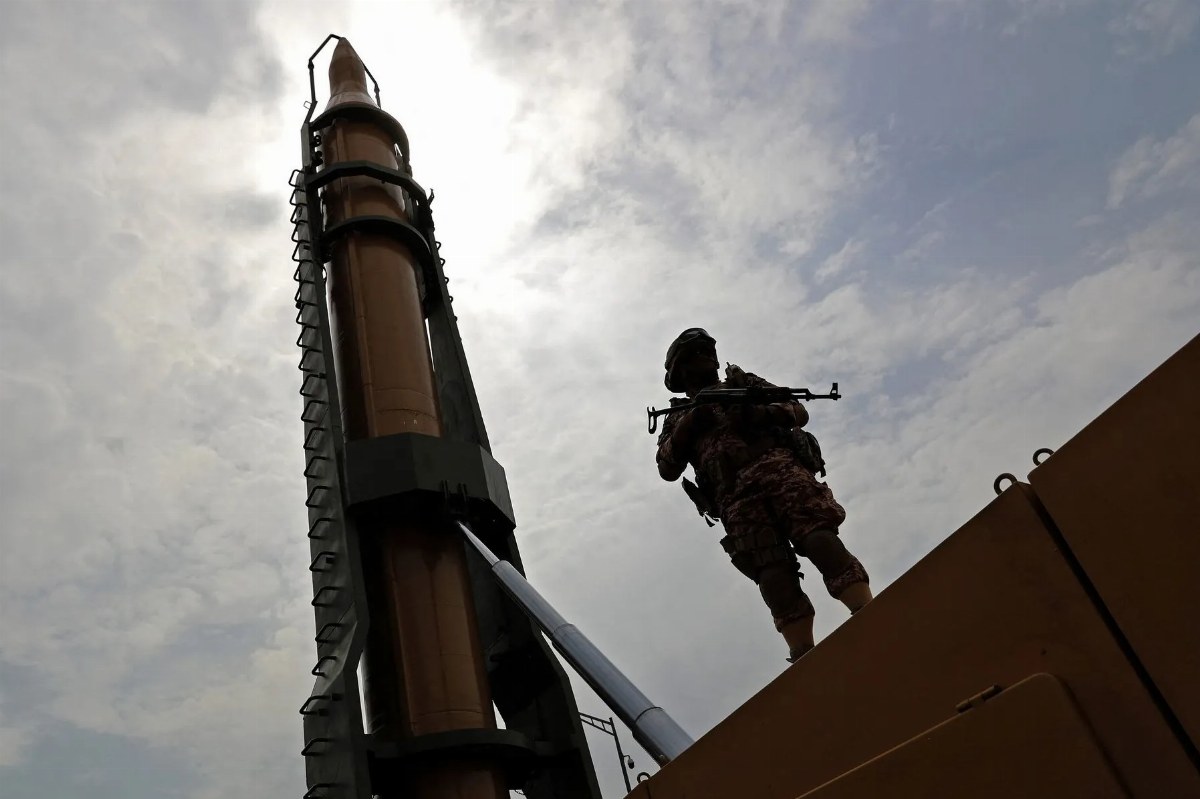
Iran is reportedly contemplating strikes against American military objectives in Europe, amidst an escalating conflict with the United States. According to sources close to the Iranian regime, officials in Tehran view the situation as increasingly inevitable, with potential targets identified in Southeastern Europe, including Bulgaria and Cyprus.
Recent assessments by Iranian forces have indicated a willingness to strike targets in countries such as Bulgaria, which allowed US aircraft to use its Bezmer Air Base last month. Additionally, Cyprus, where a British airbase was recently struck by a drone, is also on the list of possible retaliatory targets should the US escalate its military presence.
Reports suggest that Iranian forces have also evaluated the possibility of attacking submarine fiber optic cables in the Strait of Hormuz in the event of heightened conflict. This reflects a defiant stance from Tehran, as many regime members increasingly believe that a return to war is a matter of “when,” rather than “if.” Negotiations to reopen the strategically important Strait have stalled, and Iran’s Supreme Leader, Ayatollah Mojtaba Khamenei, has made significant appointments of hardliners to top military and security positions.
“Real but Limited” Threat
The Islamic Revolutionary Guard Corps (IRGC) and other military commanders have warned that in the event of a large-scale conflict, Iran will shift its prior strategy of attacking US military installations and energy facilities in the Middle East, targeting locations further afield instead. Last month, the IRGC issued warnings to London regarding the US use of British military bases, asserting that any such base used to launch attacks against Iran would be considered a legitimate target.
Sidharth Kaushal, a researcher with the Royal United Services Institute (RUSI) in London, described the threat posed by Iranian missiles to European targets as “real but limited.” He noted that Iran could deploy medium-range ballistic missiles, such as those in the Shahab series, against US targets in Southern and Southeastern Europe, but cautioned that these strikes might struggle to inflict substantial damage at longer ranges.
Tehran’s Preparations
The Iranian response to potential US actions will depend significantly on Washington’s next moves. One insider indicated that the regime is preparing for an escalation of conflict if President Trump follows through on prior threats to target Iranian infrastructure. Last month, Trump stated that Washington would destroy an Iranian bridge or power station each time Iran attacks a vessel in the Strait of Hormuz.
Another source claimed that Iran would not impose any limits on its response to US aggression, stating, “If the US oversteps, Iran will defend itself at any cost, extending its operations beyond the region and into Europe.” Iran has demonstrated a willingness to strike distant targets, having launched missiles toward Diego Garcia—a US and UK military base in the Indian Ocean—after the war began in February, although none hit their intended targets.
In March, NATO’s air defense systems intercepted several Iranian ballistic missiles, while a British airbase in Akrotiri, Cyprus, was reportedly struck by a drone that officials suspected was Iranian but launched by regional allied forces.
Recent Iranian attacks, including one that targeted a US base in Jordan and resulted in the deaths of three American soldiers, showcased Iran’s ability to conduct long-range strikes, signaling its potential capabilities for striking Europe as well. One insider remarked, “This is a message to Europe: it could be a target of our missiles, so they should know which side to take in this war.” They added that a serious misstep, such as attacking Iranian infrastructure, could escalate the conflict beyond regional borders into Europe.
Expert Opinions
A memorandum of understanding signed in June between the US and Iran collapsed last month following Iranian attacks on vessels in the Strait, leading to a cycle of retaliatory strikes and renewed American blockades on Iranian ports. Diplomatic efforts over the past weeks have failed to yield a resolution that would reopen navigation routes and resume negotiations for a broader peace agreement, with Trump expressing growing frustration over the impasse.
Kaushal noted that while more powerful missiles could be launched, they would require lighter payloads to achieve sufficient range, leading to minimal damage. He suggested that Iran might find it more beneficial to act through proxies, including militant groups like Shia militias in Iraq, Hezbollah in Lebanon, and Houthi rebels in Yemen.
Douglas Barrie from the International Institute for Strategic Studies indicated that attempted attacks on Diego Garcia this year suggest that Iran possesses weapons with ranges exceeding 2,000 km. However, he raised concerns about how many such missiles Iran actually has and whether they would be willing to use them to make a significant statement, highlighting the risks of failure or interception.
Khamenei’s Move
Some Iranian regime members fear that Tehran is overstepping its bounds. Many hardline supporters within the system distrust the US’s commitment to any agreement, insisting that Iran must impose a higher cost on Washington to ensure its compliance with any final agreement. This includes figures like Mohsen Rezaei, a former IRGC commander recently appointed by Khamenei to head national security.
Analysts in Iran view this appointment as a signal that figures such as Mohammad Bagher Ghalibaf, the country’s chief negotiator, are being sidelined for now, as prospects for a lasting agreement grow dim. One insider stated, “Iran is sending a clear message: if you can’t reach an agreement with Ghalibaf, you’ll have to deal with Rezaei,” adding that the message is, “Don’t provoke us, because I am even more agitated than you are.”
Iran Warns Gulf States
On Wednesday, Tehran warned Gulf states that it would consider any assistance provided to the US military as participation in Washington’s military operations against Iran. Iranian military chief General Ali Abdollahi stated, “We must warn that any assistance or facilitation provided to the aggressive American military amounts to participation in their military operations.” Abdollahi emphasized the improbability of so many military aircraft, including refueling planes, being present in regional bases without the host nations’ knowledge.
This warning comes as the USS George Washington is redeployed to the Middle East to replace the USS Abraham Lincoln. Abdollahi underscored that Gulf nations, which have issued various statements asserting they will not allow the US to use their territory against Iran, need to be aware that Iran is fully aware of their activities.