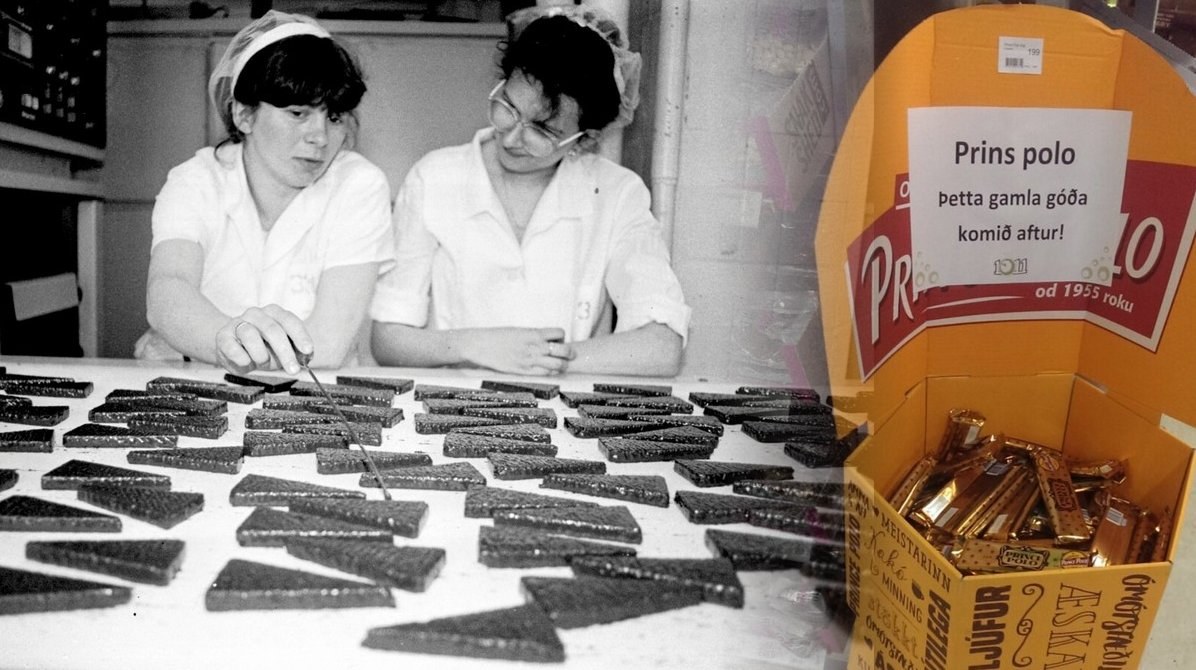
For over 70 years, Prince Polo wafers have been a cherished treat, produced in the same factory since their inception. This iconic snack has captivated not only the hearts of Poles but has also gained tremendous popularity in Iceland, where it is as beloved as Coca-Cola.
The story of Prince Polo began in Cieszyn, Silesia, where in 1924, the Wafer, Biscuit, and Cookie Factory was established by brothers Brunon and Wilhelm Schramko. According to the publication “Gospodarze. Cieszyńscy przedsiębiorcy w pierwszych latach Niepodległej,” they initially started a small wafer-making business in their grandmother’s house on Głęboką Street.
From a Family Bakery to a Major Confectionery
In response to growing demand, the brothers moved to a larger facility on Liburnia Street, expanding their product range to include biscuits, gingerbread, and chocolate bars sold throughout Poland. The factory employed around 100 people, making it one of the largest operations in the region. However, the onset of World War II in 1939 forced the Schramko family to abandon Cieszyn, and the factory was taken over by former employee Juliusz Pietschman, who ran it until 1945.
In 1946, the factory was nationalized and later merged with the Śląska Chocolate and Cocoa Factory, forming the Olza Confectionery on January 1, 1950. The first Prince Polo wafers rolled off the production line in 1955. The origin of the name remains unclear, though it is believed to have been initially called simply “Prince” before adding “Polo” to make it sound less glamorous.
In 1966, Olza merged with the Silesian Confectionery Industry in Siemianowice but regained independence 14 years later. By 1984, the factory had 750 employees and produced 11,400 tons of products annually. In 1993, it was acquired by Kraft Foods Poland S.A., which later became Mondelēz International post-2013.
An Icelandic Favorite
Since the 1950s, Prince Polo wafers have been manufactured at the same facility, initially for the Polish market but also exported to various countries, including the USA, Canada, and even Kuwait. By the 1980s, Olza had become the second-largest exporter of confectionery in Poland.
Prince Polo wafers gained exceptional popularity in Iceland, where President Ólafur Ragnar Grímsson remarked in 1999 that an entire generation of Icelanders grew up on American Coca-Cola and Polish Prince Polo. Reports indicate that each Icelandic child consumes about half a kilogram of Prince Polo annually, making it one of the country’s most favored sweets.
Since their introduction in 1955, they have been imported under the guise of “cookies” to navigate strict candy import regulations. At the height of their popularity in the 1970s, the average Icelander consumed one kilogram of Prince Polo each year, with 160 tons imported annually—a clear indication of its enduring popularity even after import restrictions were lifted in 1982.
Moreover, Prince Polo wafers were commonly served as a snack for travelers aboard LOT Polish Airlines until they were replaced by Grześki in 2019.
— For over 70 years, Prince Polo has remained a staple for Polish consumers. Its history began in 1955 at the OLZA factory in Cieszyn, which is now one of seven Mondelez factories in Poland. The wafer consists of four crispy layers filled with three layers of smooth cream, all coated in velvety chocolate. The entire production process takes 45 minutes, equivalent to a school lesson. Prince Polo has crossed borders and is available in markets including the UK, Ireland, Germany, and Hungary, with particularly strong sales in Iceland, where it is among the most recognizable sweets, as noted by Mondelez Polska’s press office.
A Sweet Workplace
Since the 1950s, women have predominantly worked in the production of Prince Polo. The growing interest in factory jobs stemmed from women’s emancipation in Poland during the ’50s, which granted them rights to vote, education, and employment, leading to greater independence. These women were trained in a vocational school within the factory.
— Today, women make up nearly 70% of the workforce, playing a crucial role in the factory’s success. Their dedication, skills, resilience, and adaptability have been vital for the company’s operations, says Lucyna Probst, the factory manager in Cieszyn.
The factory remains an essential institution in Cieszyn and a significant employer. — We are delighted to have a facility in our region that has been actively involved in local initiatives and contributes to our community’s life. The factory is a key employer in our city, and its products are known worldwide, promoting Cieszyn, says Krzysztof Kasztura, the First Deputy Mayor of Cieszyn.