
Polish coal companies, including those in Silesia and the most efficient in Lublin, have faced significant losses in recent years. Despite expectations for austerity measures, data from two companies defy this trend: Southern Mining Group and Polish Mining Group.
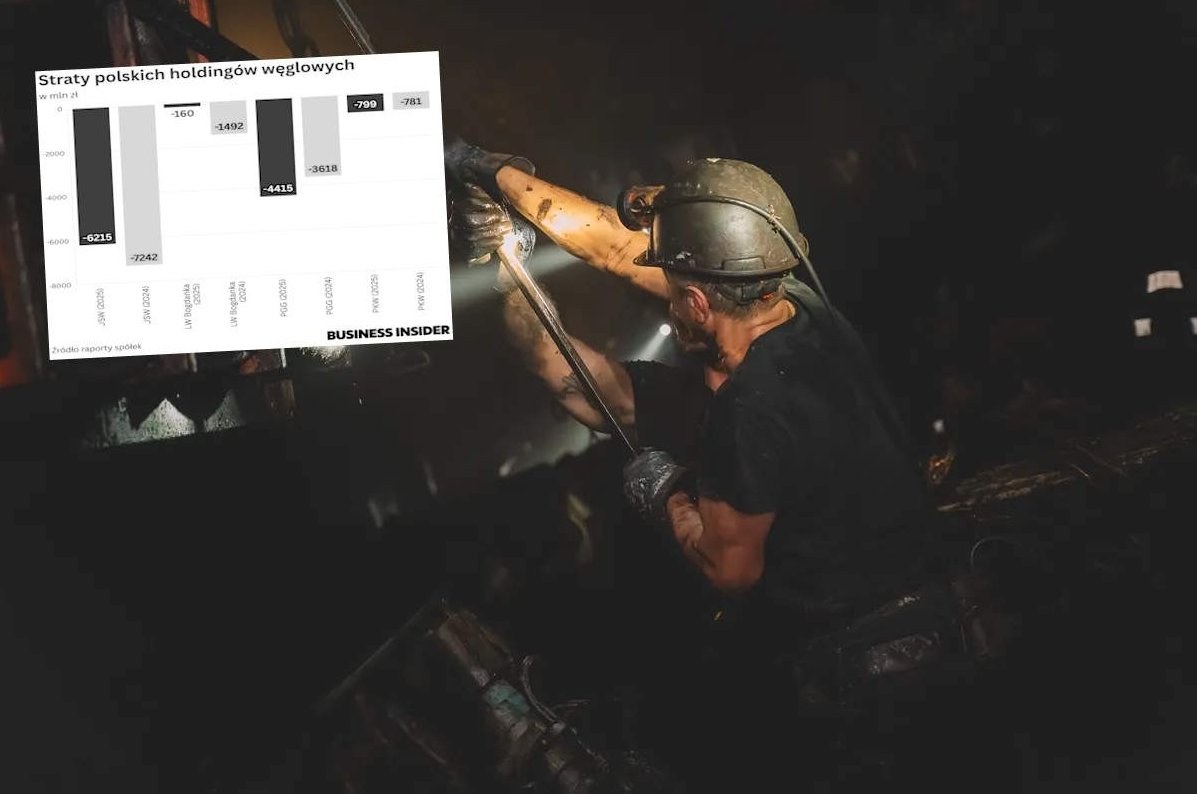
Controlled by the state, companies such as Polish Mining Group, JSW, Bogdanka, and Southern Mining Group have been struggling with low coal prices. Collectively, these four entities reported a net consolidated loss of 11.6 billion PLN last year. Specifically, PGG recorded a loss of 4.4 billion PLN, JSW lost 6.2 billion PLN, PKW incurred an 800 million PLN loss, and Bogdanka faced a 160 million PLN deficit.
Interestingly, while management salaries at PGG dropped by 24%, the number of board members increased from an average of 3.8 to 5, leaving overall management spending unchanged. Conversely, PKW saw its total management expenditures decrease from 3.4 million to 3.1 million PLN, despite a reduction in board members from three to two, resulting in a 23.8% year-on-year rise in average board member salary to 116,000 PLN monthly.
While workforce reductions have not led to decreased costs, state-owned companies are keeping management expenses stable even amidst dire financial results that threaten their existence.
Investment Agreements
Furthermore, PKW’s investment expenditures have risen by 43% year-on-year to 1.1 billion PLN, defying expectations of cuts. The company explained that the wage increase of about 3% in 2025 was aligned with the stipulations of an employment agreement. Last year, the average wage increase in the PGG group was 11.6% year-on-year, despite recording a loss of 781 million PLN.
Subsidies and Negative Taxes
It is important to note that both PGG and PKW receive substantial state subsidies aimed primarily at closing unprofitable mines. These subsidies, included in revenues, improve the companies’ financial outcomes. Without these grants, losses would be significantly higher. In 2025, PGG received a subsidy of 1.17 billion PLN for reducing production capacity, while PKW was allocated 818 million PLN for the same purpose.
For PKW, after accounting for all state taxes including CIT (despite losses, the company paid 10 million PLN), PIT, and ZUS contributions, the total tax contributions amounted to negative figures, with payments to the budget being 89 million PLN lower than the subsidies received. In contrast, PGG still generated a positive balance of 2.4 billion PLN for the state.
Efficiency Concerns
There is a significant productivity gap between the Silesian mines and Bogdanka regarding coal output per worker. In 2025, Bogdanka’s gross output per employee was 1,900 tons, a 2.7% decline year-on-year. Conversely, PKW averaged 837 tons (+4.6%) per employee, while PGG produced just 601 tons (-4.1%). JSW’s production translated to only 414 tons per worker, with the majority being higher-priced coking coal.
For international context, North Antelope Rochelle mine in the USA boasts over 50,000 tons per worker annually, while Black Thunder achieves 40,000 to 60,000 tons. The efficiency of US and Australian deep coal mines can reach 10,000 to 20,000 tons per worker yearly.
The Future of Polish Coal Mining
The viability of these mines, particularly those with outputs below 1,000 tons per worker, is increasingly questioned. This is especially true for PGG, which averages a mere 600 tons. Such operations will only be profitable during peak economic conditions and often require government subsidies to survive due to high extraction costs.
Currently, Poland’s official plan for coal mining, under the Social Agreement signed in 2021, aims for a complete phase-out by 2049. However, economic analyses suggest that many mines may cease operations much sooner, with expert forecasts indicating that the number of active mines could dwindle to just a few by 2030-2035, despite the government’s timeline extending to 2049.
Detailed projections have been compiled in the latest National Energy and Climate Plan (KPEiK), developed using models from the Energy Market Agency and the National Center for Balancing and Emissions Management. According to these forecasts, coal-fired power plants are expected to consume only 16-17 million tons by 2030, with total coal consumption declining to just 25 million tons by 2035.


