In a recent private gathering with donors, U.S. President Donald Trump indicated his desire for his Vice President, JD Vance, to win the presidential election in 2028. This suggests Trump is open to publicly endorsing Vance, although some advisers caution that the president has not firmly decided on a successor, as reported by The Washington Post.
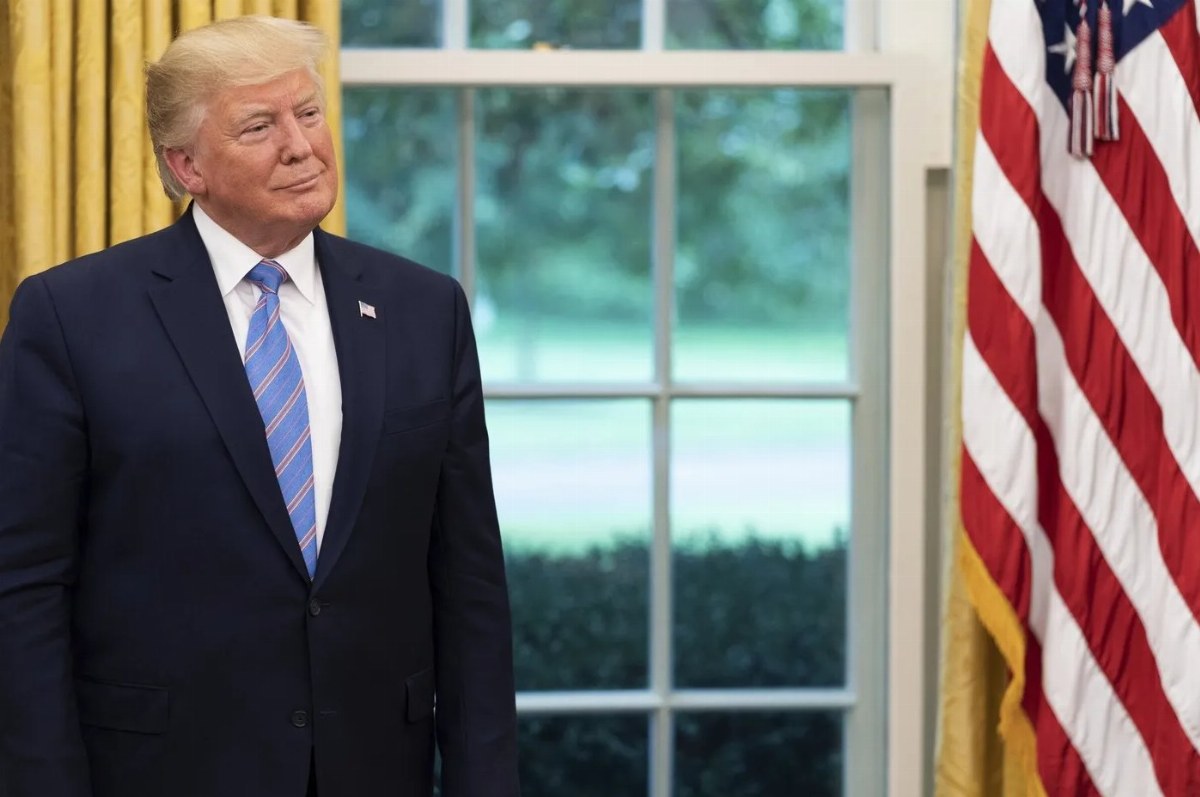
During a meeting in the Oval Office two weeks ago, Trump stated, “Ultimately, we need to choose JD,” according to two individuals familiar with the comments who spoke to the Washington Post on the condition of anonymity.
This private remark contrasts with Trump’s rhetoric over the past year, where he encouraged a competition between Vance and Secretary of State Marco Rubio for his backing. He openly speculated that both could form a strong electoral team and repeatedly refrained from specifying whom he preferred to see lead.
Even after promoting Vance to his supporters, Trump continued to bombard his advisers with questions about the competition between Vance and Rubio. An official from the White House stated that Trump personally questioned staff about both candidates during a recent helicopter ride on Marine One.
One adviser with direct knowledge of Trump’s comments to donors reported that while the president has privately decided Vance will be his heir and the Republican nominee, he feels it is “too early” to determine when Vance will announce his candidacy or receive public support.
Uncertainty Remains
However, six other advisers and allies of Trump expressed skepticism regarding the president’s commitment to Vance, emphasizing that Trump often delivers differing messages to various individuals and may still change his mind regarding his candidate for 2028. Trump’s associates generally agree that he will delay his endorsement to avoid appearing weak.
“Anyone who assumes everything is set in stone is either rushing things or simply doesn’t know the president very well,” remarked the official familiar with Trump’s recent polling on the Vance-Rubio competition.
Vance has not confirmed his plans. Earlier this year, sources indicated to The Washington Post that he had not yet made a decision. A close associate mentioned that Vance would delay making any announcement until after the birth of his fourth child, which occurred on July 19. Vance stated in June that he would discuss the matter with his wife after the midterm elections, asserting that he has “no doubt the President of the United States will strongly support him,” regardless of his decision. He has repeatedly emphasized his focus on his current role and his friendship with Rubio.
Trump Enjoys the Spotlight
The prospect of a succession battle has already sparked the kind of tensions typical of heated primary elections, with donors, activists, and party figures passionately weighing in for or against Vance.
A lot will depend on the upcoming November midterm elections. A disappointing outcome for the Republicans could encourage challengers to run against Trump’s chosen candidate and be more critical of his administration. Vance or Rubio may be vulnerable to attacks from within the party that Republicans would not direct at Trump himself—a dynamic already visible online as right-wing influencers target the Vice President regarding the Iran conflict.
Trump revels in drama reminiscent of entertainment shows, and his advisers noted his reluctance to cede the limelight to his preferred successor. The president has enjoyed playing Vance and Rubio against each other—along with the media—intensifying the competition for his endorsement, just as he did when he selected his vice presidential candidate from the same two men in 2024.
Moreover, Trump seems to relish the idea of launching a bid for a third presidential term, frequently sharing images of “Trump 2028” on social media and joking about the prospect at rallies, even as close associates confirm he is not seriously contemplating it.
Rubio and Vance: Party Favorites
Throughout the race for the 2024 vice presidential nomination and currently, Rubio has enjoyed the backing of most Republican donors from Trump’s earlier tenure. Vance aligns more closely with the younger MAGA coalition that propelled Trump back to power in 2024, although this coalition now risks fracturing. Additionally, during his vice presidency, he developed relationships with party supporters to fundraise for the Republican Party.
“Vance has put in significant political effort over the past year and a half,” remarked one of Trump’s advisers with knowledge of recent comments made to donors.
Recently, Vance impressed Trump by negotiating a ceasefire agreement with Iran in June, leading a task force to combat fraud in federal social benefits, and successfully managing a series of media interviews during his book promotion tour, according to the adviser. Although the ceasefire agreement failed in July, Vance’s associates viewed his role in the negotiations as a political victory: the agreement he negotiated was well-received, while voters largely disapprove of Trump’s handling of the conflict.
In contrast, Rubio has held several key positions in the administration, none of which lend themselves to political campaigning. Legally and logistically, a Secretary of State—or a National Security Adviser, a position also held by Rubio—cannot run for president during their term.
Rubio has avoided any discussion about 2028 and recently reduced his media presence to evade further questions on the matter, which would inevitably spur more speculation, said a close individual. However, Rubio’s team briefly fueled speculation about his ambitions earlier this year when they released a widely circulated video featuring him delivering a campaign-style monologue during a press conference. In some internal conversations, the source said Rubio hinted at the time left in his term, suggesting he intends to serve out his term fully.
He does not have a campaign in waiting or a political infrastructure ready to be organized.
One of Trump’s advisers stated that the president would still like to see Rubio on a joint ticket with Vance—and Trump regularly praises Rubio—but it remains unclear if Rubio would genuinely desire the vice presidential role alongside Vance. A spokesperson for Rubio declined to comment.