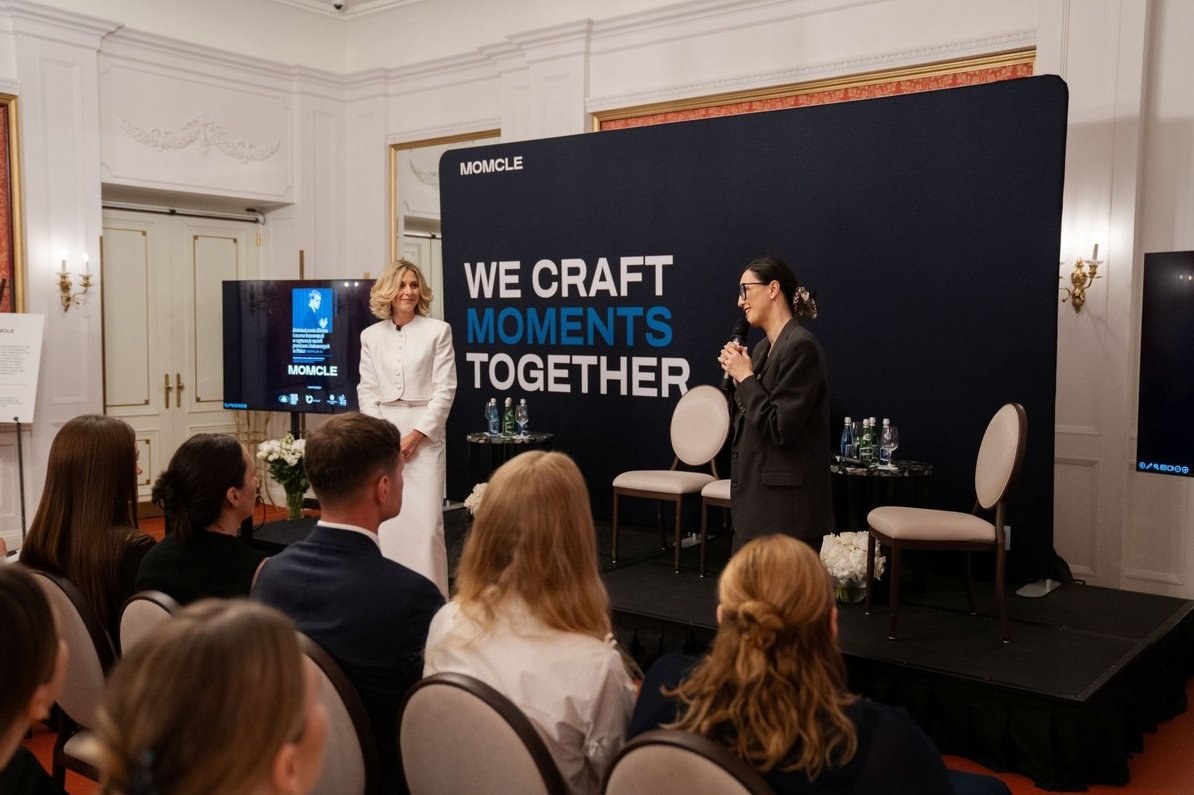
A recent report from MOMCLE indicates that consumers are increasingly driven by the overall experience rather than just the product or price when choosing luxury brands. The study, titled “Customer Experience and Consumption Patterns in the Premium and Luxury Segment in Poland, Edition II,” shows that customer experience has become a crucial business factor across the sector.
The Polish premium market is maturing faster than many brands realize. Today’s consumers are more informed, frequently travel abroad, and have real comparisons of service quality offered by global brands. This leads to higher expectations for not just exceptional products but also experiences that meet international standards. The report identifies this gap as significant. Findings indicate that Polish premium consumers are willing to pay more for high-quality experiences but are increasingly abandoning brands that fail to live up to their promised image.
Dominika Hofman, Premium & Luxury Client Experience Expert and report author, notes, “The industry has yet to address many aspects. Brands are still designing experiences for a customer that no longer exists. They continue to train staff in sales instead of relationship-building and still measure success by volume rather than the quality of every single interaction with the brand. The effect of this discrepancy is reflected in numbers that should raise concern.”
Worsening Customer Treatment as a Real Business Cost
One of the most surprising findings of the report is the scale of negative customer experiences. A staggering 44% of respondents reported feeling worse treated by luxury brands in the past two years. Most of these incidents occurred in physical boutiques, where brands have the best opportunity to build relationships and justify their value. Negative experiences directly impact business outcomes, with 68% of those who felt mistreated choosing not to make a purchase, opting for competitors, or planning to avoid the brand in the future. Thus, service quality emerges as a real factor affecting revenue loss and customer loyalty.
Customer Experience as a Deciding Factor in Sales Loss
The report highlights that modern premium customers make purchasing decisions primarily based on the quality of their experiences. Key elements identified by respondents include service quality (73%), lack of judgmental attitudes (72%), feeling respected by staff (71%), and advisor competence (70%). These factors now weigh more heavily on brand relationships than store decor or location prestige. Customers are more likely to walk away not due to product pricing but rather the quality of their experience. Consequently, customer experience becomes a fundamental factor influencing sales.
Incompetent Service as the Main Destroyer of Experience
The leading cause of negative experiences is not the product or pricing levels, but the quality of interaction with staff. 74% of respondents cited staff incompetence as the most frustrating aspect, while 55% noted a cold or patronizing communication style. These findings illustrate that the biggest challenge for premium brands today is not expanding product offerings but consistently establishing high service standards and investing in staff competencies. This is further supported by 93% of respondents emphasizing the importance of training staff in fair and professional customer treatment.
Customer Experience Becomes a Strategic Challenge for Luxury Business
The MOMCLE report indicates that in the premium and luxury segment, the quality of customer experience is becoming one of the most important business assets. Data shows that retaining customers increasingly depends not on the product itself but on the standard of service, staff competencies, and the quality of relationships with the brand. This reflects a shift where customer experience is no longer just a support area for sales but a strategic element influencing revenues, customer retention, and competitive advantage. The report suggests that for premium brands, investments in people and service culture might deliver greater business value than further communication efforts.
The study was conducted using the CAWI method in May 2026, surveying 132 fully completed questionnaires. Respondents met three screening criteria: permanent residence in Poland, an annual gross income exceeding 120,000 PLN, and active purchases in the premium or luxury segment. The questionnaire covered 11 thematic blocks. The findings were supplemented with data from a nationwide quantitative study conducted by MAD Research in February 2026 that mapped consumption patterns of luxury goods and services among the general adult Polish population (aged 16+).
*Percentage data is sourced from the MOMCLE CAWI 2026 study (n=132) and the national CATI study by MAD Research 2026.