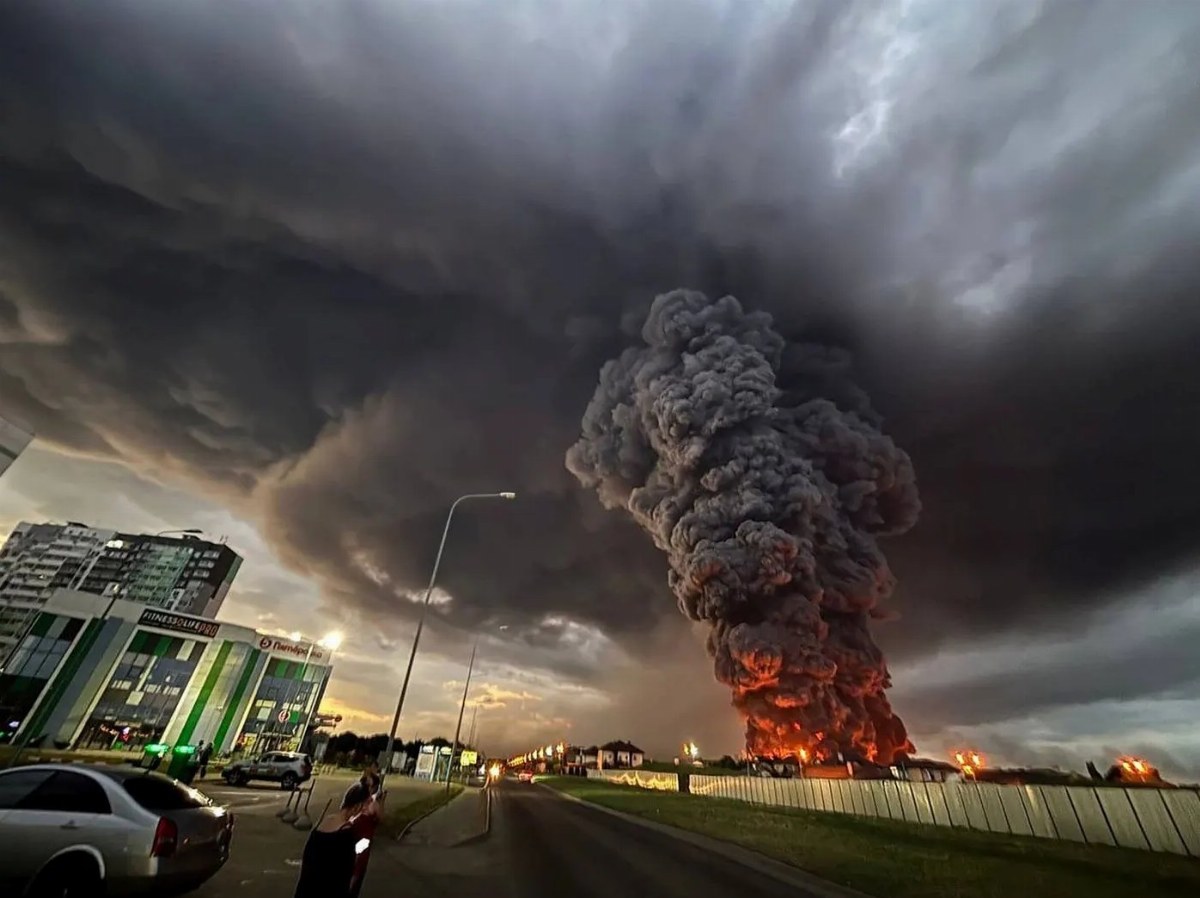
Recent drone strikes by Ukraine are posing a significant threat to Wildberries, one of Russia’s largest e-commerce platforms. The attacks, which occurred in Saint Petersburg and Simferopol, are part of a broader campaign that targets Russian commercial interests and could destabilize the company, which reported a revenue of $78 billion last year, according to reports from the Financial Times and the New York Times.
Wildberries had previously suggested to President Vladimir Putin that it could evolve beyond being a national equivalent of Amazon, aiming for a global expansion. However, these recent attacks have revealed vulnerabilities in the company, highlighting the impact of the ongoing war on Russia’s economy.
Major Player in Russian E-Commerce
The strikes are part of Ukraine’s strategy to extend the conflict onto Russian soil using long-range drones. Early attacks targeted Russian refineries, leading to fuel rationing in cities including Moscow and Siberia.
Wildberries is a mass-market platform that primarily serves lower-income Russians living outside major urban centers. Its extensive network of collection points in smaller towns has positioned it as a vital part of local economies.
Devastating Impact on Retailers
The drone strikes, which began last Saturday, have resulted in at least nine fatalities and have reportedly destroyed billions of dollars in inventory, producing thick plumes of black smoke over several regions in Russia.
Alexander Koliandr from Eurasia Group stated that the economic ramifications will extend beyond simply lost inventory. “The loss of goods will lead to the bankruptcy of thousands of merchants, resulting in unpaid taxes and loans,” he remarked, estimating that the state could lose tens of billions of rubles from taxes typically collected from these contributors.
Many Wildberries vendors operate on loans, and some may face frozen bank accounts as soon as next week if they cannot meet imminent tax obligations, according to Vedomosti.
Justifications from Ukraine
Ukraine has defended its strikes as retaliation for Russian attacks on its postal service, Nova Poshta. Ukrainian President Volodymyr Zelenskyy claimed that Wildberries’ logistics network is utilized to supply the Russian military with key components, despite denials from Kremlin spokesperson Dmitry Peskov.
Some vendors on Wildberries sell items that could be used for military purposes, including bulletproof vests and helmets, leading to further scrutiny of the platform’s operations.
Michael Schmitt, a law professor at the University of Reading, emphasized that civilian installations can become legitimate military targets if used for military purposes, although he noted the need for careful consideration to minimize civilian harm.
Potential Consequences of Ongoing Attacks
Maria Snegovaia from the Center for Strategic and International Studies pointed out that the economic slowdown in Russia, partly linked to Ukraine’s long-range attacks, aligns with a decline in public support for the war. However, some Russian commentators argue that such intensifying attacks may rally national sentiment around leadership.
One Russian military blogger indicated that the broader campaign against civilian assets is reinforcing the narrative of an ongoing conflict that demands national unity.
Direct Hits on Wildberries and Its Vendors
Data from the Russian publication Kommersant shows that prior to the latest attacks, around 444,000 square meters, or 8% of Wildberries’ storage capacity, was destroyed. Rebuilding these facilities could cost the company approximately 36 billion rubles (around $460 million).
Small businesses relying on Wildberries for sales have already faced substantial losses, with initial attacks alone potentially wiping out inventory worth between 150 and 235 billion rubles, a figure comparable to Wildberries’ net profit of 175 billion rubles projected for 2025.
Vendors in Desperate Situations
As the attacks caused widespread destruction, many vendors took to social media, expressing their despair. One vendor described how thousands of her goods worth over 20 million rubles were lost in the fires ignited by the attacks, stating, “What can I do to get help? Nothing.”
Another seller reported losing 1 million rubles and lamented the shock and powerlessness felt among entrepreneurs. Svetlana Dodo, a cosmetics brand founder, indicated that Wildberries had recently classified drone attacks as force majeure, absolving itself of liability for losses.
In response to the growing public outrage, Tatiana Kim, co-founder and CEO of Wildberries, acknowledged that insurers are unwilling to cover drone strike damages but promised compensation to the most vulnerable vendors on the platform.