Fatal news just before the NATO summit. The West shakes the anger of Donald Trump

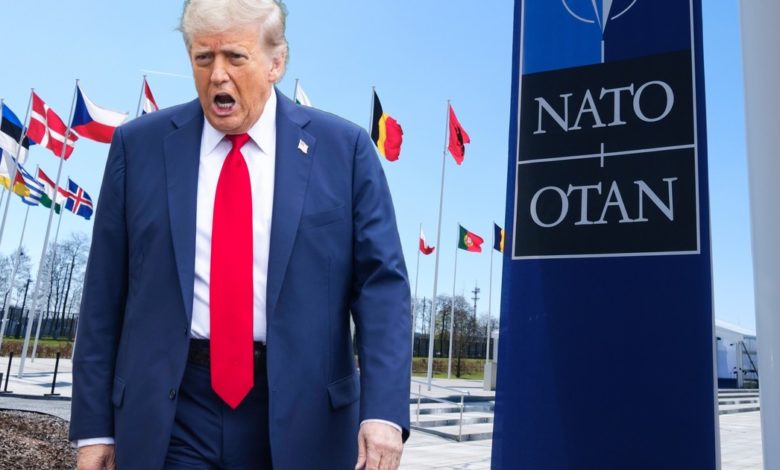
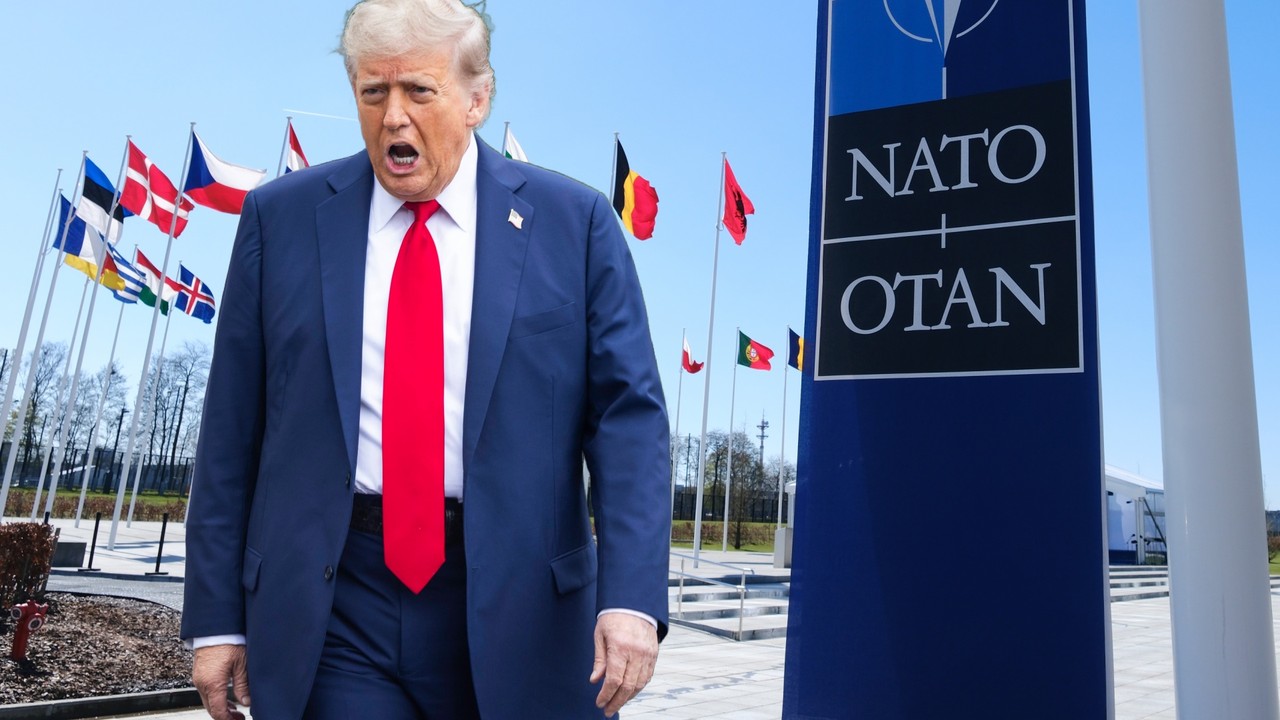
European countries are still looking for a recipe for the features of President Trump, and until Tuesday, when the NATO summit begins, there is not much time. Now it is more and more said that they will want to follow in the footsteps of the Japanese Prime Minister Shinzo Abe. During his term of office he praised his relationship with Donald Trump, finding a way for long and fruitful conversations with the American president. Now this maneuver wants to repeat the old continent.
Ukraine will not be in the foreground. In a cool technocratic jargon, he will only receive vague assistance from NATO. All this in order not to make the American president. Only that there is a diplomatic trick behind which Trump may have no idea, and which is a light in the tunnel for Kiev.
However, there are more topics in which Europe will not be discouraged by the US leader. Here are the four most important things that you talk away from the flashes of the flashes.
The NATO peak (24-25 June this year) takes place in very uncertain times. Russia in the fourth year of war is increasingly bombing Ukraine and threatens the West with nuclear weapons. The alliance wants to decide on the largest arms program since the Cold War during the meeting in Hague. Next week, the event will protect 27 thousand. policemen and 10,000 soldiers. Several frigates protect the North Sea against the Dutch city, and the airspace is controlled by F-35 fighters and Apache helicopters.
The costs are not proportional to the program: It will be the shortest NATO peak for many years. 32 heads of states and governments will officially meet only twice: on Tuesday evening at dinner at the King of the Netherlands and on Wednesday morning for a two -hour work meeting. This weekend, NATO diplomats refine decisions that will be made during the summit.
Officials are under time pressure. On Thursday, the Prime Minister of Spanish Pedro Sanchez informed the head of NATO Marek Rutti that his government rejects the planned gradual increase in defense expenditure to a total of 5 percent. GDP. In previous weeks, several other countries, such as Italy, Belgium, Portugal or Canada, gave up resistance to new goals.
Anonymous NATO diplomats said on Friday that work is underway on “building a bridge for Spain regarding defense expenses”. However, until the beginning of the weekend the government in Madrid “has not yet shown any specific moves.”
Social democrat Sanchez is under the pressure of its extremely left -wing coalition partner, leftist Alliance Sumar, for various reasons. At NATO's headquarters, however, there is a belief that Spain will ultimately agree. Any other decision would be fatal for the alliance: the arms program would fall because it requires the consent of all Member States.
This would cause not only the anger of the US government, but would also plunge the alliance in crisis. Below is a review of how important this peak is and what factors cause uncertainty.
1. The role of Donald Trump
Until the beginning of the meeting on Tuesday afternoon, for the organizers of the summit, it will be unclear not only whether the planned increase in defense expenditure will be adopted despite the opposition of Spain. It is also not known what role will be made by Donald Trump. It is also not certain whether the President of Ukraine Wołodymyr Zelanski will actually accept the invitation to the Hagi. It probably depends on whether the US president will appear.
– Perhaps the American leader will not come because of events in the Middle East – says one of the diplomats. NATO strategists are trying to encourage the US president Not only an honorary place and a great splendor during dinner with King Willem-Alaksander, but also a Golf party before a solemn meal.
Many still remember the legendary NATO summit from 2018, when the US president gave a angry speech in Brussels on the low expenditure of Germany for defense and dependence on Russian energy supply. This time, according to NATO circles, everything was done to make “President Trump to remain predictable for us.”
2. Recognition of Ukraine
It also means that in five or six paragraphs of the final declaration Ukraine will be mentioned at most in two sentences and will receive – in a cool technocratic jargon – providing support from NATO.
Finally, the statement contains two modest sentences in which Russia was described as a “threat”.
NATO strategists did not want to engage in long, tension of the debate with Washington and therefore only briefly mentioned Ukraine. This, however, lies a diplomatic trick: previous decisions regarding Ukraine and the declarations of solidarity contained in the final message from the NATO summit in London in 2024 remain in force. To put it simply: the alliance's commitment that the road to NATO is “irreversible” is at least formally in force. It is not known if Trump is aware of this. In any case, Washington does not maintain this position since the office is taken in January.
3. Magic of numbers in expenses
It is also a bit cheated on numbers. Washington really wanted NATO Member States – according to the strong postulate of Trump during the election campaign – to allocate 5 percent in the future. your GDP for defense. The countries subordinated to this decision. They do everything not to be discouraged by the US President. Therefore, the number “five” must necessarily appear in the documents. According to this, in the future 3.5 percent of GDP are to be allocated to hard military expenses, such as tanks, air defense systems and ships, and 1.5 percent. for security expenses in the widest sense of the word.
The second point includes financial assistance for Ukraine's military equipment, climate protection, borders protection, expansion of civil defense, modernization of bridges for transporting weapons or kindergartens for soldiers stationed abroad. Both goals are to be more binding than those established in 2014 in Wales. At that time, the alliance agreed on a vague formula, according to which he intended to strive to achieve a goal of 2 percent. defense expenses.
Each country is to decide itself at what stages it will reach the level of 5 percent. Until 2035, however, experts doubt whether in the coming years there will be sufficient production capacity in the field of armament to allocate high additional expenses for the purchase of enough new weapons.
Therefore, the question arises: will you not have to spend so much, because the weapon market will not be able to satisfy demand so quickly? Or maybe because each NATO country can use various tricks in the field of defense -related investments, which are to be 1.5 percent. GDP?
– It is possible that in 2035 we will not actually reach 5 percent, but less – says a high -ranking diplomat of one of the important NATO countries.
It will also depend on the future prices of military equipment and how strong the threat from Moscow will be seen by the alliance in four years. In any case, Trump focuses on cooperation with the Kremlin.
4. American troops and atomic umbrella
According to the information “Welt am Sonntag” Behind the backstage of secret bodies in NATO's headquarters, more topics appear, which pose a challenge for the alliance. However, they are not in the NATO agenda. Everything is done to make the peak in the atmosphere of harmony take place in the Hague.
In addition, French President Emmanuel Macron tries to convince Germany, Benelux countries, as well as, if possible, Eastern and Baltic European countries to participate in some form of French nuclear defense. Washington looks at it with distrust, because Americans are currently investing many billions of dollars in improving their nuclear shield for Europe.